
 By admin

Secrets of Million-Dollar Sales Letters for Mail and Internet Campaigns
Introduction: The Timeless Power of Persuasive Writing
In a world driven by digital marketing, automation, and social media ads, the art of the sales letter continues to be a silent powerhouse behind multimillion-dollar businesses. Whether you’re running a global e-commerce brand or an independent online business, the way you communicate with your audience determines your success.
Sales letters—both in traditional direct mail and modern email campaigns—remain one of the most reliable ways to convert interest into action. A well-crafted sales letter doesn’t just sell a product; it builds trust, ignites emotions, and convinces readers that your offer will change their lives for the better.
This article explores the secrets behind million-dollar sales letters, revealing strategies that blend classic direct response techniques with today’s digital realities. From understanding the psychology of persuasion to mastering modern online formatting, these insights will help you turn words into profit.
1. Understanding the Psychology Behind Every Sale
1.1 The Emotional Core of Buying Decisions
Every successful sales letter starts with a deep understanding of human psychology. People don’t buy products—they buy feelings. They buy comfort, confidence, success, or relief from pain. Your job as a copywriter is to trigger emotions that make readers see your product as the key to their desires.
A powerful sales letter speaks directly to these emotional triggers. It paints a picture of transformation: how life looks before and after using your product. This technique keeps the reader emotionally engaged from the first line to the final call to action.
1.2 The Power of Conversation
A winning sales letter isn’t a lecture—it’s a conversation. It should feel like you’re sitting across from your ideal customer, speaking directly to their needs, frustrations, and goals. Use a friendly, relatable tone, and write as if you’re talking to one person, not a crowd.
When the letter feels personal, readers are more likely to respond. That’s why top-performing letters use words like “you,” “your,” and “imagine” frequently—they bring the reader into the story.
2. The AIDA Formula: The Blueprint for Every Successful Sales Letter
The AIDA model—Attention, Interest, Desire, and Action—is a timeless formula used by marketers and copywriters for decades. Let’s explore how to apply it effectively in both direct mail and online campaigns.
2.1 Step One: Grab Attention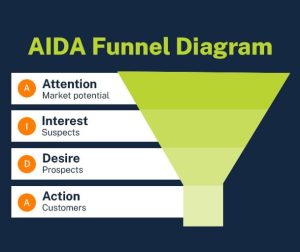
You have only a few seconds to capture your reader’s attention. Start with a powerful headline that arouses curiosity, promises a benefit, or highlights a problem. For example:
- “How to Double Your Sales Without Spending Another Dollar on Ads”
- “Finally, a Proven Way to Quit Your Job and Build Passive Income Online”
A strong headline draws readers in and sets the tone for everything that follows. Online, this headline might appear as an email subject line or landing page title. In print, it’s the first thing the prospect sees when they open the envelope.
2.2 Step Two: Build Interest
Once you have their attention, keep it alive by introducing the problem your product solves. Share relatable stories or statistics that highlight the reader’s current pain points. Then position your product as the ultimate solution.
Online, visuals, testimonials, and bullet points help maintain interest. In print, compelling storytelling and subheadings do the job.
2.3 Step Three: Create Desire
Now it’s time to turn interest into burning desire. Use descriptive language that helps readers visualize the results of owning your product. Let them feel the emotional satisfaction of success, comfort, or relief.
You might say:
“Imagine checking your inbox tomorrow morning and seeing hundreds of new orders—because of one small tweak you made today.”
2.4 Step Four: Demand Action
The final stage is clear, strong, and urgent. Tell the reader exactly what to do next—click the “Buy Now” button, fill out the order form, or reply immediately. Use urgency and scarcity (“Limited spots available,” “Offer ends at midnight”) to drive instant response.
3. Writing for the Digital Era: How Online Sales Letters Differ
3.1 The Modern Sales Page
In the digital age, your sales letter often takes the form of a landing page or long-form email. The same psychological principles apply, but the medium changes how they’re delivered.
A successful online sales page often mirrors the length and detail of traditional mail campaigns—but with added features such as testimonials, interactive graphics, or explainer videos. Unlike print, digital sales letters have no postage costs or physical limitations, so you can expand your content freely to strengthen your argument.
3.2 The Ideal Layout and Readability
Online readers have short attention spans. To keep them engaged:
- Use short paragraphs and simple sentences.
- Include bolding, underlining, and bullet points to emphasize benefits.
- Add subheadings every few paragraphs.
- Leave plenty of white space around the text for easy scanning.
Also, center your main content column for better readability—forcing users to scroll horizontally is a conversion killer.
3.3 The Mobile Revolution
With over 60% of online traffic coming from mobile devices, your sales letter must be mobile-friendly. Responsive design, fast loading times, and large clickable buttons can dramatically increase conversions.
4. Crafting the Perfect Sales Letter Structure
4.1 Headline and Opening Hook
Your opening paragraph should immediately grab attention and emotionally connect with the reader. Use bold promises, intriguing questions, or surprising facts to draw them in.
4.2 The Body: Building Trust and Value
This section forms the heart of your pitch. Expand on the benefits, explain features, and overcome objections. Testimonials, guarantees, and real-life examples work powerfully here.
For physical mail, use 1.5 line spacing and high-quality paper. For online campaigns, use clean, professional design and credible visuals.
4.3 The Close: The Emotional Push
Your closing paragraph must bring together emotion and logic. Reinforce the main benefits, restate the offer, and call for immediate action. Don’t hesitate to use urgency—people act faster when they feel time is limited.
5. The Debate Over Length: Does Size Matter?
For decades, marketers have debated whether long or short sales letters perform better. The answer, backed by research and experience, is clear: longer sales letters often convert better.
Why? Because readers who are genuinely interested want all the information before making a decision. As long as the letter remains engaging and benefits-focused, length becomes an asset, not a liability.
The key is to keep it interesting—avoid filler content, and make every paragraph earn its place.
6. Reinforcing the Sale: Using Supporting Materials
6.1 Brochures, Images, and Proof Elements
Including brochures or circulars in your mail campaign—or visuals and testimonials online—can reinforce your message. However, quality matters. Cheap, poorly designed materials damage credibility. Professionally printed and branded materials enhance trust and reinforce your positioning as a serious business.
6.2 Building Brand Credibility
Your contact details convey professionalism. Avoid using P.O. Boxes whenever possible. Instead, use a business address that appears stable and trustworthy. Even for home-based entrepreneurs, renting a private mailbox with a street address helps maintain a credible image.
On websites, display your street address, phone number, and email at the bottom of the page. Transparency increases customer confidence and lowers skepticism.
7. The Order Form: Make It Effortless
A complex order process is one of the biggest conversion killers. Whether on paper or online, your order form should be:
- Simple to complete
- Visually clear
- Pre-filled when possible
If you’re mailing physical offers, include a self-addressed reply envelope. While pre-stamped envelopes can increase responses, their cost-effectiveness depends on your target audience and campaign type. Always test both methods.
In the digital world, minimize clicks to purchase. Provide multiple payment options, clear instructions, and reassurance (e.g., “Secure payment via SSL”).
8. Testing and Continuous Optimization
No sales letter is perfect the first time. The world’s top marketers constantly test headlines, offers, visuals, and formats to improve response rates.
8.1 A/B Testing
Online, you can easily test two versions of your sales page or email to see which performs better. Test one element at a time—such as the headline, call to action, or pricing—to measure real impact.
8.2 Tracking and Analytics
Use tools like Google Analytics, heat maps, or email tracking software to understand how users engage with your sales content. Metrics such as click-through rate (CTR), bounce rate, and conversion rate reveal where improvements are needed.
9. Building Long-Term Relationships
A million-dollar sales letter doesn’t just make one sale—it starts a relationship. Follow up with personalized emails, loyalty offers, and valuable content. Each follow-up builds trust and turns one-time buyers into lifelong customers.
Consistency in tone, design, and messaging across your sales materials—whether print, email, or web—builds brand recognition and credibility over time.
Conclusion: Turning Words into Wealth
The secret behind million-dollar sales letters lies not in fancy language, but in authentic persuasion. Whether you’re sending a direct mail campaign or launching a digital product online, the core principles remain the same: capture attention, build interest, create desire, and demand action.
A great sales letter speaks to emotions, answers doubts, and promises transformation. It combines creativity with structure, psychology with proof, and passion with precision.
In the fast-paced world of digital marketing, mastering the art of persuasive writing can still be your most profitable skill. Remember—every word counts, and when used effectively, words can sell anything.