
 By admin
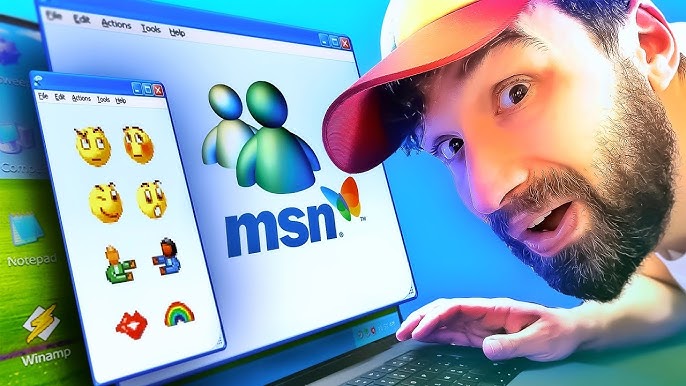
The Evolution of MSN Messenger: From Digital Revolution to Nostalgic Legend
Introduction: The Dawn of Digital Communication
Before the rise of WhatsApp, Facebook Messenger, or Discord, there was a platform that defined online communication for an entire generation: MSN Messenger. Created by Microsoft in the late 1990s, MSN Messenger was not just a chat tool—it was a digital cultural phenomenon that transformed the way people interacted across the globe.
From the early days of dial-up connections to the rise of broadband and mobile devices, MSN Messenger was at the center of a technological and social revolution. It connected friends, built communities, and even played a role in shaping modern online etiquette. Though officially discontinued in 2013, its legacy lives on in the DNA of every messaging app used today.
This article explores the history, evolution, cultural impact, and legacy of MSN Messenger, tracing how it revolutionized digital communication and why its memory still sparks nostalgia among internet users worldwide.
1. The Birth of MSN Messenger
1.1 Microsoft’s Entry into Instant Messaging
MSN Messenger was launched on July 22, 1999, as Microsoft’s response to AOL Instant Messenger (AIM), which dominated online chatting in the late 1990s. The first version of MSN Messenger was a simple tool designed to connect users through text-based conversations.
Microsoft’s strategy was straightforward: integrate instant messaging into its Microsoft Network (MSN) ecosystem, encouraging users to adopt it alongside Internet Explorer and Hotmail.
The early version of MSN Messenger allowed users to:
- Send and receive instant text messages
- Maintain a contact list of friends (known as the “buddy list”)
- Receive alerts when friends came online
- Exchange simple emoticons
This simplicity was key to its initial success. Unlike AIM, which required a separate account, MSN Messenger was integrated directly with Hotmail, Microsoft’s free email service. This gave it an immediate user base of millions.
2. The Golden Era of MSN Messenger (2001–2006)
2.1 A New Social Hub
By the early 2000s, MSN Messenger had become the most popular instant messaging service in the world. For millions of young users, it wasn’t just a chat app—it was a daily ritual.
Teenagers would rush home after school, log on to MSN, and spend hours chatting, sharing song lyrics, or customizing their display names. MSN Messenger became a virtual hangout space, replacing phone calls and even physical gatherings for many.
2.2 Features That Defined a Generation
As technology advanced, MSN Messenger evolved to include a range of innovative features that would later become standard in modern apps:
- Custom Display Names: Users could personalize their names with colors, symbols, and emojis—a precursor to today’s expressive social media profiles.
- Status Messages: “Busy,” “Away,” “Appear Offline,” or custom statuses like “Listening to Coldplay 🎧”—these status updates allowed subtle communication and expression.
- Nudge Function: A playful feature that shook the chat window to grab someone’s attention—a digital equivalent of tapping someone on the shoulder.
- Winks and Emoticons: Animated graphics that added humor and emotion to chats. MSN popularized many classic emoticons that are still used today.
- File and Photo Sharing: MSN Messenger allowed users to send photos, documents, and even voice clips—long before cloud sharing became mainstream.
MSN Messenger became more than communication—it was digital identity. Your display picture, song status, and list of friends reflected your personality.
2.3 The Music Connection: Windows Media Player Integration
One of the most memorable features was the integration with Windows Media Player. Users could automatically display what song they were listening to. This not only sparked conversations but also turned music into a form of self-expression.
It wasn’t unusual to see status lines like “🎶 Listening to Linkin Park – In the End 🎶,” prompting instant messages like, “I love that song too!” MSN Messenger helped create micro-communities based on shared interests, especially music.
3. Technological Advancements and Global Expansion
3.1 MSN Messenger Goes Worldwide
By 2004, MSN Messenger had over 150 million active users, with massive popularity in regions like Europe, South America, and Asia. In countries like Brazil and Spain, it was a cultural phenomenon, embedded in youth life.
Microsoft continued to refine its platform, improving speed, reliability, and multimedia features. MSN Messenger became a symbol of the early 2000s internet culture—fast, expressive, and fun.
3.2 Integration with Hotmail and Xbox Live
Microsoft cleverly linked MSN Messenger to its other services, such as Hotmail (later Outlook.com) and Xbox Live, allowing users to see when their gaming friends were online. This level of cross-platform connectivity was years ahead of its time and would later inspire integration models used by Facebook and Google.
3.3 Webcam and Voice Chat Revolution
In the mid-2000s, MSN introduced voice and video calling—a revolutionary step toward the future of communication. For the first time, people could talk and see each other in real time, across continents.
These innovations laid the groundwork for the rise of Skype, Zoom, and Microsoft Teams in later years.
4. The Rebranding: From MSN Messenger to Windows Live Messenger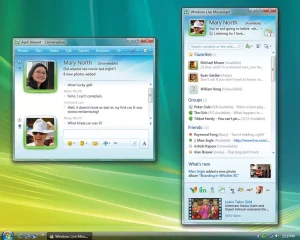
4.1 A New Identity for a New Era
In 2005, Microsoft began rebranding MSN Messenger as Windows Live Messenger, aligning it with the company’s “Windows Live” strategy. This version, officially launched in 2006, brought a redesigned interface and deeper integration with Microsoft services.
Key new features included:
- Offline Messaging: Users could send messages to friends who were offline.
- Improved File Sharing: Easier photo and document transfers.
- Mobile Access: Introduction of mobile-friendly versions of Messenger for early smartphones.
- Social Integration: Users could connect their Windows Live Spaces (early blogs) and share updates directly through Messenger.
Windows Live Messenger became a multi-functional social platform, combining chat, media sharing, and light social networking—years before Facebook Messenger adopted similar traits.
4.2 Global Dominance
By 2009, Windows Live Messenger had over 330 million monthly active users—more than any other instant messaging service in the world. It was available in over 50 languages and used by people of all ages.
However, this success came at a critical turning point: the rise of mobile apps and social media platforms was changing how people communicated.
5. The Decline of MSN Messenger
5.1 The Rise of Mobile Messaging
As smartphones became mainstream, users shifted toward mobile-first platforms like WhatsApp, BBM, and Facebook Messenger. MSN Messenger, designed for desktop environments, struggled to adapt to this new ecosystem.
While Microsoft released a mobile version, it lacked the speed and simplicity of newer competitors. The app’s heavy integration with Windows services also made it less flexible across devices.
5.2 The Skype Merger
In 2011, Microsoft acquired Skype for $8.5 billion**, signaling a strategic shift toward unified communications. Microsoft began migrating MSN Messenger users to Skype, officially retiring Windows Live Messenger in 2013 (except in China, where it lasted until 2014).
This marked the end of an era. The familiar sound alerts, colorful emoticons, and window nudges faded into memory—but not from the hearts of millions of users.
6. The Legacy and Cultural Impact of MSN Messenger
6.1 Shaping Online Culture
MSN Messenger wasn’t just a chat app—it shaped how people communicate online. The concept of “status updates,” “seen indicators,” and “emoji-based emotion” all trace their roots back to MSN’s design.
It also pioneered digital intimacy, allowing people to express emotions through text, animations, and music in ways never seen before.
6.2 A Nostalgic Digital Memory
Today, MSN Messenger is often remembered with deep nostalgia. For many, it symbolizes the simpler, more personal internet era—before algorithms, feeds, and influencers. Its shutdown marked the end of the early “golden age” of social media.
Fan-made projects like “Escargot MSN” attempt to revive the experience by recreating the old servers and interfaces. These initiatives show that even decades later, the emotional connection to MSN Messenger remains strong.
6.3 Influence on Modern Platforms
Many features we use today—typing indicators, read receipts, stickers, and video calls—can trace their origins to MSN Messenger’s early experiments. Modern messaging giants like WhatsApp, Discord, and Telegram owe a part of their functionality and design philosophy to MSN.
7. Microsoft’s New Messaging Vision
After the end of Windows Live Messenger, Microsoft didn’t leave the messaging scene entirely. Instead, it refocused its efforts on professional communication tools.
- Skype became the company’s flagship personal and business chat service, integrating voice, video, and conference tools.
- Later, Microsoft Teams, launched in 2017, became a central hub for workplace collaboration.
In a way, Microsoft continued the Messenger legacy—transforming from casual chatting to enterprise-level communication, connecting millions of professionals worldwide.
Conclusion: From Messenger to Memory
MSN Messenger was more than software—it was a global social movement that defined how humans interact online. It turned computers into windows of connection, friendship, and emotion.
While it no longer exists, MSN Messenger’s influence is still visible in every chat bubble, emoji, and notification we see today. Its spirit—of simple, personal, and joyful communication—remains at the heart of digital interaction.
For an entire generation, the “ding” sound of an incoming message wasn’t just a notification; it was a heartbeat of the internet age.
How Science Measures What Cannot Be Counted