
 By admin
The University of Oxford: A Legacy of Knowledge, Innovation, and Global Impact
Introduction
Few institutions embody the union of tradition, intellectual rigor, and forward-looking innovation as powerfully as the University of Oxford. Located in Oxford, England, it is not only the oldest university in the English-speaking world but also one of the most prestigious academic institutions globally. Founded in the 12th century, Oxford has remained a symbol of excellence, producing groundbreaking research, nurturing influential leaders, and shaping the cultural, political, and scientific landscapes of the world.
In 2025, Oxford continues to stand as a beacon of global knowledge and discovery. From medieval roots to modern advancements in artificial intelligence, medicine, and climate research, the university’s influence extends far beyond its historic walls. This article explores Oxford’s rich history, its unique academic system, world-class research, international collaborations, and its enduring mission to balance tradition with innovation.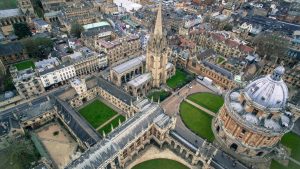
The Historical Legacy of Oxford
A Medieval Beginning
The University of Oxford traces its earliest beginnings to around 1096, when scholars first began teaching in the city. By the early 13th century, Oxford had already established itself as a key hub of learning in Europe, attracting scholars from across the continent. Its foundation coincided with the intellectual revival of the Middle Ages, a time when universities were emerging as centers of philosophy, theology, and the sciences.
Rivalry with Cambridge
In 1209, disputes between Oxford townspeople and scholars led some academics to migrate to Cambridge, where they founded what became the University of Cambridge. This rivalry gave rise to the enduring tradition of “Oxbridge,” a term still used to describe the two most elite British universities. Their academic competition has fueled centuries of innovation, excellence, and cultural impact.
Preserving Tradition
Oxford has preserved much of its medieval heritage through its colleges, libraries, and iconic architecture. The Bodleian Library, the Radcliffe Camera, and Christ Church College remain not only symbols of academic tradition but also cultural treasures that attract scholars and visitors from across the world.
Academic Excellence at Oxford
The Collegiate System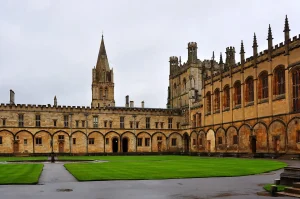
Unlike many universities, Oxford operates on a collegiate system consisting of 39 colleges and six permanent private halls. Each college serves as a self-governing community with its own dining halls, libraries, accommodation, and academic tutors. This structure allows for both personalized mentorship and a strong sense of community, fostering close intellectual engagement.
Admission Standards
Admission to Oxford is famously competitive. Applicants undergo a rigorous process involving personal statements, standardized tests, exemplary academic records, and challenging interviews. With only 15–20% of applicants gaining entry, the system ensures that the university maintains its high standards of academic excellence.
A Broad Range of Disciplines
Oxford offers programs across a vast array of fields—humanities, natural sciences, engineering, medicine, law, business, and social sciences. Whether studying ancient philosophy, quantum physics, or cutting-edge artificial intelligence, students are exposed to world-class faculty and research-intensive curricula that prepare them for leadership roles worldwide.
Research and Innovation
A Global Leader in Research
Oxford consistently ranks among the top universities for research output and global impact. In the Times Higher Education World University Rankings 2025, Oxford retained its number one position for the eighth consecutive year—a testament to its pioneering contributions across disciplines.
Breakthrough Discoveries
Oxford has been at the forefront of scientific discovery for centuries. Some of its most notable achievements include:
- The medical applications of penicillin.
- Advancements in physics and chemistry.
- Groundbreaking research in vaccine development, including the Oxford-AstraZeneca COVID-19 vaccine.
Modern Research Centers
The university hosts specialized research institutes tackling today’s most urgent challenges:
- Artificial Intelligence & Machine Learning
- Climate Change and Sustainability Studies
- Medical Sciences and Neuroscience
- Quantum Physics and Computing
Through these centers, Oxford contributes solutions that address health crises, technological challenges, and environmental concerns on a global scale.
Oxford’s Global Community
Diversity and International Students
Oxford is home to a richly diverse student body. Nearly 45% of its students come from over 160 countries, creating a global learning environment where cultural exchange and international perspectives thrive.
Global Partnerships
The university collaborates with leading institutions, governments, and organizations worldwide. These partnerships range from joint medical research in Africa, to education initiatives in Asia, to sustainability projects in North America. Such collaborations position Oxford as a truly global academic hub.
Scholarships and Accessibility
Despite its prestige, Oxford emphasizes inclusivity. Scholarships such as the Rhodes Scholarship and the Clarendon Fund provide opportunities for talented students regardless of financial background, ensuring that access to world-class education is not limited by wealth.
Campus Life and Student Experience
Balancing Academics and Social Life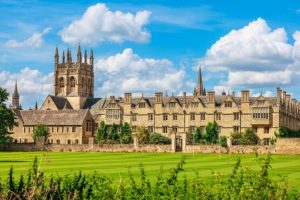
While academic rigor is central to Oxford’s reputation, students also enjoy a rich social and cultural life. Colleges host formal dining events, debates, theatrical productions, and student-run societies covering everything from music and politics to international affairs.
Sports and Traditions
Oxford is renowned for its sporting traditions, most notably the Oxford vs. Cambridge Boat Race on the River Thames, an event watched by millions worldwide. Students also participate in a wide range of athletic activities that build teamwork, resilience, and school spirit.
Libraries and Museums
Oxford’s academic resources are unmatched. The Bodleian Library—one of Europe’s largest—holds more than 13 million printed items, while museums such as the Ashmolean Museum (the oldest public museum in Britain) provide students with access to world-class cultural and historical collections.
Influential Alumni and Global Impact
Political Leaders
Oxford has educated some of the most influential figures in modern history, including Margaret Thatcher, Tony Blair, Bill Clinton, and numerous current world leaders.
Scientific Pioneers
Renowned scientists such as Stephen Hawking, Dorothy Hodgkin, and Tim Berners-Lee (inventor of the World Wide Web) studied or taught at Oxford, leaving legacies that transformed global science and technology.
Writers and Cultural Icons
Oxford has nurtured some of the greatest literary minds, including J.R.R. Tolkien, C.S. Lewis, Oscar Wilde, and T.S. Eliot, whose works continue to inspire readers worldwide.
Business Innovators
From technology entrepreneurs to CEOs of global corporations, Oxford alumni play key roles in shaping the business world and driving economic innovation.
Oxford in the 21st Century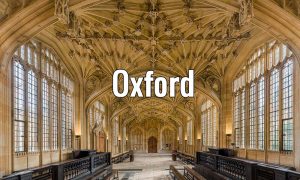
Embracing Digital Transformation
Oxford continues to adapt to the digital age by integrating AI-driven learning platforms, advanced data science programs, and virtual collaboration tools. The university blends centuries-old traditions with modern educational technology, creating a unique academic experience.
Commitment to Sustainability
Responding to climate change, Oxford has launched sustainability initiatives that include achieving carbon neutrality, developing renewable energy projects, and promoting eco-friendly campus practices. These efforts align with the university’s role as a global leader in responsible innovation.
Expanding Inclusivity
Oxford has intensified its outreach programs to include underrepresented groups, offering mentorship initiatives and financial aid packages designed to widen participation and promote diversity within its academic community.
Conclusion
The University of Oxford is far more than a historic seat of learning. It is a living, evolving institution that continues to shape the world through education, research, and cultural influence. For over nine centuries, it has produced leaders, thinkers, and innovators whose contributions transcend national boundaries.
In 2025, Oxford stands as both a guardian of tradition and a pioneer of progress. Its global partnerships, groundbreaking research, and commitment to inclusivity ensure that it remains a central force in solving today’s most pressing challenges. For students, scholars, and researchers seeking excellence, Oxford represents not just an academic destination, but a gateway to opportunity, leadership, and lasting global impact.