
 By admin
The BRICS Alliance: Shaping the Future of Global Power
Introduction
The global balance of power is undergoing a remarkable transformation. For decades, international politics and economics have been dominated by Western institutions such as the United States, the European Union, the International Monetary Fund (IMF), and the World Bank. However, the rise of emerging economies has reshaped this dynamic, giving birth to new alliances that challenge the traditional order. One of the most influential and rapidly evolving blocs is the BRICS group, initially formed by Brazil, Russia, India, China, and South Africa.
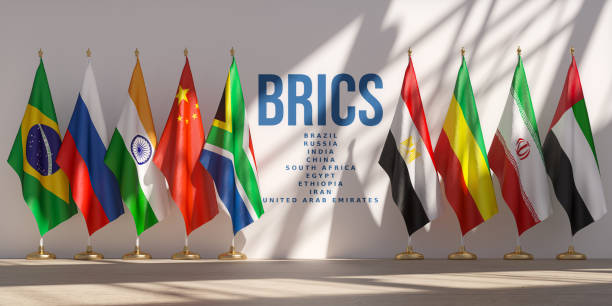
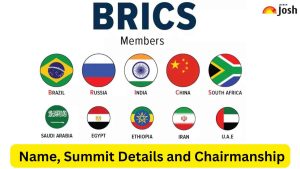
In recent years, the BRICS has expanded its membership to include new players from the Global South, reflecting the aspirations of countries that seek greater influence in world affairs and reduced dependence on Western powers. Today, the alliance has grown into a ten-member coalition, bringing together Brazil, Russia, India, China, South Africa, Egypt, Iran, the United Arab Emirates, Ethiopia, and Indonesia. This diverse group spans multiple continents, economic systems, and political models, yet it shares a common vision: to reshape global governance and amplify the voice of emerging nations.
This article explores the evolution of BRICS, its economic and geopolitical significance, the strategic goals of its members, and the challenges it faces. Ultimately, the BRICS represents more than just an economic partnership—it symbolizes a profound shift toward a multipolar world order.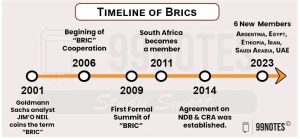
Origins and Evolution of BRICS
From BRIC to BRICS
The concept of BRIC was first introduced in 2001 by economist Jim O’Neill, who highlighted the growth potential of Brazil, Russia, India, and China. The idea gained traction as these economies experienced rapid expansion in the early 2000s. In 2009, the first BRIC summit was held in Yekaterinburg, Russia, marking the group’s formal entry into global politics. South Africa joined in 2010, turning BRIC into BRICS and reinforcing the bloc’s representation of emerging economies across multiple continents.
Expansion to Ten Members
In 2024, the BRICS underwent its most significant transformation with the inclusion of five new members: Egypt, Ethiopia, Iran, the United Arab Emirates, and Indonesia. This expansion reflected the bloc’s desire to increase its geopolitical reach, economic influence, and representation of the Global South.
- Brazil – A regional power in Latin America, rich in natural resources.
- Russia – A military superpower with vast energy reserves.
- India – A rapidly growing democracy and technology hub.
- China – The world’s second-largest economy and a global manufacturing leader.
- South Africa – Africa’s most industrialized nation and a gateway to the continent.
- Egypt – A strategic Middle Eastern and African power.
- Ethiopia – One of the fastest-growing economies in Africa despite internal challenges.
- Iran – A major energy producer with significant geopolitical influence.
- United Arab Emirates – A wealthy petro-monarchy and financial hub.
- Indonesia – The largest economy in Southeast Asia and a rising regional leader.
This diverse mix strengthens the bloc’s ability to influence global trade, energy markets, and international diplomacy.
Economic Power of BRICS
GDP and Trade Influence
Together, BRICS countries represent nearly 45% of the world’s population and contribute over 32% of global GDP (2025 estimates)—a share that continues to rise as Western economies experience slower growth. The bloc is particularly powerful in terms of natural resources, energy production, and manufacturing capacity.
- China and India serve as manufacturing and technology hubs.
- Russia, Iran, and the UAE dominate energy exports.
- Brazil and Indonesia are major agricultural and commodity exporters.
- Africa’s role (South Africa, Egypt, Ethiopia) enhances the bloc’s access to minerals, food security, and growing markets.
Financial Institutions and Currency Goals
One of the BRICS’ most ambitious projects is the creation of alternative financial systems to reduce dependence on the U.S. dollar. The New Development Bank (NDB), established in 2014, finances infrastructure and sustainable development projects across member states. Additionally, discussions about creating a common BRICS currency or strengthening the use of national currencies in trade aim to challenge the dominance of the dollar in global markets.
Geopolitical Significance
Counterbalance to Western Dominance
The BRICS has become a geopolitical counterweight to institutions like the G7 and NATO. By expanding to include Middle Eastern and African powers, the bloc strengthens its bargaining position in global forums such as the United Nations, the World Trade Organization, and climate negotiations.
Energy and Resource Diplomacy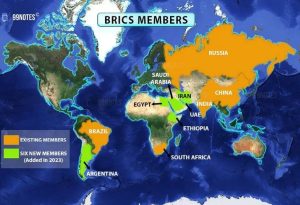
Energy security is at the heart of the BRICS strategy. With members like Russia, Iran, and the UAE dominating oil and gas exports, and countries like Brazil and Ethiopia focusing on renewable resources, the bloc has the potential to shape future energy markets. Cooperation in green technology, nuclear energy, and sustainability projects further enhances its influence.
Regional Leadership
Each BRICS member represents a regional sphere of influence:
- Brazil in Latin America.
- Russia in Eurasia.
- India and China in Asia.
- South Africa, Egypt, and Ethiopia in Africa.
- Iran and the UAE in the Middle East.
- Indonesia in Southeast Asia.
This geographic diversity makes BRICS one of the most globally representative coalitions.
Challenges Facing BRICS
Internal Rivalries
Despite its potential, the BRICS faces significant internal challenges. Rivalries such as India–China border disputes, Iran–UAE tensions, and differing political ideologies could undermine unity.
Economic Disparities
The group includes both advanced economies like China and smaller, fragile states like Ethiopia. Balancing the interests of such diverse members is complex, especially in coordinating economic policies.
Relations with the West
The BRICS seeks to reduce Western dominance without entirely severing ties. Many members maintain strong trade relations with the U.S. and Europe, making it difficult to adopt unified stances on sanctions, conflicts, or global crises.
The Future of BRICS
Toward a Multipolar World
The BRICS expansion highlights the global shift from a unipolar system dominated by the U.S. to a multipolar world where multiple centers of power coexist. The group’s success depends on its ability to institutionalize cooperation, strengthen financial mechanisms, and promote technological innovation.
Digital and Technological Cooperation
BRICS countries are investing heavily in digital infrastructure, artificial intelligence, space exploration, and cybersecurity. Joint technological initiatives could reduce reliance on Western companies and foster new ecosystems of innovation.
Global South Solidarity
Perhaps the most important role of BRICS is serving as a voice for the Global South. By promoting fairer trade, sustainable development, and inclusive governance, the bloc positions itself as an advocate for emerging nations often marginalized in international decision-making.
Conclusion
The BRICS alliance has evolved from a simple economic concept into a powerful geopolitical force. With ten members spanning multiple continents, cultures, and political systems, it represents the growing influence of the Global South in shaping the world order. While challenges remain—ranging from internal rivalries to economic disparities—the group’s expansion demonstrates its ambition to create a more balanced, multipolar global system.
As BRICS continues to expand its financial, technological, and diplomatic reach, it is poised to play a defining role in the 21st century’s geopolitical and economic landscape. The future of global governance may no longer be dictated solely by the West but increasingly shaped by the voices of diverse and rising powers united under the BRICS banner.
Building AdSense Success in 2025