
 By admin
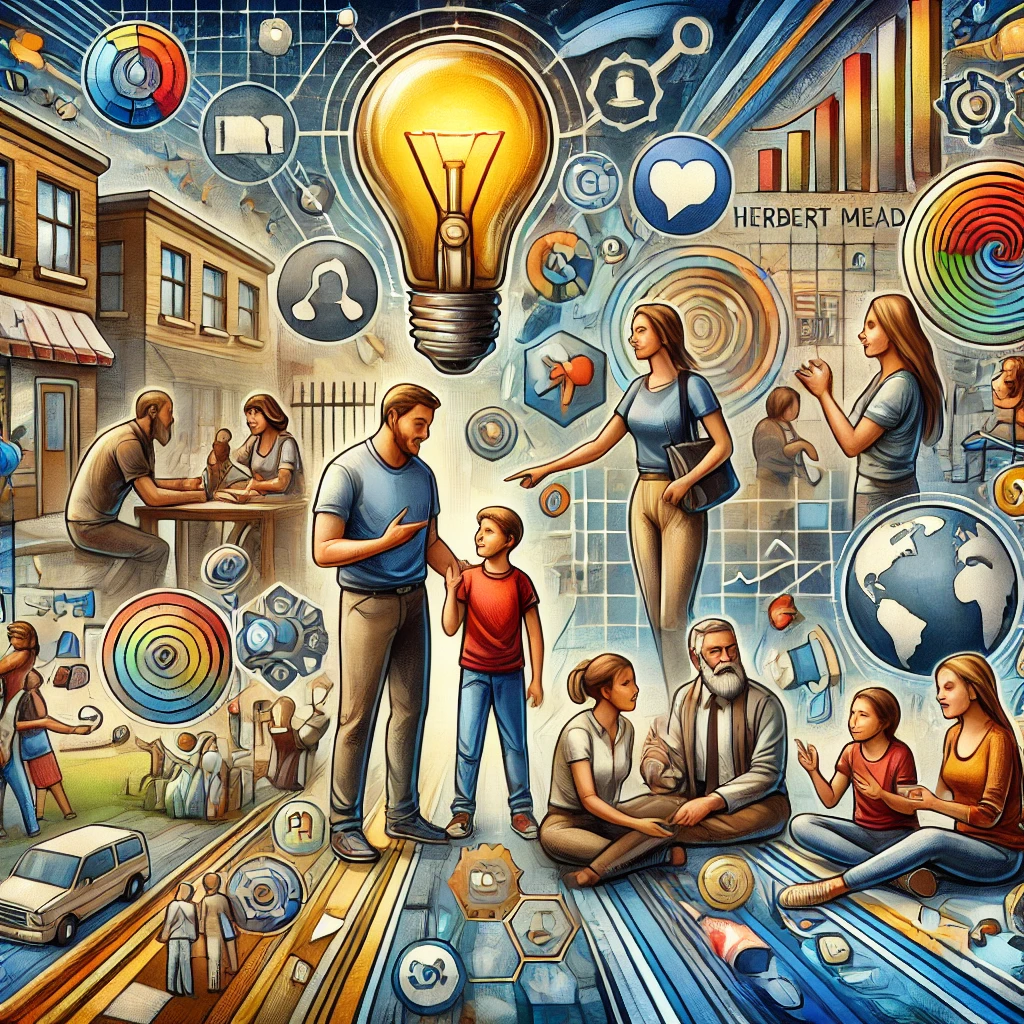
Understanding how past experiences shape our lives is a cornerstone of sociological and psychological research. One of the most notable theories in this area is sociologist Herbert Mead’s concept of social behaviorism. This theory emphasizes the pivotal role of social interactions in the formation of personality, diverging from traditional views that attribute personality development to biological drives. Mead’s work, alongside contributions from other scholars, underscores how the interplay of social experiences, family, education, and peer groups molds individuals’ behaviors, beliefs, and self-perception.

Social Behaviorism: The Foundation of Personality
Herbert Mead’s social behaviorism posits that personality emerges not in isolation but through interactions with others. According to Mead, the “self” develops only when individuals engage with others. Without these social interactions, personality remains undeveloped. For example, children who grow up in prolonged isolation often face severe developmental delays, both physically and mentally. This illustrates the necessity of social exchanges for personal growth.
Central to Mead’s theory is the idea of symbolic interaction. Humans, unlike animals, assign meaning to words and symbols. For instance, when a dog obeys a command to sit, it does so to receive a treat, not because it understands the reason behind the command. Humans, however, use language and symbols to communicate complex ideas, intentions, and emotions. This capacity allows individuals to anticipate others’ responses, shaping their own actions accordingly. For example, when driving, a person might anticipate another driver’s actions based on observed behavior, such as a sudden acceleration indicating a lane change. Mead referred to this anticipatory understanding as “taking the role of the other.”
The Looking-Glass Self: Reflection and Identity
An extension of Mead’s theory is the concept of the “looking-glass self,” which suggests that individuals form self-perceptions based on how they believe others view them. If someone perceives that others see them as attractive, they are likely to view themselves similarly. Conversely, negative perceptions from others can lead to diminished self-esteem. This mirroring process illustrates how deeply social interactions influence self-identity.

During early development, children mimic the behaviors of significant figures in their lives, such as parents. Through role-playing activities like “playing house,” they internalize social norms and expectations. As children grow, they learn to navigate various roles, adapting to different social contexts. This process of role-taking becomes increasingly sophisticated with age, highlighting the dynamic nature of personality development.
The Role of Family in Shaping Personality
Despite differing opinions among sociologists, there is widespread agreement on the profound impact of family on personality development. From infancy, individuals rely on their families for nurturing, trust, and cultural values. Families impart fundamental communication skills, beliefs, and social norms. The saying, “it takes a village to raise a child,” resonates with the idea that both family and the broader environment play crucial roles in child development.
Interestingly, socioeconomic status significantly influences parenting styles and priorities. For example, lower-class families often emphasize obedience and conformity, reflecting the structured nature of their own work environments. In contrast, upper-class families value creativity and independent thinking, traits that align with professional autonomy. A 2003 survey in the United States revealed that these differences often extend to disciplinary methods, with lower-class families more likely to use physical punishment to enforce obedience.
The Influence of Education
School environments also play a critical role in shaping personality. Children spend a significant portion of their day at school, where they engage with peers and authority figures. Schools introduce children to peer groups—individuals with similar interests—which become instrumental in socialization. Peer groups provide a space for children to discuss shared interests such as fashion, music, and hobbies, often serving as a refuge from adult supervision.
Gender and racial dynamics also influence interactions within school settings. Boys often gravitate toward physical or competitive activities, while girls lean toward artistic or collaborative pursuits. These preferences are reflected in academic choices, with boys frequently pursuing physical sciences or technology-related fields and girls gravitating toward humanities and arts. These early preferences can shape future career paths and social roles.
The Role of Peer Groups and Adolescence
Adolescence marks a significant shift in social dynamics as individuals increasingly identify with peer groups. This period often involves a quest for independence from parental influence, accompanied by heightened sensitivity to peer opinions. Parents’ concerns about their children’s social circles are well-founded, as peer groups heavily influence behaviors, attitudes, and decision-making during these formative years.
The Impact of Mass Media
Mass media, particularly television, profoundly affects personality development and social behavior. Studies have shown that excessive television consumption can diminish creativity and promote passivity. The United States, for example, leads in television ownership and viewing hours, raising concerns about its long-term effects on social and cognitive development. Beyond television, social media and digital platforms increasingly shape self-perception and social interactions, particularly among younger generations.
Critiques and Broader Perspectives
While Mead’s theories have significantly contributed to understanding personality development, they are not without criticism. Some scholars argue that his emphasis on societal influences underestimates the role of individual agency and biological factors. Erik Erikson, another influential sociologist, proposed a contrasting theory suggesting that personality evolves through a series of stages across the lifespan, rather than being predominantly shaped in early childhood.

Erikson’s theory acknowledges that life experiences, such as career changes, relationships, and personal challenges, continue to shape personality well into adulthood. This perspective aligns with the observation that individuals respond to life events in diverse ways, influenced by their unique circumstances and social environments.
Conclusion
The interplay of past experiences, family influences, education, peer groups, and mass media shapes individuals’ personalities and life trajectories. Herbert Mead’s social behaviorism and related theories provide valuable insights into how social interactions mold self-perception and behavior. While debates about the relative contributions of societal, biological, and individual factors persist, the consensus remains that socialization is a lifelong process. Recognizing the complexity of this process allows us to appreciate the diverse ways in which past experiences influence who we are and who we become.