
 By admin
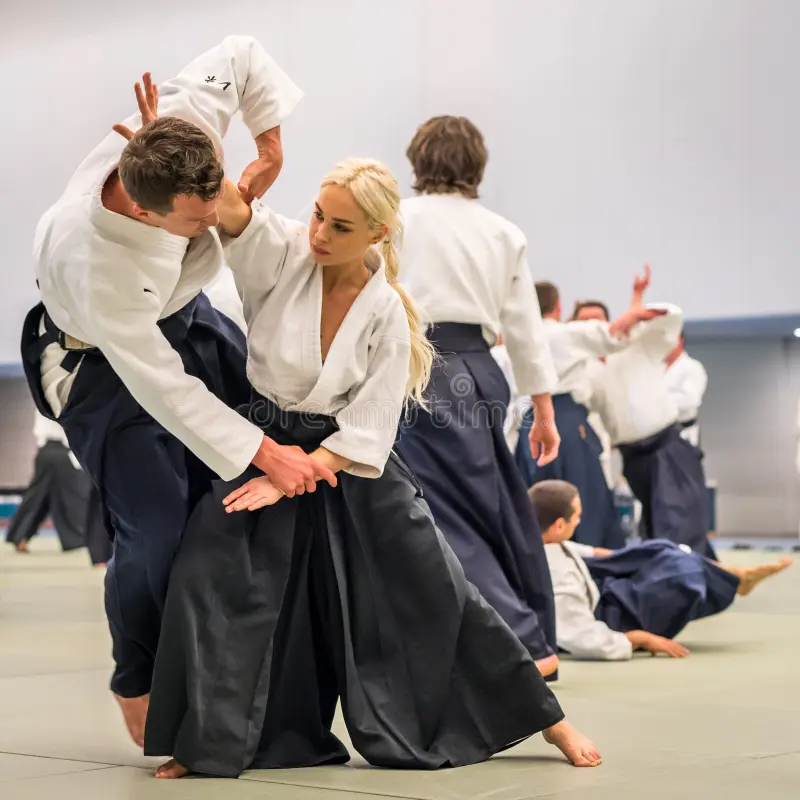
The Dynamics of Aikido Techniques: A Modern Perspective on Flow, Form, and Philosophy
Introduction
Aikido, often described as the “art of peace,” is a Japanese martial art that transcends the boundaries of traditional combat. Unlike martial arts that emphasize brute strength or aggressive domination, Aikido focuses on blending with an opponent’s energy and redirecting it to neutralize conflict without causing harm. Founded in the early 20th century by Morihei Ueshiba—reverently known as O-Sensei—Aikido has evolved into a globally practiced discipline characterized by fluid movements, inner harmony, and profound philosophical principles.
One of the most intriguing aspects of Aikido is its dynamic nature. Unlike many martial arts with rigid forms and highly codified systems, Aikido encourages adaptability, personal interpretation, and continuous evolution. This fluidity is both its strength and its challenge. This article explores the core techniques of Aikido, examines the variations that exist across dojos, and explains how the art has evolved while preserving its foundational principles.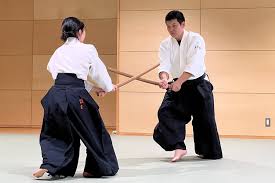
The Philosophy Behind Aikido Techniques
Harmony Over Confrontation
At the heart of Aikido is the principle of non-resistance. Ueshiba believed that true martial arts should protect both the defender and the attacker, striving for reconciliation rather than destruction. This philosophy is encapsulated in the idea of “not fighting force with force”. Instead, Aikido practitioners seek to harmonize with the energy of an attack, using that momentum to subdue or redirect the opponent.
Techniques as Expressions of Philosophy
Aikido techniques are not merely physical maneuvers—they are expressions of philosophical and spiritual principles. Each movement reflects the core tenets of respect, balance, timing, and spatial awareness. Practitioners often spend years refining techniques not just for effectiveness, but to internalize the principles of centeredness, calm under pressure, and compassion.
The Evolution of Aikido Techniques
From Ueshiba to the World
As Ueshiba’s students matured in their practice, he encouraged them to establish their own dojos. This dissemination of knowledge was not rigid but open to interpretation, as long as the principles remained intact. Over time, this led to the emergence of different styles and techniques, each infused with the unique insights of its founder.
Some of the most well-known branches include: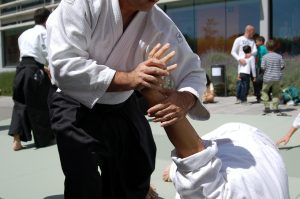
-
Aikikai – The most traditional form, associated with the Aikido Hombu Dojo in Tokyo.
-
Yoshinkan – A more structured and militaristic form, often used for police training in Japan.
-
Shodokan (Tomiki) – Introduces competitive elements and is considered more modern and pragmatic.
-
Iwama Ryu – Preserves traditional weapons training alongside empty-hand techniques.
Despite stylistic differences, all legitimate schools emphasize the non-violent, harmonious essence of Aikido.
The Fluid Nature of Technique
Because Aikido adapts to the energy of the attacker, it resists categorization into rigid forms. That said, most dojos share a core set of techniques that provide the building blocks for more advanced application. These techniques are not fixed but are practiced with variations to encourage adaptability.
Core Techniques of Aikido: A Breakdown
1. Ikkyo (First Teaching)
This foundational technique involves elbow control and wrist manipulation to bring the attacker to the ground. The grip targets the ulnar nerve, creating discomfort that facilitates compliance. Ikkyo is often the first technique taught in dojos and is essential for understanding Aikido’s principles of control and redirection.
2. Nikyo (Second Teaching)
Nikyo applies an adductive wrist lock, looping the attacker’s arm and causing sharp nerve pressure. It’s particularly effective for pain compliance and is often used in law enforcement training due to its control without excessive force.
3. Sankyo (Third Teaching)
This technique produces an upward spiraling pressure through the wrist and arm. It targets joints and ligaments, making it a powerful tool for immobilizing an opponent without striking.
4. Yonkyo (Fourth Teaching)
Yonkyo emphasizes pain compliance by applying knuckles to the radial nerve of the forearm. Both hands are used to grip and control the attacker’s arm, making it a practical yet painful deterrent.
5. Gokyo (Fifth Teaching)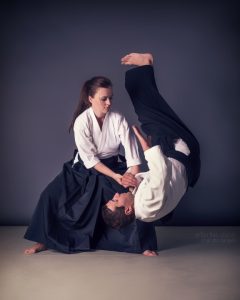
A variant of Ikkyo, Gokyo involves an inverted wrist grip and is typically used during weapon disarmament, such as against a knife (tanto). This makes it crucial for advanced practitioners and those involved in self-defense training.
6. Shihonage (Four-Direction Throw)
This iconic technique folds the attacker’s arm back over the shoulder, locking the joint and enabling a powerful throw. It symbolizes the core Aikido idea of surrounding energy—redirecting an attack from multiple directions.
7. Kotegaeshi (Wrist Turn or Reversal)
A wrist-turning throw, Kotegaeshi uses a supinating wristlock to off-balance and project the opponent. It’s visually dynamic and effective in situations where space is limited.
8. Kokyunage (Breath Throw)
Kokyunage refers to a broad category of throws based on timing, flow, and breath control. These techniques rely less on joint locks and more on intuitive movement and blending, showcasing Aikido’s artistic side.
9. Iriminage (Entering Throw)
This powerful throw requires the practitioner to enter the attacker’s space, blending and redirecting their force in a sweeping motion. Resembling a clothesline, Iriminage is a favorite for demonstrating Aikido’s assertive yet non-aggressive nature.
10. Tenchinage (Heaven-and-Earth Throw)
In this technique, one hand moves high like the heavens, and the other low like the earth. This opposing motion disrupts the attacker’s balance and results in a flowing throw. It’s often practiced to develop spatial awareness and dual movement coordination.
Modern Applications of Aikido Techniques
Aikido in Law Enforcement and Security
Due to its emphasis on control without harm, Aikido has found a place in police and security training. Techniques like Nikyo and Yonkyo are particularly valuable for pain compliance and joint control, allowing officers to subdue suspects without excessive force.
Self-Defense and Civilian Use
Aikido’s emphasis on timing, awareness, and non-resistance makes it suitable for self-defense. While it may not be as aggressive as other martial arts, its techniques are designed to neutralize threats efficiently. Practitioners learn how to control distance, off-balance opponents, and remain calm under pressure.
Aikido and Mental Health
Beyond physical defense, Aikido also contributes to mental and emotional well-being. The focus on breath, posture, and presence develops mindfulness, while the cooperative nature of training fosters empathy and trust. Many practitioners report increased self-confidence, stress reduction, and emotional regulation as benefits of long-term practice.
The Role of Weapons in Aikido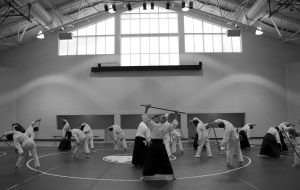
Bokken, Jo, and Tanto
Traditional Aikido incorporates weapons such as the bokken (wooden sword), jo (short staff), and tanto (wooden knife). Training with these weapons enhances understanding of distance, timing, and movement. It also connects modern practice with samurai traditions, honoring the martial roots of Aikido.
Weapons as Tools of Understanding
Incorporating weapons into training is not about preparing for battle but about enhancing movement precision and internalizing principles. For example, sword work teaches alignment and intention, while staff work develops circular motion and full-body coordination.
Training Environment: Dojo Culture and Etiquette
Aikido is not just a physical discipline but also a cultural one. The dojo is a space of mutual respect, humility, and growth. Students bow to each other, to the mat, and to portraits of Ueshiba as a gesture of gratitude. These rituals help maintain a sense of discipline and reverence that elevates practice beyond mere technique.
Conclusion
The dynamics of Aikido techniques reflect a unique blend of martial efficacy, spiritual philosophy, and artistic expression. While rooted in traditional Japanese values, Aikido continues to evolve, adapting to modern contexts without losing its essence. From joint locks and throws to breath control and philosophical insight, each technique offers a path toward self-mastery and peaceful resolution.
In a world increasingly marked by conflict, the teachings of Aikido remain profoundly relevant. By learning to harmonize with, rather than resist, the forces we encounter—both physical and emotional—we move closer to the ideal of a more peaceful, compassionate society.
The Aerobic Power of Personal Trainers