
 By admin
Introduction
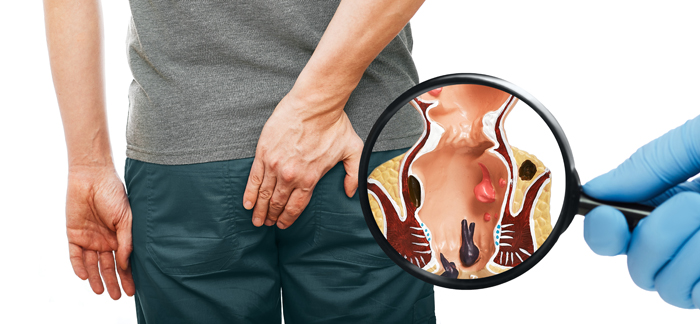
Hemorrhoids—commonly known as piles—remain one of the most widespread anorectal conditions affecting millions of people globally. Despite being common, they are often misunderstood, overlooked, or self-diagnosed incorrectly. Modern medical research reveals that hemorrhoids are not merely “swollen veins,” but a complex disorder involving the degeneration, displacement, or dysfunction of normal anal vascular cushions responsible for continence and pressure regulation.
Although hemorrhoids are rarely dangerous, they can severely affect quality of life by causing pain, bleeding, itching, discomfort, and emotional distress. With advancing research, evolving therapies, and improved diagnostic tools, the understanding and management of hemorrhoidal disease have drastically transformed over the past decade. Today, treatment ranges from conservative and lifestyle-based strategies to minimally invasive office procedures and cutting-edge surgical techniques.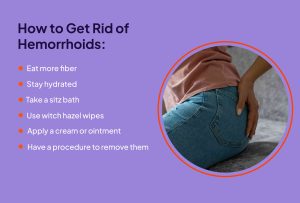
This professionally rewritten article provides a detailed, modern, and evidence-based overview of hemorrhoids—covering causes, risk factors, diagnosis, classification, symptoms, complications, and the full spectrum of treatment options, along with proven prevention strategies. It is designed to serve both as a medical guide and an educational resource for patients, caregivers, and health professionals.
I. Understanding Hemorrhoids: A Modern Medical Perspective
Hemorrhoids are vascular structures located in the anal canal, composed of blood vessels, connective tissue, smooth muscle, and mucosa. These cushions play a key physiological role in maintaining continence. Hemorrhoidal disease occurs when these structures enlarge, become symptomatic, or prolapse due to multiple underlying mechanisms.
A. Pathophysiology: How Hemorrhoids Develop
Recent medical studies suggest that hemorrhoids result from a combination of:
- Weakening of connective tissue supporting the cushions
- Increased venous pressure in the hemorrhoidal plexus
- Downward displacement of anal cushions
- Vascular dilation and impaired blood flow
- Chronic straining and abnormal bowel habits
This modern understanding moves away from the outdated belief that hemorrhoids are simply varicose veins. Instead, they are now viewed as a disorder of normal anatomical structures undergoing pathological change.
B. Major Causes and Risk Factors
Hemorrhoids stem from multiple genetic, physiological, dietary, and lifestyle influences:
1. Genetic and Connective Tissue Weakness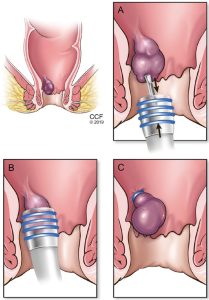
A strong hereditary component exists. Families with weak collagen or connective tissue disorders are at higher risk.
2. Increased Intra-Abdominal Pressure
This remains the primary mechanical cause and can result from:
- Chronic constipation
- Hard stools
- Prolonged sitting on the toilet
- Persistent coughing
- Heavy lifting
3. Dietary Patterns
Low-fiber diets, dehydration, and excessive red meat intake are strongly associated with hemorrhoidal disease. Research also shows that spicy foods may worsen symptoms in some individuals.
4. Pregnancy-Related Hemorrhoids
Pregnancy combines hormonal changes with increased abdominal pressure and venous compression, making it one of the most common causes of hemorrhoids in women.
5. Obesity and Sedentary Lifestyle
These factors contribute to venous congestion and decreased pelvic floor support.
6. Pelvic Tumors or Rectal Diseases
Although rare, colorectal tumors can obstruct venous drainage and trigger hemorrhoidal symptoms—making proper medical evaluation critical.
II. Classification of Hemorrhoids: Internal, External, and Mixed
Understanding the type of hemorrhoids is essential for choosing the best treatment.
A. Internal Hemorrhoids
Found above the dentate line and covered by mucous membrane, they are generally painless.
They are graded as follows: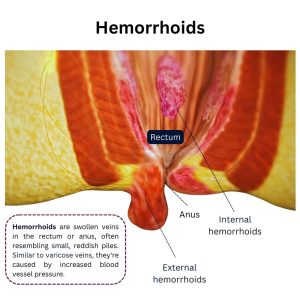
- Grade I: No prolapse; may bleed.
- Grade II: Prolapse with straining but retract spontaneously.
- Grade III: Prolapse requiring manual reduction.
- Grade IV: Irreducible prolapse with risk of strangulation and pain.
B. External Hemorrhoids
These occur below the dentate line and are covered with highly sensitive skin (anoderm). Thrombosed external hemorrhoids cause sudden, severe, sharp pain and appear as bluish lumps.
C. Mixed Hemorrhoids
A combination of both internal and external components, usually seen in advanced cases.
III. Symptoms and Differential Diagnosis
Misdiagnosis is common because several anorectal disorders present with similar symptoms. Rectal bleeding, in particular, should never be automatically attributed to hemorrhoids.
A. Common Symptoms
1. Bright Red Rectal Bleeding
Often painless and noted on toilet paper or in the bowl—typical of internal hemorrhoids.
2. Prolapse
A bulging sensation or visible tissue protruding during bowel movements.
3. Pain and Thrombosis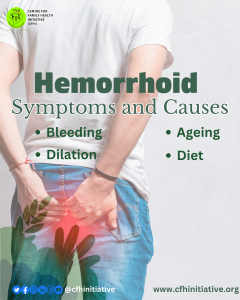
Sudden, sharp pain suggests thrombosed external hemorrhoids or strangulated internal hemorrhoids.
4. Itching, Mucus, and Irritation
Prolapsed tissues may produce mucus, causing inflammation and pruritus.
B. Conditions That Mimic Hemorrhoids
Physicians must rule out:
- Colorectal cancer
- Anal fissure
- Inflammatory bowel disease
- Rectal polyps
- Infections
- Rectal prolapse
This makes proper medical evaluation essential, especially for adults over 45.
IV. Potential Complications
If untreated or severe, hemorrhoids can lead to complications:
1. Thrombosed External Hemorrhoid
Painful clot formation requiring early surgical intervention for relief.
2. Strangulated Internal Hemorrhoid
Loss of blood supply leading to necrosis—an emergency.
3. Chronic Blood Loss
Long-term bleeding can cause iron-deficiency anemia.
4. Infection or Abscess
Rare but possible in ulcerated or necrotic hemorrhoids.
V. Diagnosis: A Modern Clinical Approach
Accurate diagnosis involves:
A. History and Physical Examination
Evaluation of bowel habits, bleeding patterns, and pain.
B. Digital Rectal Examination (DRE)
Initial assessment of anorectal tone and abnormalities.
C. Anoscopy
Direct visualization of internal hemorrhoids, essential for grading.
D. Colonoscopy
Recommended for:
- Patients over age 45–50
- Individuals with significant bleeding
- Patients with family history of colon cancer
- Persistent symptoms or red flags
VI. Treatment: From Lifestyle Changes to Advanced Surgical Procedures
A tiered approach guides modern hemorrhoid management.
A. Conservative Treatment (First-Line for Grade I–II)
1. Dietary Fiber (25–35 g/day)
Fiber supplements such as psyllium improve stool texture and reduce straining.
2. Hydration
Drinking 1.5–2 liters of water daily supports bowel regularity.
3. Topical Treatments
Include:
- Corticosteroid creams
- Local anesthetics
- Astringents (witch hazel)
- Anti-inflammatory suppositories
These offer symptom relief but do not cure hemorrhoids.
4. Oral Phlebotonics
Micronized purified flavonoid fraction (MPFF) helps improve venous tone and reduce bleeding.
5. Warm Sitz Baths
Improve blood flow and relieve discomfort.
B. Office-Based, Minimally Invasive Procedures
These procedures are effective for Grades II–III and have short recovery times.
1. Rubber Band Ligation (RBL)
The gold standard for internal hemorrhoids. A rubber band cuts off blood supply, causing the hemorrhoid to shrink and detach.
2. Sclerotherapy
Injection of sclerosant to shrink tissue—ideal for small internal hemorrhoids or patients on anticoagulants.
3. Infrared Coagulation (IRC)
Uses infrared light to coagulate vessels and reduce blood flow.
4. Electrocoagulation
Effective for bleeding internal hemorrhoids.
C. Surgical Options (For Severe or Refractory Cases)
1. Hemorrhoidectomy (Excisional Surgery)
Used for severe Grade III–IV, mixed, or external hemorrhoids. It offers the highest cure rate but requires longer recovery.
2. Stapled Hemorrhoidopexy (PPH)
A circular stapler repositions prolapsed hemorrhoids and reduces blood flow. Less painful but not ideal for external components.
3. Doppler-Guided Hemorrhoidal Artery Ligation (HAL/THD)
A modern technique identifying and ligating hemorrhoidal arteries via Doppler ultrasound.
4. Thrombectomy
Immediate clot removal for acutely thrombosed external hemorrhoids.
VII. Prevention Strategies: Lifestyle Medicine for Long-Term Relief
Prevention is the most effective way to avoid recurrent hemorrhoidal disease.
A. Optimize Diet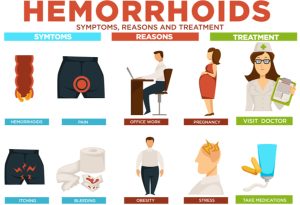
- High-fiber foods
- Adequate hydration
- Limiting processed foods and red meats
B. Improve Bowel Habits
- Avoid straining
- Avoid unnecessary prolonged sitting
- Respond promptly to the urge to defecate
C. Increase Physical Activity
Moderate exercise enhances bowel motility and strengthens pelvic support.
D. Maintain Healthy Body Weight
Reduces abdominal pressure.
E. Avoid Heavy Lifting or Use Proper Technique
Prevents venous congestion and cushion displacement.
Conclusion
Hemorrhoids are a common but highly manageable condition, deeply rooted in the anatomy and physiology of the anal canal. Modern medicine now views hemorrhoidal disease as a dynamic interaction between lifestyle factors, genetics, bowel habits, and vascular changes. With today’s advanced diagnostic tools and an extensive range of therapeutic options—from diet-based prevention to minimally invasive procedures and precision surgeries—patients can achieve effective, long-lasting relief.
Early evaluation of rectal bleeding or persistent symptoms is essential to rule out serious diseases and initiate tailored treatment. Combining medical guidance with proactive, healthy lifestyle habits remains the most powerful long-term solution for preventing hemorrhoids and supporting digestive and pelvic health.
How to Manage Allergies Without Overspending