
 By admin
Introduction
The Earth’s inner layers have long fascinated scientists, adventurers, and storytellers alike. From the imaginative tales of Jules Verne’s Journey to the Center of the Earth to the cutting-edge technologies employed by modern geophysicists, humanity’s curiosity about the planet’s interior remains insatiable. But despite centuries of exploration and scientific advancement, the question still stands: has anyone truly reached the center—or even the deep interior—of the Earth?
In this article, we’ll dive deep into the scientific understanding of Earth’s structure, examine the furthest depths humans have reached, explore the technological and natural limits of subterranean exploration, and highlight what modern science is doing to peer further into the planet than ever before.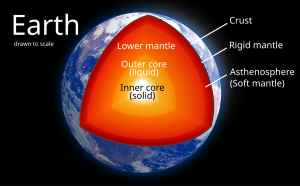
The Structure of the Earth: Layers Beneath Our Feet
The Crust: Earth’s Outermost Layer
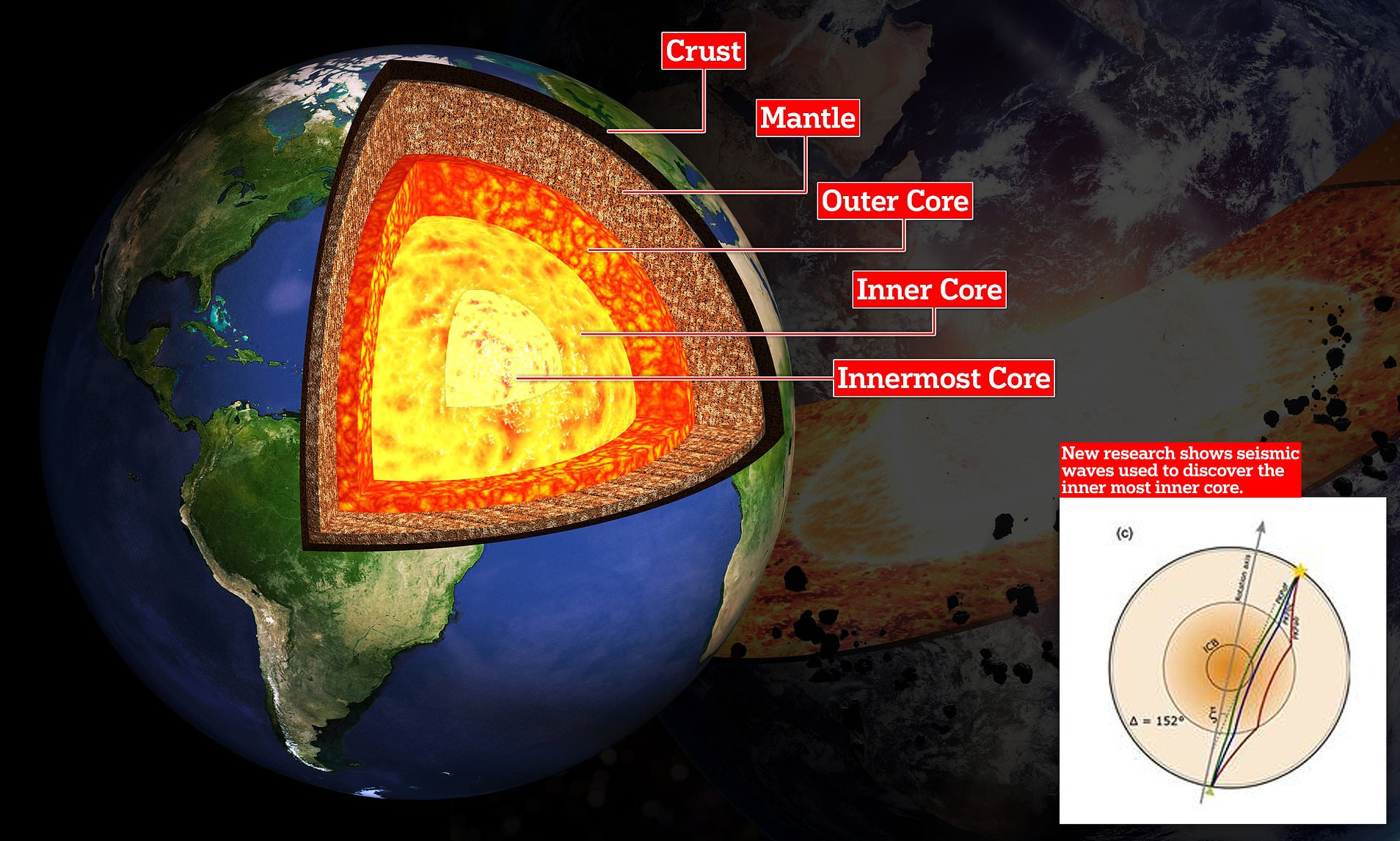
The Earth’s crust is the outermost shell, extending about 5 to 70 kilometers thick. It includes the land we live on and the ocean floors. The crust is relatively cool and solid, composed of continental and oceanic plates that float on the softer mantle below.
The Mantle: Vast and Viscous
Beneath the crust lies the mantle, which extends to about 2,900 kilometers deep. Though solid, the mantle behaves like a viscous fluid over geological time, slowly convecting and driving tectonic plate movement. The mantle is subdivided into the upper and lower mantle, with varying temperature and pressure conditions.
The Outer Core: Liquid Metal
At depths between 2,900 and 5,150 kilometers lies the outer core. This layer consists mostly of molten iron and nickel. It is responsible for generating the Earth’s magnetic field through the dynamo effect—convection and rotation of liquid metal produce electric currents that sustain the magnetic field.
The Inner Core: A Solid Mystery
At the very center, starting around 5,150 kilometers and extending to the Earth’s radius at about 6,371 kilometers, lies the solid inner core. Temperatures here are estimated to reach up to 6,000°C, comparable to the surface of the sun. The immense pressure keeps this layer solid despite the heat.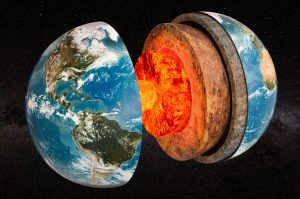
The Deepest Humans Have Ever Drilled
The Kola Superdeep Borehole: Humanity’s Greatest Depth
The deepest humans have ever physically reached into the Earth is the Kola Superdeep Borehole in Russia. Drilled between 1970 and 1992, it reached a depth of 12.26 kilometers (7.6 miles), penetrating a portion of the continental crust.
Despite its impressive depth, the Kola Borehole barely scratches the surface—literally. It only reached about 0.2% of the way to the Earth’s center. The high temperatures (180°C instead of the expected 100°C) and pressure encountered at that depth made further drilling impossible with existing technology.
Other Notable Drilling Projects
Other deep drilling attempts include the German Continental Deep Drilling Program (KTB) and Japan’s Chikyu Hakken Project, focused on oceanic drilling. These projects aim to understand crustal dynamics, seismic activity, and Earth’s early history. However, none have surpassed the depth of the Kola Borehole.
Natural Probes into the Earth
Volcanic Eruptions and Lava Samples
While humans can’t physically access the deep mantle, volcanoes bring up materials from deep within the Earth. Lava samples from volcanic eruptions often carry mantle xenoliths, providing clues about Earth’s inner composition.
Diamonds: Messengers from the Mantle
Natural diamonds are formed under extreme pressure and temperature conditions, often more than 150 kilometers deep in the mantle. These diamonds sometimes trap inclusions—minerals and fluids from the deep mantle—offering a unique window into Earth’s inaccessible regions.
Why Can’t We Reach the Earth’s Core?
Technological Barriers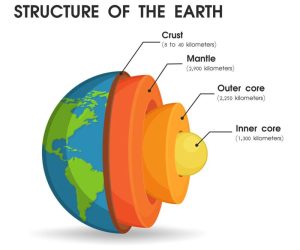
Reaching the Earth’s core is a monumental challenge. Temperatures and pressures increase drastically with depth. At the inner core, pressure is over 3.5 million times atmospheric pressure, and the temperature is hotter than most furnaces can withstand.
No known drilling equipment can operate under such conditions. Even the most advanced drill bits wear down quickly under the intense pressure and heat of just the upper crust.
Economic and Energy Limitations
Drilling deeper becomes exponentially more expensive. It requires massive energy, robust engineering, and materials that don’t yet exist in commercial quantities or applications. The logistics of removing debris, maintaining borehole integrity, and cooling equipment present additional hurdles.
How We Study Earth’s Interior Without Going There
Seismic Waves: Nature’s X-ray
The most reliable method of studying Earth’s internal structure is seismology. By analyzing how seismic waves from earthquakes travel through different layers, scientists infer the density, composition, and state (solid or liquid) of those layers.
P-waves (primary waves) can travel through solids and liquids, while S-waves (secondary waves) only travel through solids. The way these waves bend, reflect, or disappear as they move through the planet reveals critical information.
Computational Modeling
With modern computing power, geophysicists create complex simulations of Earth’s interior using seismic data, material science, and fluid dynamics. These models help scientists understand how the core and mantle interact, and how tectonic processes affect surface geology.
Geoneutrino Detection
Geoneutrinos—particles emitted by radioactive decay within the Earth—offer a glimpse into the composition and heat generation of Earth’s interior. Detecting these elusive particles with underground observatories helps scientists estimate the amount of radiogenic heat fueling plate tectonics and volcanic activity.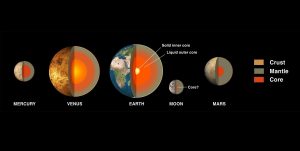
Modern Theories and Discoveries
A Layered Inner Core?
Recent seismic studies suggest the inner core may have multiple layers with varying properties. Some models indicate an innermost core, possibly aligned differently in crystal structure from the surrounding inner core. This revelation could reshape our understanding of Earth’s thermal and magnetic evolution.
Superionic Iron?
In 2021, simulations revealed that iron in the inner core might exist in a superionic state—a strange condition between solid and liquid where atoms remain fixed in a lattice, but protons flow freely. This may explain how the solid inner core contributes to Earth’s magnetic field dynamics.
Could We Reach the Core in the Future?
Theoretical Proposals
Some speculative ideas have been proposed to reach deeper into the Earth, including:
-
Laser drilling technologies: Still in early stages, with theoretical designs aiming to vaporize rock instead of physically drilling through it.
-
Magma-powered boreholes: Using geothermal energy to power deeper drilling efforts.
-
Nanobot exploration: Hypothetical nanotechnology could one day survive extreme depths and transmit data from within the Earth.
While intriguing, these concepts are far from feasible with current technology.
Conclusion
So, has anyone reached the center of the Earth? The answer is a resounding no—and we are still extremely far from doing so. Despite ambitious projects like the Kola Superdeep Borehole, humans have only penetrated a fraction of the Earth’s outer crust.
Yet, through the clever use of seismic waves, advanced simulations, and natural geological messengers, scientists continue to uncover remarkable insights about our planet’s interior. While reaching the core may remain a dream for now, each discovery brings us closer to understanding the engine that powers our planet.
The deep Earth remains one of the final frontiers—uncharted, mysterious, and waiting to reveal its secrets.