
 By admin
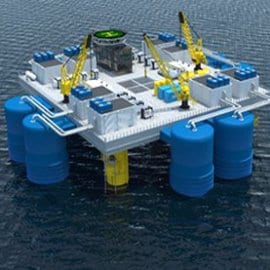
Alternative Energy from the Ocean: Unlocking the Power of Ocean Thermal Energy Conversion (OTEC)
Introduction
As the global demand for sustainable and renewable energy intensifies, scientists, engineers, and policymakers are increasingly turning their attention to the vast and largely untapped resources of the world’s oceans. Among the most promising innovations in this domain is Ocean Thermal Energy Conversion (OTEC)—a technology that harnesses the natural temperature differences between warm surface seawater and cold deep ocean water to generate electricity.
Originally conceptualized in 1881 by the French engineer Jacques D’Arsonval, OTEC has evolved from a theoretical concept into a functioning experimental reality. Today, facilities such as the Natural Energy Laboratory of Hawaii Authority serve as testing grounds for this innovative energy solution. Despite its enormous potential, OTEC remains underdeveloped due to technological and economic challenges.
This article explores the principles, types, benefits, challenges, and future prospects of OTEC, offering a comprehensive and modern perspective on how ocean-based energy could play a pivotal role in the global transition toward clean and sustainable power.
Understanding Ocean Thermal Energy Conversion (OTEC)
The Basic Principle Behind OTEC
OTEC operates on a simple yet powerful concept: the temperature gradient between warm surface water (typically around 25°C) and cold deep-sea water (around 5°C). This temperature difference can be used to run a heat engine, which in turn generates electricity.
The process involves transferring heat from the warm water to a working fluid or directly using seawater to produce vapor. This vapor drives a turbine connected to a generator, producing electricity. The vapor is then cooled using cold deep-sea water, condensing it back into a liquid and completing the cycle.
This continuous cycle makes OTEC a renewable and reliable energy source, unlike solar or wind energy, which depend on weather conditions.
Types of OTEC Systems
OTEC technology can be categorized into three main types, each with its own mechanisms, advantages, and challenges.
1. Closed-Cycle OTEC
How It Works
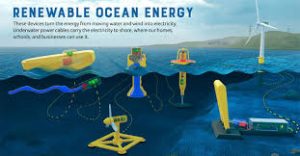
Closed-cycle OTEC systems use a working fluid with a low boiling point, such as ammonia or propane. The process follows these steps:
- Warm surface seawater heats the working fluid in a heat exchanger.
- The fluid vaporizes due to its low boiling point.
- The vapor expands and spins a turbine connected to a generator.
- Cold deep-sea water condenses the vapor back into liquid form.
- The cycle repeats continuously.
Advantages
- Efficient and controlled system
- Suitable for consistent electricity generation
- Can be integrated with industrial processes
Limitations
- Requires complex heat exchangers
- High initial infrastructure costs
- Potential environmental concerns if leaks occur
2. Open-Cycle OTEC
How It Works
Open-cycle OTEC eliminates the need for an intermediate fluid. Instead, it uses seawater directly:
- Warm surface seawater is introduced into a low-pressure chamber.
- The reduced pressure causes the water to boil, producing steam.
- The steam drives a turbine to generate electricity.
- Cold seawater is used to condense the steam back into liquid.
Unique Benefit: Desalination
One of the most significant advantages of open-cycle OTEC is its ability to produce desalinated freshwater as a byproduct. This makes it especially valuable for island nations and coastal regions facing water scarcity.
Challenges
- Requires precise vacuum conditions
- Lower efficiency compared to closed-cycle systems
- Engineering complexity in large-scale applications
3. Hybrid-Cycle OTEC
Concept and Innovation
Hybrid-cycle OTEC combines elements of both closed and open systems to maximize efficiency and output. Although still largely theoretical and experimental, hybrid systems aim to:
- Use closed-cycle processes to generate electricity
- Utilize that electricity to support open-cycle operations
- Increase freshwater production through dual open-cycle integration
Potential Advantages
- Higher overall efficiency
- Dual benefits: electricity and freshwater
- Enhanced scalability for future applications
Current Status
Hybrid OTEC systems are still under research and development, with ongoing studies exploring their feasibility and economic viability.
Applications Beyond Electricity Generation
OTEC is not limited to power production. Its versatility allows it to support a wide range of additional applications, making it a multi-functional energy solution.
1. Desalination and Freshwater Production
Open-cycle and hybrid OTEC systems can produce large quantities of clean drinking water, addressing one of the most pressing global challenges—water scarcity.
2. Air Conditioning and Refrigeration
Cold deep-sea water can be used directly for cooling purposes in buildings, reducing the need for conventional air conditioning systems. This application is particularly effective in tropical coastal regions.
3. Aquaculture and Mariculture
The nutrient-rich deep ocean water brought to the surface can support marine farming operations, including fish, shellfish, and algae cultivation. This opens opportunities for sustainable food production.
4. Industrial and Chemical Processing
Closed-cycle OTEC systems can be adapted for chemical processing and industrial cooling, enhancing their economic viability.
Environmental Impact of OTEC
Positive Environmental Contributions
- Zero greenhouse gas emissions during operation
- Minimal air pollution, unlike fossil fuel-based energy
- Sustainable energy source with continuous availability
OTEC represents a clean energy alternative that aligns with global climate goals and environmental sustainability initiatives.
Potential Environmental Concerns
Despite its advantages, OTEC is not without environmental risks:
- Marine ecosystem disruption due to water intake and discharge
- Thermal pollution affecting local ocean temperatures
- Impact on marine life from infrastructure and operations
Careful environmental assessments and technological improvements are necessary to mitigate these risks.
Economic and Technical Challenges
High Initial Costs
The primary barrier to widespread OTEC adoption is the high capital investment required for infrastructure, including:
- Offshore platforms
- Heat exchangers
- Deep-sea pipelines
Technological Limitations
- Efficiency depends on small temperature differences
- Engineering challenges in harsh marine environments
- Maintenance complexity and costs
Limited Commercial Deployment
Currently, OTEC remains in the experimental stage, with only a few pilot projects in operation worldwide, including those at the Natural Energy Laboratory of Hawaii Authority.
Recent Developments and Future Outlook
Advancements in Technology
Recent innovations in materials science, heat exchanger design, and offshore engineering are helping to reduce costs and improve efficiency. Governments and private companies are increasingly investing in OTEC research.
Global Interest and Investment
Countries with tropical coastlines, such as Japan, India, and island nations in the Pacific, are actively exploring OTEC as a viable energy solution.
Integration with Other Renewable Sources
OTEC can complement other renewable energy systems like solar and wind, providing a stable and continuous energy supply.
A Vision for the Future
With continued research, funding, and international collaboration, OTEC could become a cornerstone of the global renewable energy portfolio. Its ability to generate electricity, produce freshwater, and support sustainable industries makes it uniquely valuable.
Conclusion
Ocean Thermal Energy Conversion (OTEC) stands at the intersection of innovation, sustainability, and necessity. From its origins in the visionary work of Jacques D’Arsonval to its modern-day experimental applications, OTEC represents a bold step toward harnessing the immense power of the oceans.
While challenges related to cost, technology, and environmental impact remain, the potential benefits far outweigh the obstacles. As the world seeks cleaner and more reliable energy sources, OTEC offers a compelling solution—one that not only generates power but also addresses critical issues such as water scarcity and food security.
Investing in OTEC today could unlock a future where the oceans serve as a sustainable engine for global development, powering communities while preserving the planet.
The Evolution and Future of Solar Energy