
 By admin
Introduction
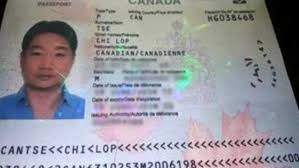
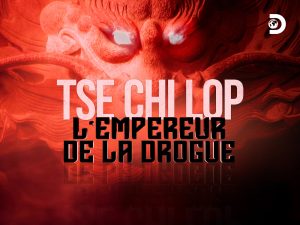
Tse Chi Lop is a name that reverberates through the corridors of global law enforcement agencies. Once a low-profile immigrant in Canada, Tse transformed himself into one of the world’s most elusive and dangerous drug lords. His rise to power, operating behind the scenes for over a decade, earned him comparisons to notorious figures like Joaquín “El Chapo” Guzmán and Pablo Escobar. By the time he was captured in 2021, Tse had become the alleged mastermind behind a multibillion-dollar drug empire known as The Company or Sam Gor, a syndicate responsible for flooding Asia-Pacific with synthetic drugs, especially methamphetamine.
In this article, we delve deep into Tse’s journey from his humble beginnings to the heights of criminal power, analyzing the operations of his syndicate, his influence over the drug trade in Asia, and how international collaboration finally brought him down.
1. Humble Beginnings: From Guangdong to Toronto
1.1 Early Life in China
Tse Chi Lop was born in Guangdong Province, China, in 1963. Very little is publicly known about his early years, but what is clear is that he grew up in an environment that would later shape his strategic mindset and adaptability. Like many others in southern China, he was influenced by the underworld culture that had flourished in Hong Kong and Guangdong for decades.
1.2 Immigration to Canada
In the late 1980s, Tse immigrated to Toronto, Canada, seeking a better life. He settled in the city’s Chinese community and blended into the background of everyday Canadian life. But beneath the surface, Tse was already establishing connections with organized crime syndicates.
By the early 1990s, he became affiliated with the Big Circle Boys, a criminal organization formed by former members of the Red Guards during China’s Cultural Revolution. The Big Circle Boys had expanded operations into North America, specializing in heroin trafficking, gambling, extortion, and money laundering.
2. The Birth of a Criminal Empire
2.1 Early Criminal Activity
Tse was first arrested in the United States in 1998 for heroin trafficking. He was sentenced to nine years in prison and served time in a federal facility. This incarceration proved to be a turning point. While behind bars, he is believed to have built deeper connections with international crime networks, especially those linked to Southeast Asia’s Golden Triangle, a region historically associated with opium production.
2.2 Formation of Sam Gor
Upon his release in the mid-2000s, Tse returned to Asia with a new vision. He began building what would become known as Sam Gor, a highly sophisticated drug trafficking syndicate that combined multiple Asian triads including:
-
The 14K Triad
-
Wo Shing Wo
-
Bamboo Union
-
Sun Yee On
-
Big Circle Boys
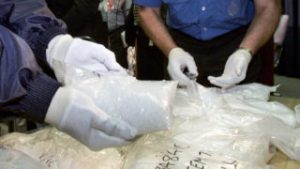
(AUSTRALIA OUT) Customs officers display part of a large haul of drugs siezed by customs and police. It contained 184 kilograms of heroin and 79 kilos of a new amphetamine drug called Ice, 21 December 2000. SMH Picture by PETER RAE (Photo by Fairfax Media via Getty Images/Fairfax Media via Getty Images via Getty Images)
These groups cooperated under a loosely centralized umbrella organization, with Tse operating as the suspected mastermind and coordinator. Sam Gor was notable for its corporate-style structure, treating drug trafficking like a multinational business—complete with logistics departments, financial officers, and quality control.
3. Global Operations and Impact
3.1 Synthetic Drug Production in the Golden Triangle
Tse and Sam Gor revolutionized the drug trade in Asia by shifting focus from traditional opiates to synthetic drugs like methamphetamine and MDMA. These drugs were:
-
Cheaper to produce
-
Easier to transport
-
More addictive
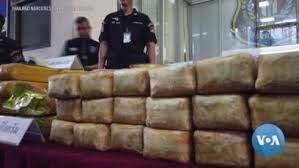
Sam Gor’s manufacturing operations were centered in Myanmar, especially in lawless zones controlled by ethnic militias in Shan State. Massive, industrial-scale labs churned out tons of meth each year, destined for markets in Australia, Japan, South Korea, Thailand, and New Zealand.
3.2 Sophisticated Logistics and Laundering
Tse’s operation utilized legitimate shipping routes to conceal massive drug shipments, hiding product in tea packages, electronics, and furniture. With a deep understanding of international finance, the syndicate laundered billions through casinos, real estate, and shell companies in Hong Kong, Macau, and mainland China.
Estimates from the United Nations Office on Drugs and Crime (UNODC) suggest that Sam Gor was generating up to $17 billion annually in meth sales alone by the late 2010s.
4. Eluding Capture: The Invisible Boss
4.1 Low Profile Strategy
Unlike flamboyant drug lords like Escobar, Tse operated with remarkable discretion. He rarely used digital communication, frequently changed locations, and lived under multiple aliases. His ability to stay off the radar frustrated international law enforcement for years.
4.2 Intelligence Gathering and International Cooperation
By 2018, authorities in Australia—which had become a major target for Sam Gor’s meth—spearheaded Operation Kungur, a global initiative involving agencies such as:
-
Australian Federal Police (AFP)
-
U.S. DEA
-
Interpol
-
Royal Canadian Mounted Police (RCMP)
-
Chinese Public Security Bureau
After years of surveillance, Tse’s network was gradually exposed. Undercover agents tracked financial flows, intercepted shipments, and gathered intelligence on the syndicate’s structure.
5. The Arrest and What Comes Next
5.1 The Capture in Amsterdam
On January 22, 2021, Tse Chi Lop was finally arrested at Amsterdam’s Schiphol Airport while attempting to fly to Canada. The arrest was based on an Interpol Red Notice issued by Australia. Dutch authorities acted swiftly, ending Tse’s years of invisibility.
His arrest sent shockwaves through Asia’s criminal underworld and was seen as a major victory in the global fight against synthetic drugs.
5.2 Extradition and Legal Proceedings
Tse is currently undergoing extradition proceedings to Australia, where he faces charges related to drug trafficking and organized crime. The trial is expected to be one of the most significant in modern criminal justice history, shedding light on the inner workings of multinational drug syndicates.
6. The Legacy of Tse Chi Lop
6.1 Structural Impact on the Drug Trade
Even after his arrest, authorities believe that Sam Gor’s decentralized structure allows it to continue operations. Tse’s genius lay in creating a resilient, adaptable organization rather than relying solely on personal control. The model he developed may continue to influence organized crime for years to come.
6.2 Lessons for Global Law Enforcement
Tse’s case underscores the importance of:
-
Cross-border cooperation
-
Intelligence sharing
-
Targeting financial networks, not just drugs
Law enforcement agencies now recognize that tackling global drug syndicates requires the same level of sophistication as dismantling terrorist cells or corporate fraud.
Conclusion
The story of Tse Chi Lop is a cautionary tale of how globalization, weak law enforcement coordination, and innovative criminal enterprise can produce one of the most powerful drug syndicates in history. From a quiet immigrant in Canada to the alleged kingpin of an empire that spanned continents, Tse’s journey is as extraordinary as it is dangerous.
His arrest marks a critical point in the fight against synthetic drugs, but the battle is far from over. As global demand for meth and other illicit substances continues to rise, new players may emerge, perhaps inspired by the very model Tse built. The challenge for law enforcement is to stay one step ahead in a game where the stakes are life, death, and billions of dollars.
The Psychology Behind High Heels