
 By admin
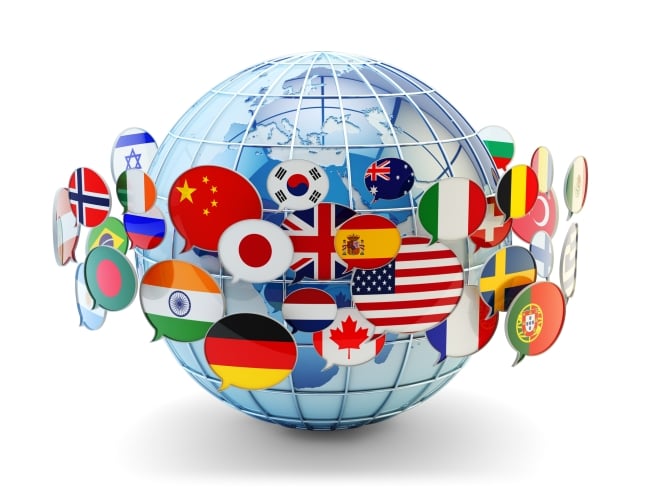
Why Do Humans Speak 7,000 Different Languages Instead of Just One?
Introduction
Language is one of humanity’s most powerful inventions. It allows us to communicate, share ideas, preserve culture, and pass knowledge across generations. Yet, one of the most fascinating facts about human communication is that there are not just a handful of languages—but around 7,000 distinct languages spoken across the globe today. This raises a fundamental question: why do humans speak so many different languages instead of just one universal tongue?
From the perspective of evolution, culture, and geography, the diversity of languages makes sense. They developed over thousands of years in different regions, shaped by migration, isolation, social structures, and even the environment. This article explores the historical, cultural, and scientific reasons behind the existence of multiple languages, while also discussing the implications for globalization, technology, and the future of communication.
The Origins of Linguistic Diversity
Early Human Communication
The earliest humans likely communicated with simple sounds, gestures, and symbols long before fully developed languages emerged. As human groups migrated and spread across continents, these early systems of communication evolved into more complex languages.
- Geographic isolation played a key role: small groups separated by mountains, rivers, or oceans developed distinct ways of speaking.
- Over time, these differences became permanent, giving rise to unique languages.
The Tower of Babel Effect
While the story of the Tower of Babel is a myth, it reflects a real truth about human history—language diversification is natural. Just as species adapt to their environments, languages evolve and split when groups of people no longer interact regularly.
Factors That Led to 7,000 Languages
1. Geography and Isolation
Mountains, deserts, forests, and oceans have historically kept human groups apart. For instance:
- In Papua New Guinea, a country with rugged terrain and isolated valleys, over 800 languages are spoken today—more than in any other nation.
- In contrast, flat and connected regions like the Middle East developed larger language families with shared features.
2. Migration and Settlement
As humans migrated, they adapted their languages to new realities. New words and grammatical structures emerged to describe plants, animals, tools, and social systems specific to each region.
- The Indo-European language family, which includes English, Spanish, Hindi, and Russian, spread widely due to migration and conquest.
- Meanwhile, smaller communities preserved local dialects that eventually became distinct languages.
3. Culture and Identity
Language is more than communication—it is a symbol of cultural identity. Communities often develop unique languages or dialects to distinguish themselves from outsiders.
- For example, Catalan in Spain or Quechua in South America are not just languages but also emblems of cultural pride.
- Preserving a distinct language helps protect traditions, stories, and heritage.
4. Politics and Power
Empires and states have historically shaped language diversity. Some rulers promoted a single “official language,” while others allowed linguistic pluralism.
- Latin spread across Europe through the Roman Empire, later evolving into French, Spanish, Italian, Portuguese, and Romanian.
- In contrast, countries like India or Nigeria host dozens of official languages because of their multicultural and multiethnic compositions.
5. Evolution of Dialects
Every language changes with time. Pronunciation, grammar, and vocabulary shift naturally. When groups stop interacting frequently, their dialects drift apart until they become mutually unintelligible—essentially new languages.
The Science Behind Language Change
Linguistic Evolution
Linguists compare language evolution to biological evolution:
- Just as species branch into new forms, languages branch into new dialects and eventually new languages.
- Sound shifts, grammar simplifications, and borrowed words from other tongues accelerate this process.
Role of Environment
The environment also influences language:
- Communities living in dense forests often develop short, sharp sounds that carry better.
- Communities in open plains may evolve tonal or melodic languages that travel further.
Social Influence
Social hierarchies, trade, and intermarriage influence vocabulary. For example, English absorbed thousands of words from French after the Norman Conquest, reshaping the language we know today.
Why Didn’t Humanity Stick to One Language?
Natural Drift Over Time
Even if humanity began with a single language, natural changes over thousands of years would inevitably lead to splits.
The Role of Distance
Before modern technology, communities living even 50 kilometers apart could become linguistically isolated. With no need for mutual understanding, their languages would gradually diverge.
The Function of Diversity
Multiple languages served practical purposes:
- They created in-group bonds, strengthening community identity.
- They limited outsiders’ ability to understand secret information, which was important for security and survival.
Modern Globalization and Language
Dominant Global Languages
In today’s interconnected world, some languages have risen to global prominence:
- English is the most widely studied second language, dominating international business, science, and technology.
- Mandarin Chinese, Spanish, Arabic, and French are also spoken by hundreds of millions worldwide.
The Role of Technology
Digital platforms like Google Translate, AI-based translation tools, and multilingual social media are bridging communication gaps. Yet, instead of erasing language diversity, technology often preserves it by giving smaller languages a platform.
Language Endangerment
While globalization increases communication, it also threatens smaller languages. UNESCO estimates that one language disappears every two weeks as younger generations shift to dominant tongues. By 2100, half of the world’s languages may vanish unless preservation efforts succeed.
Benefits of Linguistic Diversity
Cognitive Advantages
Research shows that bilingual or multilingual individuals enjoy:
- Improved memory and problem-solving skills.
- Better adaptability to new environments.
- Delayed onset of age-related cognitive decline.
Cultural Richness
Every language carries unique stories, traditions, and worldviews. Losing a language means losing an irreplaceable part of human history.
Scientific Value
Studying different languages helps scientists understand how the human brain processes communication, shedding light on both cognition and social interaction.
The Future: Will We Ever Have One Global Language?
The Push Toward a Common Tongue
Some argue that English—or perhaps a simplified international language like Esperanto—could eventually become a universal mode of communication.
The Case Against It
However, a single global language would erase cultural richness. The loss of linguistic diversity would mean the loss of unique perspectives and histories encoded in each language.
A Likely Scenario
Instead of a single language, the future will likely see:
- One or two global lingua francas (such as English and Mandarin) for international use.
- Thousands of regional and community languages preserved through education, cultural initiatives, and digital media.
Conclusion
The fact that humans speak around 7,000 languages is not a flaw but a reflection of our diversity, adaptability, and creativity. Language diversity emerged naturally from geography, migration, cultural identity, and social evolution. While globalization is shaping a world where some languages dominate, smaller languages still hold immense cultural and scientific value.
The challenge of the 21st century is not to replace linguistic diversity with one universal tongue but to balance global communication with the preservation of local languages. Our future should celebrate the richness of human expression while ensuring that no community loses its voice.
How Childhood Wounds Shape Adult Behavior