
 By admin

Hantavirus: A Comprehensive Review of Virology, Epidemiology, Clinical Features, Diagnosis, Treatment, and Prevention
Introduction
Hantaviruses are among the most dangerous zoonotic pathogens affecting humans today. Although infections are relatively uncommon compared with widespread viral illnesses such as influenza or COVID-19, hantavirus infections remain a major global health concern because of their potential to cause severe respiratory and renal disease with high mortality rates. These viruses are naturally maintained in rodent populations and are transmitted to humans primarily through exposure to contaminated rodent urine, saliva, or droppings.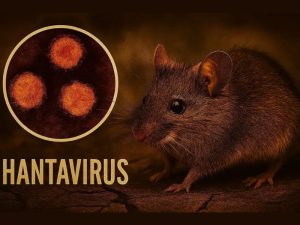
Over the past several decades, hantavirus outbreaks have attracted growing attention from infectious disease specialists, epidemiologists, and public health authorities worldwide. The emergence of Hantavirus Pulmonary Syndrome (HPS), also known as Hantavirus Cardiopulmonary Syndrome (HCPS), in the Americas and Hemorrhagic Fever with Renal Syndrome (HFRS) in Europe and Asia has demonstrated the devastating effects these viruses can have on human health.
The global significance of hantavirus infections extends beyond clinical medicine. Environmental changes, urbanization, climate variability, deforestation, and increasing human interaction with wildlife habitats have all contributed to altered rodent populations and increased opportunities for viral transmission. As a result, hantavirus infections are increasingly recognized as an important example of the connection between environmental health, animal reservoirs, and human disease.
This article provides a professional and updated overview of hantavirus infections, including their virology, classification, transmission patterns, epidemiology, pathogenesis, clinical manifestations, diagnosis, treatment strategies, prevention methods, and future research priorities.
Understanding Hantaviruses
What Are Hantaviruses?
Hantaviruses belong to the family Hantaviridae within the order Bunyavirales. They are enveloped RNA viruses primarily carried by rodents, although certain insectivores and bats may also serve as hosts for related viral strains. Unlike many viruses that cause disease in their animal hosts, hantaviruses usually establish persistent infections in rodents without causing apparent illness.
Each hantavirus strain is typically associated with a specific rodent species. Humans become accidental hosts when they inhale aerosolized viral particles released from infected rodent excreta.
The two major clinical syndromes caused by hantaviruses are:
- Hantavirus Pulmonary Syndrome (HPS/HCPS) — mainly found in North and South America
- Hemorrhagic Fever with Renal Syndrome (HFRS) — primarily reported in Europe and Asia
Both conditions are characterized by vascular dysfunction and increased capillary permeability, although the target organs differ.
Virology and Classification
Structure of the Virus
Hantaviruses are single-stranded, negative-sense RNA viruses. Their genome consists of three RNA segments:
- S segment — encodes nucleocapsid proteins
- M segment — encodes glycoproteins
- L segment — encodes RNA polymerase
The virus enters human cells through interactions with endothelial cell receptors, leading to widespread vascular leakage and inflammation.
Major Hantavirus Species
Different hantavirus species are associated with distinct geographic regions and clinical outcomes.
Important Hantaviruses in the Americas
- Sin Nombre virus
- Andes virus
- Black Creek Canal virus
- Laguna Negra virus
These viruses are mainly associated with HPS/HCPS.
Important Hantaviruses in Europe and Asia
- Hantaan virus
- Puumala virus
- Seoul virus
- Dobrava-Belgrade virus
These strains are commonly linked to HFRS.
Andes Virus: A Unique Concern
Most hantaviruses are not transmitted from person to person. However, Andes virus represents an important exception because limited human-to-human transmission has been documented among close contacts in South America. This characteristic makes Andes virus especially important in outbreak preparedness and infection control.
Reservoirs and Modes of Transmission
Rodents as Natural Reservoirs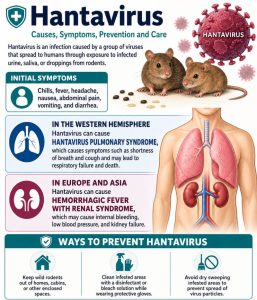
Rodents are the principal carriers of hantaviruses. Common reservoir species include:
- Deer mice
- Cotton rats
- Rice rats
- Bank voles
- Field mice
These animals shed the virus through:
- Urine
- Saliva
- Feces
The virus can remain infectious in contaminated environments for extended periods under favorable conditions.
How Humans Become Infected
Human infection most commonly occurs through inhalation of aerosolized viral particles. Activities that increase exposure risk include:
- Cleaning rodent-infested buildings
- Sweeping contaminated areas
- Entering abandoned cabins
- Agricultural work
- Forestry activities
- Camping in wilderness areas
- Handling rodents or rodent nests
Direct rodent bites are less common but may also transmit infection.
Environmental and Occupational Risk Factors
Certain occupations and environmental conditions increase hantavirus exposure risk:
High-Risk Occupations
- Farmers
- Forestry workers
- Pest control personnel
- Construction workers
- Military personnel
- Laboratory animal handlers
Environmental Risk Factors
- Poor sanitation

- Rural housing
- Food storage issues
- Climate changes affecting rodent populations
- Deforestation and habitat disruption
Global Epidemiology
Geographic Distribution
Hantavirus infections occur worldwide, but distribution depends heavily on the ecology of rodent hosts.
Asia
Asia reports the highest number of HFRS cases globally, especially in:
- China
- South Korea
- Russia
China alone accounts for a significant proportion of worldwide hantavirus infections.
Europe
In Europe, hantavirus infections are most commonly linked to Puumala virus. Northern and Central European countries experience periodic outbreaks associated with fluctuations in rodent populations.
Americas
HPS cases occur throughout:
- United States
- Canada
- Argentina
- Chile
- Brazil
- Paraguay
Although fewer cases occur annually compared with HFRS, HPS often carries a much higher mortality rate.
Seasonal Patterns
Hantavirus infections often show seasonal variation linked to rodent breeding cycles and human outdoor activities. Increased rainfall, food availability, and ecological changes can trigger rodent population surges and increase transmission risk.
Public Health Surveillance
Surveillance systems are critical for detecting outbreaks and monitoring trends. Modern public health strategies include:
- Rodent surveillance
- Laboratory reporting systems
- Contact tracing
- Environmental monitoring
- International disease reporting networks
Pathogenesis of Hantavirus Disease
Vascular Leakage and Immune Dysfunction
The hallmark of hantavirus disease is increased vascular permeability. Rather than causing extensive direct tissue destruction, hantaviruses primarily disrupt endothelial cell function and trigger excessive immune activation.
This results in:
- Plasma leakage
- Hypotension
- Edema
- Shock
- Organ dysfunction
Organ Involvement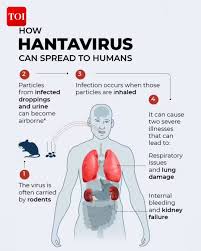
In HPS/HCPS
The lungs and cardiovascular system are predominantly affected. Pulmonary edema can rapidly progress to respiratory failure.
In HFRS
The kidneys and vascular system are the primary targets, leading to:
- Acute kidney injury
- Hemorrhage
- Hypotension
- Electrolyte imbalance
Clinical Manifestations
Early Symptoms
Initial hantavirus symptoms are often non-specific and resemble influenza-like illnesses.
Common early manifestations include:
- Fever
- Chills
- Fatigue
- Muscle aches
- Headache
- Nausea
- Vomiting
- Abdominal pain
- Dizziness
Because these symptoms overlap with many infectious diseases, early diagnosis can be difficult.
Hantavirus Pulmonary Syndrome (HPS)
Prodromal Phase
The disease usually begins with fever and muscle pain lasting several days.
Cardiopulmonary Phase
Patients may suddenly develop:
- Severe shortness of breath
- Pulmonary edema
- Hypoxia
- Tachycardia
- Shock
Respiratory failure can progress rapidly within hours, requiring emergency intensive care.
Mortality
HPS carries a high fatality rate, often ranging between 30% and 50% depending on the viral strain and availability of advanced medical care.
Hemorrhagic Fever with Renal Syndrome (HFRS)
Clinical Phases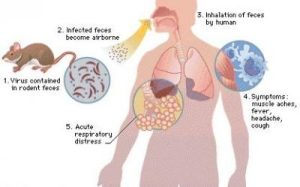
HFRS classically progresses through several stages:
- Febrile phase
- Hypotensive phase
- Oliguric phase
- Diuretic phase
- Recovery phase
Common Manifestations
- Fever
- Bleeding tendencies
- Thrombocytopenia
- Low blood pressure
- Acute kidney injury
- Reduced urine output
Severity varies significantly depending on the infecting virus.
Mild Versus Severe Disease
Puumala virus infections are generally milder, while Hantaan and Dobrava viruses may cause severe complications and higher mortality.
Diagnosis of Hantavirus Infection
Clinical Evaluation
Accurate diagnosis requires careful assessment of:
- Symptoms

- Travel history
- Occupational exposure
- Rodent exposure
- Environmental risks
Clinicians should maintain suspicion in patients presenting with unexplained fever and respiratory or renal symptoms following rodent exposure.
Laboratory Testing
Serology
Serological tests detect hantavirus-specific antibodies and remain one of the most important diagnostic tools.
Molecular Testing
Polymerase Chain Reaction (PCR) can identify viral RNA, especially during early infection.
Additional Laboratory Findings
Common abnormalities include:
- Thrombocytopenia
- Elevated hematocrit
- Leukocytosis
- Proteinuria
- Elevated creatinine
Differential Diagnosis
Hantavirus infection may resemble:
- Influenza
- COVID-19
- Leptospirosis
- Dengue fever
- Sepsis
- Malaria
- Bacterial pneumonia
Timely differentiation is essential because disease progression may be rapid.
Treatment and Clinical Management
Supportive Care
Currently, no universally effective antiviral cure exists for hantavirus infections. Therefore, supportive medical care remains the cornerstone of treatment.
Management of HPS
Patients with severe HPS often require:
- Intensive care monitoring
- Oxygen therapy
- Mechanical ventilation
- Hemodynamic support
- Vasopressors
- Careful fluid management
In critical cases, extracorporeal membrane oxygenation (ECMO) may improve survival.
Management of HFRS
Treatment strategies for HFRS include:
- Fluid and electrolyte correction
- Blood pressure stabilization
- Renal monitoring
- Dialysis when necessary
Ribavirin
Ribavirin has shown some benefit in certain HFRS cases when administered early, but evidence for effectiveness in advanced HPS remains limited.
Importance of Early Recognition
Early diagnosis significantly improves survival outcomes because rapid supportive intervention can reduce severe cardiopulmonary and renal complications.
Prevention and Control Strategies
Rodent Control
The most effective prevention strategy is minimizing contact with infected rodents.
Essential Prevention Measures
- Seal holes and gaps in buildings
- Store food securely
- Eliminate rodent nesting areas
- Dispose of garbage properly
- Use rodent traps safely
Safe Cleaning Procedures
When cleaning rodent-infested areas:
- Wear gloves and protective equipment
- Ventilate enclosed spaces
- Spray contaminated surfaces with disinfectant
- Avoid dry sweeping or vacuuming
- Dispose of contaminated materials carefully
Improper cleaning can aerosolize viral particles and increase infection risk.
Public Education
Public awareness campaigns are essential in endemic regions. Education should emphasize:
- Safe cleaning practices
- Early symptom recognition
- Occupational protection
- Environmental sanitation
Infection Control for Andes Virus
Because Andes virus may spread between humans under rare circumstances, additional precautions such as isolation and contact tracing may be necessary during outbreaks.
Public Health Importance
Emerging Infectious Disease Threat
Hantaviruses highlight the growing importance of zoonotic diseases in global health. Human encroachment into wildlife habitats and climate-related ecological changes may increase future outbreak risks.
Economic and Healthcare Burden
Severe hantavirus infections can result in:
- Intensive care hospitalization
- Long recovery periods
- Loss of productivity
- Significant healthcare costs
Surveillance and Preparedness
Strong public health infrastructure is necessary for:
- Early outbreak detection
- Laboratory preparedness
- Risk communication
- Emergency response coordination
Future Research Directions
Despite advances in understanding hantaviruses, major gaps remain.
Priority Research Areas
Vaccine Development
Safe and effective vaccines remain a major global research priority.
Antiviral Therapies
New antiviral drugs are urgently needed to reduce mortality.
Improved Diagnostics
Rapid point-of-care diagnostic tools could improve early detection in remote and resource-limited settings.
Understanding Immune Responses
Further research into immune-mediated vascular injury may lead to targeted therapies.
Climate and Ecological Research
Understanding how environmental changes affect rodent populations may improve outbreak prediction models.
Conclusion
Hantaviruses are serious zoonotic pathogens capable of causing life-threatening respiratory and renal diseases. Although relatively rare compared with many viral infections, their high mortality rates, rapid progression, and potential for severe complications make them a major concern in infectious disease medicine and public health.
These viruses are primarily transmitted through exposure to contaminated rodent excreta, emphasizing the critical importance of rodent control, environmental hygiene, and public awareness. Hantavirus Pulmonary Syndrome and Hemorrhagic Fever with Renal Syndrome remain the two principal clinical manifestations, each associated with distinct geographic patterns and organ involvement.
Because no universally curative therapy currently exists, early diagnosis and aggressive supportive care are essential for improving patient outcomes. Advances in surveillance, diagnostics, vaccine development, and antiviral research will play a crucial role in reducing the global burden of hantavirus disease in the future.
Ultimately, hantavirus infections demonstrate the close connection between environmental change, wildlife ecology, human behavior, and emerging infectious diseases. Strengthening global preparedness and prevention strategies remains essential to protecting public health against future outbreaks.
7 Steps to Control Childhood Asthma