
 By admin
The Kangaroo: A Fascinating Icon of Australia’s Wildlife
The kangaroo, one of the most iconic and recognizable animals in the world, is often associated with the vast and diverse landscapes of Australia. This remarkable marsupial, known for its strong hind legs, distinctive tail, and unique hopping gait, has not only captured the curiosity of people worldwide but has also evolved into a symbol of Australia’s rich natural heritage. Kangaroos are much more than just a tourist attraction or a symbol on the Australian coat of arms; they play an integral role in the ecosystem and have adapted impressively to the harsh, arid conditions of the Australian outback.
In this comprehensive article, we will dive deep into the biology, behavior, evolution, and conservation status of kangaroos, examining their importance to Australia’s biodiversity, the challenges they face, and their cultural significance. We will also explore the different species of kangaroos, their ecological roles, and ongoing conservation efforts to protect them.
What is a Kangaroo?
The kangaroo is a marsupial belonging to the family Macropodidae (meaning “big foot” in Greek, referring to its large hind feet). Kangaroos are primarily herbivores and are known for their characteristic strong hind legs, which allow them to travel long distances by hopping, and their large muscular tails, which help maintain balance. Kangaroos are native to Australia, and their presence there has been recorded for millions of years. They are found in a variety of environments, from the arid outback to the temperate forests along Australia’s coasts.
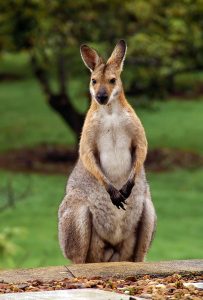
While kangaroos are often depicted in the wild, many species have become accustomed to living in the vicinity of human settlements, especially in areas where food is abundant. Kangaroos are highly adaptable animals that can survive in a wide range of ecosystems, from grasslands and open woodlands to desert regions.
There are four primary species of kangaroos in Australia:
- Red Kangaroo (Macropus rufus): The largest species of kangaroo, the red kangaroo is found throughout most of Australia. Males can grow to more than 8 feet in length, including their tail, and weigh up to 200 pounds. Red kangaroos are primarily found in the arid and semi-arid regions of the country and are well adapted to the harsh conditions of the Australian outback.
- Eastern Grey Kangaroo (Macropus giganteus): Slightly smaller than the red kangaroo, the eastern grey kangaroo is commonly found in the southeastern parts of Australia, especially in fertile and temperate areas. It is the most widespread species of kangaroo and is frequently seen grazing in rural and suburban settings.
- Western Grey Kangaroo (Macropus fuliginosus): This species, found in southern and western Australia, is smaller and more lightly built than both the red and eastern grey species. It is commonly found in open forests and grasslands near water sources.
- Antilopine Kangaroo (Macropus antilopinus): The least common of the four, the antilopine kangaroo is found in the northern parts of Australia. This species has a more slender build, resembling an antelope, and is typically found in tropical regions that receive more rainfall.
Each species of kangaroo is highly specialized to its particular environment, with distinct physical and behavioral characteristics that help them thrive in their specific ecosystems.
Kangaroo Anatomy and Physiology
Kangaroos possess several distinctive physical features that have evolved to support their survival in challenging environments. These features are specifically suited to their primary mode of locomotion, feeding habits, and reproductive strategies.
- Hopping and Large Hind Legs
The kangaroo’s most unique feature is its powerful hind legs, which are adapted for hopping. The long, muscular hind limbs allow kangaroos to cover vast distances by bounding, often at speeds of up to 35 miles per hour in short bursts. The energy-efficient nature of hopping helps kangaroos conserve energy during long migrations across the harsh outback. Hopping is not only an effective way to travel but also offers kangaroos an advantage in avoiding predators by enabling them to cover more ground with less effort.
- Strong Tail for Balance
Kangaroos have a long, thick tail that acts as a counterbalance when hopping. The tail is a crucial element of their locomotion, helping them maintain balance during their powerful jumps. The tail also serves as a stabilizer when kangaroos make sharp turns or adjust their posture. Beyond its role in movement, the tail is also used for communication within the social structure of kangaroos, signaling dominance and territorial claims.
- Forelimbs and Feeding
While the kangaroo’s forelimbs are smaller than the hind legs, they are still strong and useful for a variety of tasks. Kangaroos use their forelimbs to grasp vegetation while feeding, and the forelimbs are also employed in grooming and other forms of social interaction. Their hands are equipped with long, sharp claws that help them manipulate objects and reach food in trees or shrubs.
- Adapted Digestive System
As herbivores, kangaroos primarily consume grasses, leaves, and shrubs. Their digestive systems are highly specialized to handle tough, fibrous plant material. Kangaroos have a complex stomach with multiple chambers that help break down plant material through fermentation, similar to the process seen in cows and other ruminants. This allows them to extract maximum nutrients from their food, which is essential for survival in regions where food can be scarce.
- Reproductive System and Pouch
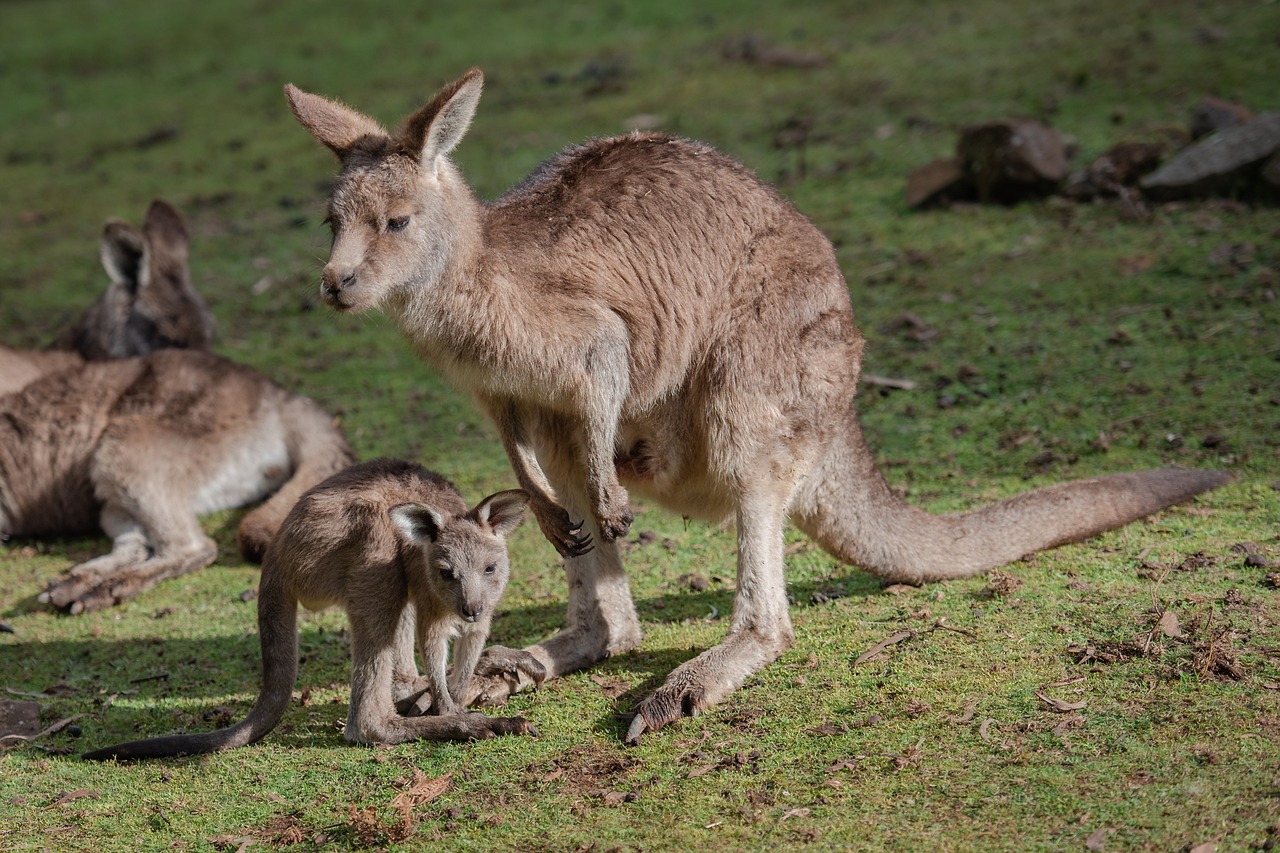
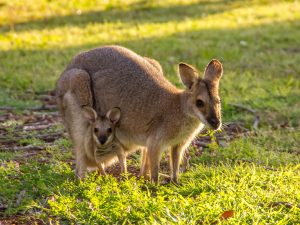
Kangaroos are unique in that they are marsupials, meaning they give birth to underdeveloped young that continue to develop outside the womb in a pouch. The female kangaroo has two uteri and a well-developed pouch, where the newborn joey is carried and nurtured for several months. The joey crawls into the pouch immediately after birth, where it attaches to a teat and begins to nurse. Over time, the joey slowly emerges from the pouch but will continue to nurse and depend on the mother for protection for up to a year.
Kangaroo Behavior and Social Structure
Kangaroos are primarily nocturnal, becoming active during the cooler parts of the day—at dawn and dusk—when the temperatures are more manageable. Their social structure is based around groups known as “mobs.” These mobs typically consist of 10 to 20 kangaroos, although larger mobs have been observed in areas with abundant food. Mobs serve as a form of protection against predators, with multiple individuals keeping watch for threats.
- Mating and Reproduction
Kangaroos breed throughout the year, although the breeding season typically peaks in spring and summer. Male kangaroos often compete for dominance within a mob, engaging in “boxing” matches, which involve powerful kicks and grapples. The winner of these contests gains access to mating opportunities with females in the group. Female kangaroos, after mating, give birth to a single joey, although twins are occasionally born. After birth, the joey immediately crawls into the pouch to continue developing.
- Social Hierarchy and Communication
Within kangaroo mobs, a social hierarchy is often established through displays of strength and dominance. The dominant male kangaroo typically leads the group and is the primary mate for the females. Kangaroos communicate through a variety of vocalizations, body language, and scent marking. Their most common vocalization is a low, grunting sound, which serves as a warning to other kangaroos of potential danger.
- Feeding and Grazing Habits
Kangaroos are selective feeders, grazing primarily on grasses, leaves, and shrubs. Their feeding behavior is adapted to their environment, with kangaroos using their keen sense of smell to locate the most nutritious plants. Kangaroos can also go for long periods without drinking water, as they are able to extract moisture from the plants they consume. This adaptation is particularly important in Australia, where water sources can be scarce in certain regions.
Kangaroo Evolution and Adaptation
Kangaroos are a key example of how evolution has shaped the diversity of life on Earth. As marsupials, they have evolved distinct features that enable them to thrive in the unique ecosystems of Australia. Over millions of years, kangaroos have adapted to various environmental pressures, from the arid deserts of the outback to the more temperate regions along the coasts.
- Evolution of Hopping
Hopping as a mode of movement likely evolved in kangaroos as a response to the vast, open landscapes of Australia. Early kangaroo-like species likely used walking or running as their primary mode of travel. However, as the Australian continent’s conditions became more arid, hopping emerged as a highly energy-efficient means of locomotion, enabling kangaroos to cover long distances in search of food and water.
- Adaptations to Harsh Conditions
Kangaroos have evolved a range of features that help them cope with the extreme environmental conditions of Australia. These adaptations include the ability to go without water for extended periods, their energy-efficient hopping, and the development of a highly specialized digestive system that allows them to extract maximum nutrients from tough, fibrous plants. Additionally, kangaroos are equipped with thick fur to help regulate their body temperature and protect them from the harsh sun.
Kangaroo Conservation and Human Impact
While kangaroos are not currently considered endangered, they face significant threats from human activities. Habitat loss, climate change, and human-wildlife conflict all pose challenges to kangaroo populations. Agricultural development and urbanization have fragmented their natural habitats, making it difficult for kangaroos to find sufficient food and shelter.
**1. Culling and
Management**
Kangaroo populations are sometimes controlled through culling, a practice that has been controversial. Culling is often used in areas where kangaroos are seen as a threat to agriculture or where populations have become unsustainably large. Supporters of culling argue that it helps reduce overgrazing and the depletion of natural resources, while critics contend that it is inhumane and disrupts the natural balance of ecosystems.
- Climate Change and Habitat Degradation
Climate change is expected to exacerbate the challenges faced by kangaroo populations. Increasing temperatures, more frequent droughts, and reduced rainfall are affecting the availability of food and water sources in many parts of Australia. The ongoing degradation of habitats, especially in the more arid regions, is another significant threat.
- Conservation Efforts
Several organizations are actively working to conserve kangaroo populations and protect their habitats. These conservation efforts include habitat restoration projects, wildlife corridors that allow kangaroos to move between fragmented areas, and research programs that study kangaroo behavior and ecology. Additionally, kangaroos are a central part of Australia’s eco-tourism industry, which helps raise awareness about their importance and provides funding for conservation initiatives.
Conclusion
The kangaroo is not only a symbol of Australia’s unique wildlife but also a testament to the power of adaptation and evolution. These fascinating creatures have adapted to some of the harshest environments on Earth, developing specialized features like powerful hind legs for hopping, complex digestive systems, and strong social structures. Despite their resilience, kangaroos face growing threats from human activity and climate change.
Conservation efforts, both in terms of habitat protection and responsible management, will play a critical role in ensuring that kangaroos continue to thrive in the wild for generations to come. As Australia’s iconic marsupial, the kangaroo remains a crucial part of the nation’s biodiversity, and its preservation is key to maintaining the ecological balance of the Australian landscape.
Effective Tips for Stopping Cat Spraying