
 By admin
Introduction: Japan’s Urgent Energy Challenge
Japan stands at the crossroads of energy innovation and sustainability. As a densely populated island nation with limited fossil fuel resources, it has long faced the challenge of balancing energy security, environmental responsibility, and economic growth. Following the 2011 Fukushima Daiichi nuclear disaster, Japan’s dependence on imported oil and natural gas raised deep concerns about vulnerability and sustainability. These challenges have fueled a strong national commitment toward alternative energy development—with wind, solar, geothermal, hydrogen, and small-scale hydroelectric systems leading the way.
In a global context where climate change and energy independence have become defining issues, Japan is emerging as a key player in renewable energy technology. The nation’s ambitious goals align with its 2050 target of carbon neutrality, aiming to build a low-carbon economy driven by innovation, resilience, and green infrastructure.
1. The Evolution of Japan’s Renewable Energy Policy
1.1 From Post-War Energy Dependence to Self-Sufficiency Goals
Japan’s modern energy policy has been deeply shaped by its history. The oil crises of the 1970s and the resource shortages during World War II demonstrated the dangers of energy dependence. As a result, Japan began investing in energy diversification, first through nuclear power and later through renewables.
After the Fukushima nuclear disaster in 2011, nuclear energy production declined dramatically—from covering nearly 30% of Japan’s electricity needs to less than 5%. This crisis accelerated the transition toward alternative energy sources, prompting the government to reform its energy strategy around renewables and efficiency.
1.2 Government Commitment and Legal Framework
The Japanese government’s Strategic Energy Plan and the Basic Hydrogen Strategy have become central pillars of national policy. Through initiatives like the Feed-in Tariff (FIT) system introduced in 2012, Japan has encouraged large-scale investment in renewable projects by guaranteeing fixed prices for electricity produced from renewable sources.
In 2021, Japan updated its Green Growth Strategy, pledging to cut greenhouse gas emissions by 46% from 2013 levels by 2030 and to achieve net-zero emissions by 2050. These commitments have catalyzed private-sector innovation and global partnerships aimed at transforming Japan into a model of clean energy development.
2. Wind Power: Harnessing the Strength of the Seas
2.1 Offshore Wind as a Key Resource
Wind energy, especially offshore wind, has emerged as one of Japan’s most promising renewable sectors. With its long coastlines and strong maritime winds, Japan possesses enormous potential for offshore wind power generation. However, due to deep coastal waters, traditional fixed-bottom turbines are often impractical—driving research into floating offshore wind technology.
As Svend Sigaard, President and CEO of Vestas Wind Systems, once emphasized, Japan’s unique geography makes offshore installations more expensive, yet more rewarding: offshore winds are stronger and more consistent, compensating for higher construction costs.
Vestas, along with other global wind turbine manufacturers like Siemens Gamesa and Mitsubishi Heavy Industries, has been investing heavily in Japan’s offshore wind infrastructure. These partnerships aim to make wind power more cost-competitive per kilowatt-hour, rivaling traditional fossil fuel sources.
2.2 Japan’s Offshore Wind Projects and Regional Development
Japan’s first large-scale offshore wind farm began operation in 2022 off the coast of Akita Prefecture, signaling a milestone in the nation’s renewable energy journey. The project, developed by a consortium including Marubeni and Vestas, can power tens of thousands of homes and serves as a model for future expansion.
In 2024, the government announced plans for additional offshore wind auctions, targeting 10 gigawatts (GW) of installed capacity by 2030 and 45 GW by 2040. Prefectures such as Hokkaido, Niigata, and Chiba are now emerging as renewable energy hubs, where offshore wind projects are creating new jobs, industries, and technological expertise.
3. Solar Energy: From Rooftops to Smart Cities
3.1 The Rise of Photovoltaic Power
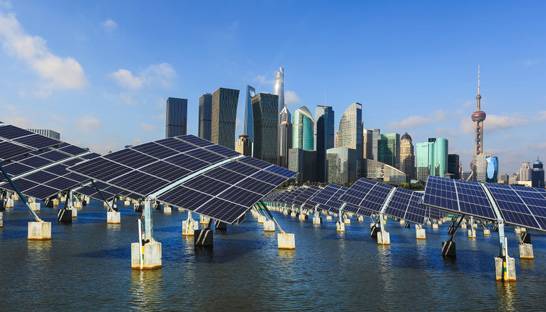
Following the Fukushima disaster, solar power became Japan’s fastest-growing renewable energy source. The government’s subsidies and feed-in tariffs encouraged households, businesses, and municipalities to install photovoltaic (PV) panels across the country. Japan is now one of the world’s top five solar energy producers, with over 70 GW of installed solar capacity.
Solar power has become an integral part of Japan’s urban design—integrating into smart city projects like Yokohama’s Smart City initiative and the Toyota Woven City, a futuristic, hydrogen-powered community at the base of Mount Fuji.
3.2 Technological Innovation and Energy Storage
Japan’s advancements in solar cell efficiency, led by companies like Panasonic and Sharp, have made its PV systems more productive in limited spaces—critical in a densely populated nation. In parallel, energy storage technologies such as lithium-ion and solid-state batteries are transforming solar power into a reliable 24-hour resource.
The integration of AI-based grid management and “virtual power plants” (VPPs) allows Japan to balance electricity demand and supply dynamically, ensuring efficient use of renewable energy even during peak hours or low sunlight periods.
4. Hydroelectric Power: Small Streams, Big Impact
4.1 Micro and Mini Hydroelectric Systems
Hydroelectric energy has long played a role in Japan’s power generation. However, modern trends emphasize micro- and mini-hydroelectric systems—small-scale plants that harness the power of mountain streams and rivers.
The New Energy and Industrial Technology Development Organization (NEDO) defines micro-hydropower plants as those generating up to 100 kilowatts, while mini-hydropower plants can reach up to 1,000 kilowatts.
These systems are ideal for Japan’s mountainous terrain and are now being used not only in rural regions but also within cities. For instance, Kawasaki City Waterworks and Tokyo Electric Power Company (TEPCO) have successfully implemented micro-hydropower installations that generate electricity from the natural water flow in urban pipelines and water facilities.
4.2 Environmental and Social Benefits
Unlike large dams, small hydropower systems have minimal environmental impact. They preserve river ecosystems, require little maintenance, and provide reliable power for local communities. In remote areas, micro-hydro plants offer a path toward energy independence, reducing reliance on centralized grids and costly imports.
These systems also align with Japan’s vision of community-based energy management, empowering local governments and citizens to take an active role in the country’s energy transformation.
5. Hydrogen Energy: The Next Frontier
5.1 Japan’s Hydrogen Society Vision
Japan is at the forefront of global efforts to create a hydrogen-based economy. Recognizing hydrogen as a versatile, zero-emission fuel, the Japanese government launched the Basic Hydrogen Strategy in 2017, aiming to commercialize hydrogen power across transportation, manufacturing, and residential sectors.
Tokyo hosted the world’s first Hydrogen Olympics in 2020, showcasing hydrogen-powered vehicles and fuel-cell infrastructure. Companies such as Toyota, Honda, and Kawasaki Heavy Industries are pioneering hydrogen mobility and storage technologies, while new import terminals for liquid hydrogen are being built to secure global supply chains.
5.2 Integrating Hydrogen into the Energy Grid
Japan envisions hydrogen as a key enabler of grid decarbonization, complementing intermittent renewables like solar and wind. By converting surplus renewable electricity into hydrogen through electrolysis, energy can be stored and later used in fuel cells to produce electricity when needed.
This technology could solve one of the greatest challenges of renewable energy—storage and stability—making hydrogen a cornerstone of Japan’s sustainable energy future.
6. Geothermal and Biomass: Untapped Resources
6.1 Geothermal Energy Potential
Situated on the Pacific “Ring of Fire,” Japan holds the world’s third-largest geothermal energy potential after the United States and Indonesia. Yet, development has been limited due to restrictions near national parks and hot spring resorts.
Recently, the government has begun relaxing regulations to allow responsible geothermal exploration. Modern drilling techniques and eco-friendly infrastructure are enabling Japan to tap into this vast natural resource without harming its treasured landscapes.
6.2 Biomass and Waste-to-Energy Innovations
Japan’s commitment to sustainability extends to biomass energy, derived from agricultural, industrial, and municipal waste. Waste-to-energy plants are transforming food scraps, wood residues, and sewage into electricity and biofuels.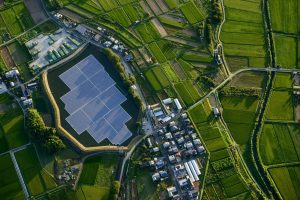
Cities like Osaka and Fukuoka have adopted circular economy principles, where waste is converted into energy, closing the loop on resource consumption and contributing to Japan’s low-carbon strategy.
7. Challenges and the Road Ahead
7.1 Land Limitations and High Costs
Despite impressive progress, Japan faces significant barriers. Limited land availability, complex regulations, and high construction costs slow the deployment of renewable infrastructure. Offshore projects require specialized floating platforms, while solar and wind farms compete with urban expansion and agricultural land use.
7.2 Energy Storage and Grid Modernization
Renewable energy integration requires a modernized smart grid capable of handling decentralized and fluctuating power inputs. Japan’s investment in grid storage systems and AI-based energy management is crucial to overcoming these challenges.
7.3 Public Awareness and Industry Collaboration
Public acceptance, especially for projects near residential zones, remains vital. Government, industry, and citizens must collaborate to ensure a just and inclusive energy transition. Education campaigns, transparent policy-making, and technological innovation will be key to sustaining momentum.
Conclusion: Japan’s Path to a Renewable Tomorrow
Japan’s pursuit of alternative energy development is not merely an environmental initiative—it’s a strategic imperative for national resilience and economic renewal. Through innovation in wind, solar, hydrogen, and micro-hydropower technologies, Japan is steadily transforming its energy landscape.
While challenges remain, the nation’s vision of a carbon-neutral society powered by clean, reliable, and locally generated energy is becoming a reality. As Japan continues to lead in technological development and global collaboration, it sets an inspiring example for other countries striving to build a sustainable future.
Microwave Safety 101: Materials to Avoid