
 By admin

The Road to Intuition: Awakening Your Inner Intelligence
Introduction
Have you ever experienced a moment when a sudden inner voice, an unexplainable feeling, or a powerful hunch urged you to act—or to stop—only for events to later confirm that instinct was right? Perhaps you avoided a situation without knowing why, or made a decision that defied logic yet led to a surprisingly positive outcome. These moments are often described as intuition, a subtle but powerful form of inner intelligence that operates beyond conscious reasoning.
In today’s fast-paced, data-driven world, intuition is sometimes dismissed as irrational or mystical. Yet modern psychology, neuroscience, and leadership studies increasingly recognize intuition as a critical cognitive process—one that integrates experience, emotion, and subconscious pattern recognition. Far from being a rare or mystical gift reserved for a chosen few, intuition is a natural human ability that can be consciously developed and refined.
This article explores the road to intuition in depth. We will define what intuition truly is, examine its different forms, explain why it matters in modern life, and provide practical, research-informed methods for strengthening intuitive awareness. By the end, you will understand why intuition is not the opposite of logic—but its silent and powerful partner.
Understanding Intuition: What It Really Means
Defining Intuition in Modern Terms
Intuition can be described as the ability to know or sense something immediately, without conscious reasoning. It often manifests as a feeling, an image, or an inner voice that arises spontaneously. Unlike analytical thinking, intuition does not rely on step-by-step logic. Instead, it draws from subconscious memory, emotional intelligence, and pattern recognition.
From a scientific perspective, intuition is the brain’s ability to process vast amounts of information rapidly, often below conscious awareness. This includes past experiences, learned behaviors, emotional cues, and environmental signals. When these elements align, the brain produces a “gut feeling” that feels immediate and convincing.
Intuition vs. Emotion and Impulse
It is important to distinguish intuition from raw emotion or impulse. While emotions can be reactive and fleeting, intuition tends to feel calm, neutral, and persistent. It does not scream; it gently insists. Learning to differentiate intuitive signals from fear-based reactions is one of the key skills in intuitive development.
The Three Core Forms of Intuition
Intuition expresses itself in several ways. While people may experience one form more strongly than others, all three are present to varying degrees in most individuals.
1. Clairvoyance: Seeing Beyond the Visible
Clairvoyance, often referred to metaphorically as “the third eye,” involves visual intuition. This does not necessarily mean seeing literal images, but rather gaining insight through mental pictures, symbols, or sudden clarity.
People with strong visual intuition may:
- Instantly imagine outcomes before they happen
- Receive insights through symbols or mental snapshots
- “See” solutions or possibilities without logical reasoning
In modern psychology, this is linked to the brain’s ability to visualize patterns and anticipate outcomes based on incomplete information.
2. Clairsentience: The Power of the Gut Feeling
Clairsentience is the most common form of intuition and is often referred to as a gut feeling or hunch. It manifests physically or emotionally, such as a tight chest, a sense of comfort, or an unexplained urge to act.
Common characteristics include:
- Feeling strongly about a situation without evidence
- Physical sensations that signal alignment or discomfort
- An unshakable sense of “just knowing”
This form of intuition is closely connected to the nervous system and emotional intelligence, especially the communication between the brain and the gut.
3. Clairaudience: Listening Between the Lines
Clairaudience refers to intuitive listening. This does not necessarily involve hearing literal voices, but rather picking up subtle cues, tones, or inner messages.
It may appear as:
- An inner voice offering guidance
- Sudden understanding triggered by sounds or words
- Deep insight gained from silence or subtle auditory signals
Modern research associates this form of intuition with heightened sensitivity to language patterns, tone, and subconscious cues.
Is Intuition a Gift or a Skill?
The Myth of the “Chosen Few”
There is a long-standing belief that intuition is a rare gift, often linked to astrology, spirituality, or psychic abilities. Some traditions claim that certain personality types or zodiac signs are naturally intuitive. While individuals may have varying levels of intuitive sensitivity, current research strongly suggests that intuition is a universal human capacity.
What Science Says
Studies in neuroscience and behavioral psychology show that intuition is rooted in:
- Experience-based learning
- Emotional memory
- Rapid subconscious processing
Professionals such as doctors, firefighters, athletes, and entrepreneurs often rely on intuition developed through repeated exposure and reflection. Their “gut feelings” are not random—they are the result of deeply ingrained knowledge processed instantly.
Why Developing Intuition Matters
1. Improved Communication and Empathy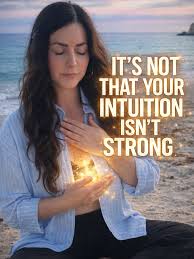
Intuition enhances emotional awareness, allowing you to sense what others feel even when they do not express it openly. This leads to:
- Better interpersonal relationships
- Fewer misunderstandings
- Increased compassion and empathy
Being intuitive helps you respond appropriately rather than react impulsively.
2. Enhanced Creativity and Innovation
Intuition fuels creativity by allowing ideas to emerge organically. Many artists, writers, designers, and innovators credit intuition as the source of their most original work.
When intuition is active:
- Creative blocks dissolve
- New ideas surface effortlessly
- Expression becomes more authentic
3. Emotional and Psychological Healing
Intuition has a profound healing effect—not on the physical body directly, but on the emotional and psychological self. It helps uncover suppressed emotions, unresolved trauma, and limiting beliefs.
By listening inwardly, intuition:
- Brings awareness to hidden emotional wounds
- Encourages self-compassion
- Supports inner balance and clarity
4. Better Decision-Making
Life is full of decisions that logic alone cannot solve. Intuition provides clarity when:
- Information is incomplete
- Time is limited
- Outcomes are uncertain
Many life-changing decisions—relationships, career moves, personal transformations—are guided by intuition rather than logic.
Practical Ways to Develop and Strengthen Intuition
1. Hypnosis and Self-Hypnosis
Hypnosis helps bypass the analytical mind and access subconscious awareness. Self-hypnosis techniques and guided audio programs can:
- Increase inner focus
- Reduce mental noise
- Strengthen intuitive sensitivity
By entering a relaxed mental state, intuitive signals become easier to recognize.
2. Meditation and Mindfulness Practices
Meditation is one of the most powerful tools for intuitive development. It quiets mental chatter and creates space for inner awareness.
Effective practices include:
- Breath-focused meditation
- Mindfulness exercises
- Yoga and body awareness
Consistency is key. Even a few minutes daily can dramatically improve intuitive clarity.
3. Cultivating a Positive Mindset
Fear, anxiety, and chronic worry block intuition. A positive mental state enhances intuitive reception by:
- Reducing internal resistance
- Increasing emotional openness
- Aligning thoughts with awareness
Gratitude, optimism, and self-trust are powerful intuitive enhancers.
4. Learning to Let Go
Letting go means releasing control, expectations, and mental rigidity. When facing important decisions:
- Step away from overthinking
- Spend time in silence or nature
- Allow insights to emerge naturally
Intuition often appears when the mind stops forcing answers.
5. Practicing Patience and Non-Attachment
Intuition rarely operates on demand. Expecting immediate answers creates pressure that blocks intuitive flow.
Instead:
- Trust the timing
- Allow insights to surface naturally
- Remain open and receptive
Often, the answer arrives unexpectedly—clear and undeniable.
6. Trusting First Impressions
First impressions are often intuitive responses based on subconscious cues. While they should not replace rational judgment entirely, they are valuable signals.
Practice:
- Noticing your immediate reactions
- Reflecting on their accuracy over time
- Building trust through experience
7. Choosing Happiness and Inner Balance
Happiness is a powerful amplifier of intuition. When you are emotionally balanced:
- Awareness increases
- Sensitivity sharpens
- Inner guidance becomes clearer
Intuition thrives in an environment of contentment, peace, and self-acceptance.
Conclusion: Walking the Road to Intuition
Intuition is not mystical, irrational, or reserved for a select few. It is a natural form of intelligence embedded within every human being. In a world dominated by logic and speed, intuition offers depth, wisdom, and balance. It bridges the gap between knowledge and insight, between thought and feeling.
By developing intuition, you enhance communication, creativity, emotional healing, and decision-making. You learn to trust yourself at a deeper level and navigate life with greater clarity and confidence. The road to intuition is not about acquiring something new—it is about remembering and refining what has always been within you.
Begin listening. Begin trusting. The journey inward may be the most powerful journey you ever take.
The Enduring Crisis of Bullying