
 By admin
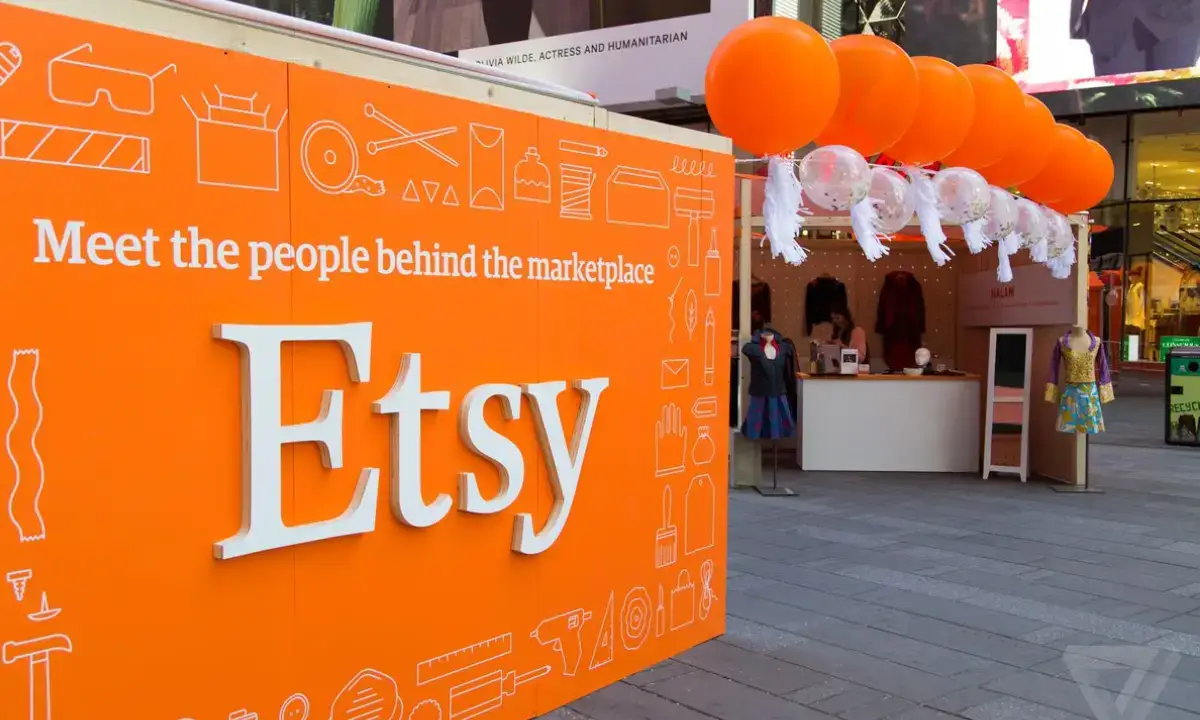
The Story of Etsy: How a Handmade Marketplace Became a Global E-Commerce Powerhouse
Introduction: A Human-Centered Alternative in a Mass-Produced World
In the early 2000s, the rapid expansion of e-commerce transformed global consumption patterns. Platforms like Amazon and eBay revolutionized convenience, price comparison, and logistics, but they also accelerated the dominance of mass-produced, standardized goods. In this increasingly impersonal digital marketplace, something essential was missing: a space that celebrated creativity, craftsmanship, individuality, and human connection.
It was within this context that Etsy was born in 2005, in Brooklyn, New York. Conceived by Rob Kalin, Chris Maguire, and Haim Schoppik, Etsy emerged as a radical alternative to mainstream online retail. Its mission was clear yet ambitious: to create a warm, human-centered marketplace where artisans, designers, and vintage collectors could sell unique, handmade, or historically meaningful items directly to buyers who valued authenticity over uniformity.
Over nearly two decades, Etsy has evolved from a niche platform for independent creators into a global e-commerce giant serving millions of buyers and sellers worldwide. This journey, however, has not been linear. It has been marked by explosive growth, philosophical compromises, internal conflicts, financial pressures, and ongoing debates about the true meaning of “handmade” in the digital age.
This article explores the history of Etsy, tracing its origins, major milestones, controversies, strategic shifts, and current identity. It also examines the broader implications of Etsy’s evolution for artisans, small businesses, and the future of ethical e-commerce.
1. The Birth of Etsy: An Idea Rooted in Craft and Community (2005)
1.1 Founders and Vision
Etsy was officially launched in June 2005 by Rob Kalin, a bookseller and carpenter with a deep appreciation for handmade objects, alongside software engineers Chris Maguire and Haim Schoppik. Kalin’s frustration with existing online marketplaces was simple yet profound: they treated handcrafted goods the same way they treated mass-produced commodities.
The founders envisioned a digital space where makers could tell their stories, showcase their creative processes, and connect directly with buyers who appreciated originality, sustainability, and personal expression. This philosophy was summarized in Etsy’s early mantra:
“Keep commerce human.”
1.2 The Meaning Behind the Name “Etsy”
The name Etsy was deliberately abstract. Rob Kalin reportedly wanted a word with no predefined meaning, allowing the brand to define itself organically. Inspiration came while he was watching Federico Fellini’s film 8½ in Italian, where the phrase “eh, sì” (“oh yes”) is frequently heard. The sound and ambiguity appealed to Kalin, reinforcing Etsy’s creative and open-ended identity.
2. The Early Years: Grassroots Growth and Artisan Culture (2005–2007)
2.1 A Marketplace Built by Makers
In its earliest years, Etsy functioned less like a corporation and more like a cooperative of passionate creators. The platform was modest in scale, but rich in community spirit. Sellers—often referred to as “Etsians”—were encouraged to interact with one another, share advice, and build relationships with buyers.
Physical meet-ups, craft fairs, and local Etsy events played a crucial role in reinforcing this sense of belonging. Unlike traditional e-commerce platforms, Etsy was not just a sales channel; it was a cultural movement that celebrated independent creativity.
2.2 A Clear Stand Against Industrialization
During this period, Etsy maintained a strict opposition to industrially manufactured goods. Products had to be handmade, vintage, or directly related to creative supplies. This clarity helped Etsy stand out and attract a loyal base of artisans and conscious consumers seeking meaningful alternatives to mass-market retail.
3. Scaling Up: Investment, Infrastructure, and Global Expansion (2008–2013)
3.1 Introduction of Etsy Shops
As the platform grew, Etsy introduced Etsy Shops, giving sellers customizable storefronts with branding tools, descriptions, and product organization features. This shift transformed Etsy from a simple listing site into a more sophisticated marketplace where sellers could build recognizable micro-brands.
3.2 Venture Capital and Strategic Funding
To support its rapid expansion, Etsy attracted major investors, including Union Square Ventures. These funding rounds allowed Etsy to invest heavily in technology, infrastructure, customer support, and international expansion.
3.3 Internationalization and Localization
Etsy quickly expanded beyond the United States, launching localized versions of the platform in multiple languages, including French and German. This move helped Etsy tap into Europe’s rich artisan traditions and establish itself as a truly global handmade marketplace.
3.4 A Major Milestone: $1 Billion in Gross Merchandise Sales
By 2013, Etsy announced that it had surpassed $1 billion in annual gross merchandise sales (GMS). This milestone confirmed that a platform dedicated to handmade and vintage goods could achieve massive commercial success without fully abandoning its original ethos—at least for the moment.
4. Going Public: The IPO That Changed Everything (2015)
4.1 Etsy’s NASDAQ Debut
In April 2015, Etsy went public with a high-profile Initial Public Offering (IPO) on the NASDAQ. The move symbolized a major turning point: a company rooted in craft culture was now accountable to public shareholders.
4.2 Shareholder Pressure and Profitability Concerns
While the IPO brought capital and legitimacy, it also introduced intense pressure to increase profitability, streamline operations, and demonstrate consistent growth. Critics argue that this moment marked the beginning of Etsy’s gradual departure from its idealistic roots.
5. Controversies and Philosophical Tensions (2016–2017)
5.1 Manufacturing Partners and Outsourcing
To scale seller operations, Etsy expanded its manufacturing partners policy, allowing sellers to outsource production while retaining design ownership. Although intended to support growth, this policy blurred the line between handmade craftsmanship and semi-industrial production.
5.2 The Rise of Mass Listings and Advertising
Etsy also introduced more aggressive on-platform advertising tools, encouraging sellers to pay for visibility. While beneficial for some, this shift fueled accusations that Etsy’s algorithm favored sellers with larger budgets, disadvantaging small, independent artisans.
5.3 Community Backlash
Many long-time sellers accused Etsy of betraying its original values. Forums, blogs, and social media were filled with criticism about declining quality, rising fees, and the growing presence of factory-made products disguised as handmade items.
6. Leadership Change and Strategic Reset (2017–2020)
6.1 Rob Kalin’s Departure
In 2017, founder Rob Kalin permanently left Etsy’s board of directors, closing a chapter in the company’s history. His departure symbolized the end of Etsy’s founder-led era.
6.2 Josh Silverman’s New Direction
Later that year, Josh Silverman was appointed CEO. He implemented a controversial but decisive restructuring that included layoffs and operational changes. At the same time, Silverman emphasized a renewed focus on Etsy’s core categories.
6.3 Clarifying Product Categories
Under Silverman’s leadership, Etsy refined its definitions of acceptable products:
- Handmade (created or designed by the seller)
- Vintage (at least 20 years old)
- Craft supplies
These clearer labels aimed to restore trust and transparency for buyers and sellers alike.
7. Strategic Acquisitions and Platform Expansion (2019–2023)
7.1 Reverb: Expanding Into Musical Instruments
In 2019, Etsy acquired Reverb, a marketplace for new and vintage musical instruments. This acquisition aligned with Etsy’s values of creativity, craftsmanship, and niche expertise.
7.2 Depop: Fashion and Gen Z Appeal
Etsy later acquired Depop, a peer-to-peer fashion resale platform popular with younger audiences. Although Depop was eventually sold in 2023, the acquisition demonstrated Etsy’s ambition to diversify and reach new demographics.
8. Etsy Today: A Marketplace with Two Faces
8.1 A Global E-Commerce Leader
Today, Etsy is one of the world’s most influential online marketplaces, hosting millions of sellers and buyers across dozens of countries. It has become a default destination for:
- Personalized gifts
- Handmade home décor
- Custom jewelry
- Vintage fashion
- Creative supplies
8.2 Ongoing Criticisms
Despite its success, Etsy continues to face criticism over:
- High commission and transaction fees (including a 6.5% transaction fee)
- Mandatory off-site advertising costs
- Algorithmic bias favoring promoted listings
- Persistent quality control challenges
9. Etsy’s Identity Crisis: Ethics vs. Economics
Etsy embodies a modern entrepreneurial dilemma: how can a company maintain a strong ethical foundation while operating at global scale within competitive financial markets?
On one hand, Etsy has empowered hundreds of thousands of artisans, designers, and micro-entrepreneurs, offering them economic independence and global reach. On the other hand, its compromises reflect the unavoidable tension between community-driven ideals and shareholder-driven growth.
Conclusion: Etsy’s Enduring Relevance in a Standardized World
Despite its contradictions and controversies, Etsy remains profoundly relevant. In a world dominated by fast fashion, automated production, and anonymous consumption, Etsy continues to offer something rare: objects with stories, creators with faces, and commerce with meaning.
While it may no longer be the utopian craft collective it once was, Etsy has succeeded in embedding creativity into the global digital economy. For millions of buyers seeking authenticity and millions of sellers seeking independence, Etsy remains the first—and often best—place to look.
Its future will depend on its ability to strike a delicate balance between scalability and sincerity, between profitability and purpose. Whether Etsy can fully reconcile these forces remains an open question—but its impact on modern e-commerce is undeniable.