
 By admin
Introduction: Understanding the Mysterious Feline Bond
Cats have accompanied humans for thousands of years, and their mysterious nature continues to intrigue us. While dogs wear their hearts on their sleeves, cats are often seen as enigmatic and emotionally distant. Many cat owners wonder: Does my cat actually love me? Unlike dogs, cats don’t typically express affection through overt, enthusiastic gestures. However, if you know what to look for, cats offer clear signs of attachment, affection, and trust. This article explores five scientifically and behaviorally supported signs that show your cat genuinely loves you, along with insights into the long-standing relationship between humans and felines.
From Wild Predator to Beloved Companion
The Origin of Domestic Cats
Modern domestic cats (Felis catus) are direct descendants of the African wildcat (Felis lybica). Genetic and archaeological evidence places the beginnings of cat domestication around 9,000 years ago in the Near East. One of the earliest and most significant instances of human-cat interaction comes from a burial site in Cyprus dated to 7500 BCE, where a human and a cat were buried side by side—indicating a bond that transcended mere utility.
The Egyptian Connection
In ancient Egypt, around 3,000 BCE, cats were revered and often associated with divinity. They served practical roles, such as protecting food supplies from rodents, but they were also adored as companions. Egyptian art and writings reveal that cats were integrated into family life, worshiped in temples, and even mummified after death to honor their spirits.
Evolution of Cat-Human Relationships
Cats began living in proximity to human settlements primarily because those areas provided easy access to food (mostly rodents and scraps) and protection from larger predators. Over time, a mutually beneficial relationship evolved: humans appreciated the cats’ hunting prowess, while cats enjoyed safer lives with a consistent food supply. Eventually, humans began selectively breeding cats for docile traits, solidifying the domesticated feline as a household fixture.
Do Cats Love Humans?
Challenging Stereotypes
Cats have long been misunderstood. Some believe that cats are aloof, unaffectionate, or emotionally unavailable. However, modern feline behavioral research suggests that cats form complex social bonds with their owners, recognizing voices, seeking attention, and even showing signs of separation anxiety when their favorite human is gone.
A 2019 study published in Current Biology confirmed that cats form secure attachments to their owners similar to those of dogs and human infants. This attachment style reflects emotional dependency and trust—clear indicators that cats are capable of loving relationships.
Five Signs That Show Your Cat Loves You
Knowing how to decode your cat’s behavior is crucial to understanding their affection. Here are five telltale signs that your cat truly loves and trusts you.
1. Slow Blinking: A Feline “I Love You”
One of the most subtle yet profound signs of feline affection is the “slow blink.” When your cat looks at you and slowly closes and reopens its eyes, it’s expressing trust and comfort. In the wild, closing one’s eyes is a sign of vulnerability—no animal would do it unless they feel completely safe.
What it means:
Slow blinking is the feline equivalent of a kiss. You can even reciprocate by slow-blinking back, which many cats recognize as a sign of mutual affection.
2. Bringing You “Gifts”
As unappealing as it might be to find a dead mouse or bird on your doorstep, this behavior is actually a sign of affection. Your cat is sharing its “hunt” with you—a gesture that demonstrates both generosity and inclusion.
What it means:
Your cat views you as part of its social group or family. By offering you a gift, your cat is either teaching you to hunt (as a mother cat would do) or simply showing care.
3. Vocalization: More Than Just Meows
Cats generally do not meow at other cats once they’re out of kittenhood. Adult cats typically reserve their vocalizations for humans. Each cat’s tone, pitch, and pattern can convey different emotions—from hunger to affection.
What it means:
If your cat frequently meows, chirps, or trills at you, especially when you enter a room, it’s likely expressing happiness and a desire to communicate. Vocal cats are often more socially bonded with their humans.
4. Exposing the Belly: Trust in Vulnerability
The feline belly is one of the most vulnerable parts of a cat’s body. When a cat rolls onto its back and exposes its stomach, it’s showing that it feels safe in your presence.
What it means: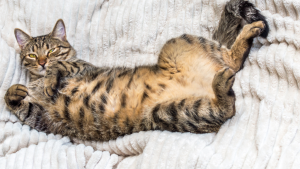
Although not all cats enjoy belly rubs, the act of revealing their stomach is a huge display of trust and relaxation. It’s a moment of vulnerability that indicates your cat feels protected and loved.
5. Tail Language: The Question Mark Tail
A cat’s tail can communicate a wealth of information about its emotional state. When a cat approaches you with its tail held high and curved at the tip—resembling a question mark—it’s a sign of affection and friendliness.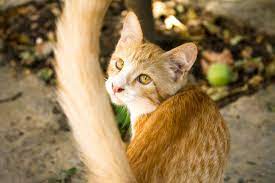
What it means:
This particular tail position signals happiness and curiosity. It shows that your cat is glad to see you and wants to engage positively.
Additional Signs of Feline Affection
Beyond the five main behaviors, cats express love in various other ways:
-
Head Butting and Rubbing: Cats have scent glands on their cheeks and forehead. When they rub their heads against you, they’re marking you as part of their territory and social group.
-
Purring in Your Presence: While cats can purr for multiple reasons, a low, rhythmic purr while lying next to you typically signals contentment.
-
Following You Around: If your cat acts like a shadow, tailing you from room to room, it’s not just being nosy—it’s seeking companionship.
-
Sleeping Near or On You: Cats prefer to sleep in places where they feel secure. If your cat chooses to sleep next to or on you, it’s a major vote of trust.
How to Strengthen the Bond With Your Cat
Respect Their Boundaries
Cats are independent creatures that require space. By respecting their need for solitude and not forcing interactions, you earn their trust over time.
Create a Safe Environment
Make your home cat-friendly with hiding spots, climbing spaces, and cozy resting areas. A secure environment helps build confidence and reduces stress.
Engage in Play
Interactive play with feather toys, laser pointers, or puzzle feeders mimics natural hunting instincts and creates a positive bond between you and your cat.
Use Your Voice
Talk to your cat often. Over time, your cat will recognize your voice and may respond with its own vocalizations. Cats who are spoken to regularly often become more social and expressive.
Conclusion: Love, Trust, and the Feline Heart
Cats may not wag their tails or slobber all over us, but their love is no less real—just subtler. Recognizing and understanding the signs of feline affection can deepen the bond between you and your furry friend. From slow blinks to playful gifts, your cat is constantly communicating its feelings—if you know how to read them.
After thousands of years of coexistence, cats have evolved not just to live alongside us but to form genuine emotional connections. When your cat exposes its belly, meows in your direction, or follows you from room to room, it’s saying, “I trust you, and I care.” That, in the language of cats, is pure love.
The Enduring Allure of Arabian Horses