
 By admin
Introduction
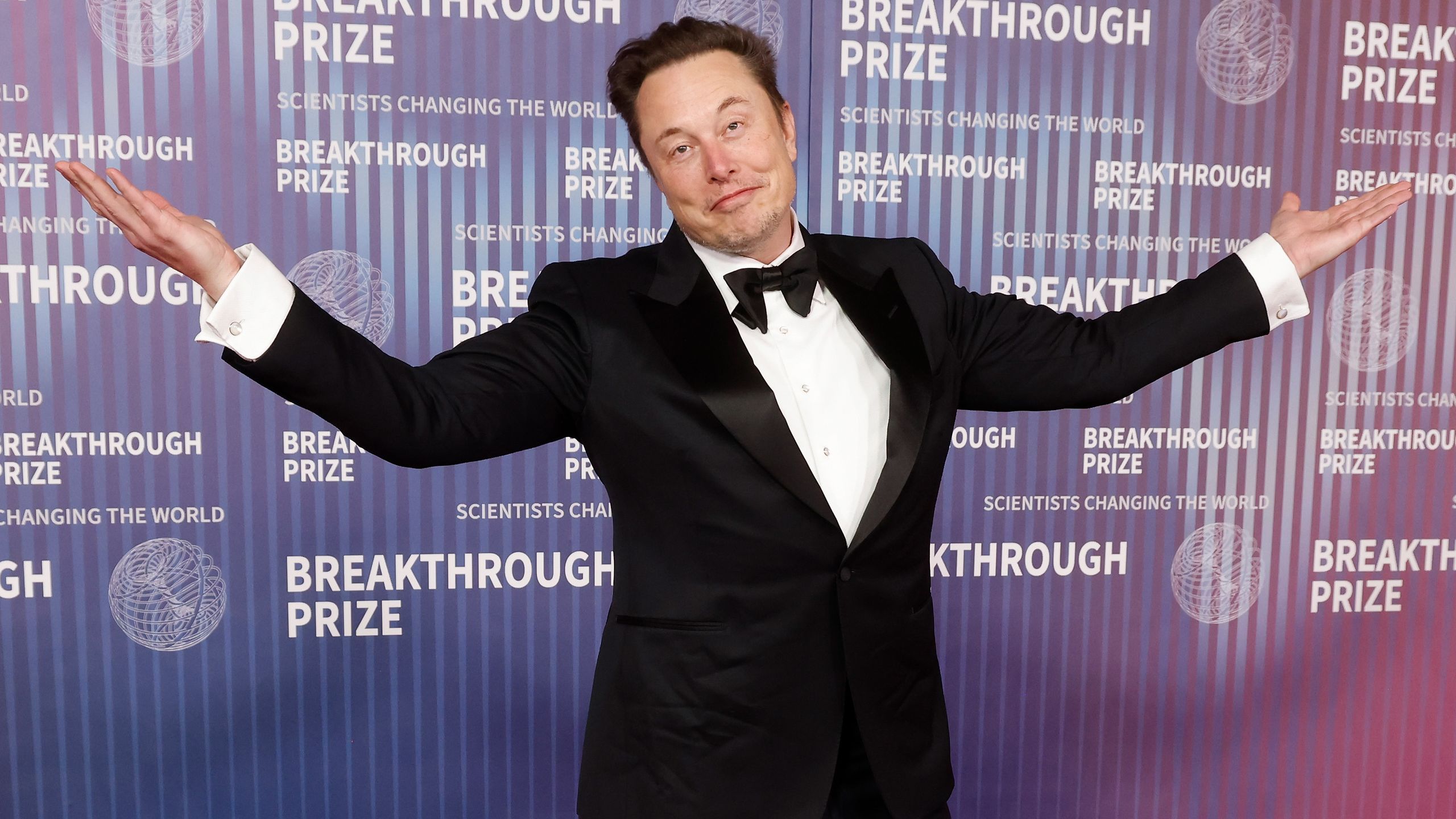
Elon Musk’s journey from a curious young entrepreneur in South Africa to becoming perhaps the richest person on the planet is nothing short of astonishing. His wealth—once hovering in the billions—is now measured in the hundreds of billions of dollars, with recent estimates placing his net worth around the $500 billion mark. (Investopedia) But beyond the sheer size of that fortune, what matters more is how Musk accumulated it: the strategic investments, the high-stakes bets, the timing, the technological revolutions he embraced, and the mindset that drove him to scale ventures from garages and launch pads into global enterprises. In this article, we’ll explore the key milestones, companies, strategies and modern dynamics behind Elon Musk’s extraordinary wealth accumulation—illuminating not only what he did but why it worked, the lessons to draw, and where his fortune stands today.
I. Early foundations: from Zip2 to PayPal
1. The formative years and first ventures
Elon Musk was born in Pretoria, South Africa, in 1971, and demonstrated early aptitude for computing and entrepreneurship. He taught himself programming at age 12 and sold a simple game called Blastar. Over time he moved via Canada to the U.S., seeking opportunities in technology and innovation. (matt-haycox.com)
His first major business venture was Zip2, a company he co-founded with his brother Kimbal in 1996. Zip2 developed online city guides for newspapers and local media. In 1999, it was sold to Compaq for ~US$307 million. Musk received roughly US$22 million from that deal—his first major payoff. (nasdaq.com)
2. From online banking to a major exit: X.com / PayPal
Following Zip2, Musk founded X.com in 1999—an online banking/payment venture that soon merged with Confinity and ultimately became PayPal. In 2002, PayPal was acquired by eBay for US$1.5 billion. Musk walked away with around US$165 million (depending on source) from that transaction. (Business Insider)
3. How these early successes set the stage
While the absolute sums from these early exits (tens to hundreds of millions) may pale in comparison today, they were critical for Musk in three ways:
- They provided ventures’ seed capital and credibility. With cash from Zip2/PayPal, Musk could invest in riskier opportunities rather than simply hold a regular job.
- They established his entrepreneurial track record—success begets investor trust, board seats, and influence.
- They came at the right moment—the dot-com boom, rising internet adoption, and growing willingness of investors to fund ambitious tech ventures.
Thus, by the early 2000s Musk had both capital and credibility—foundational prerequisites for scaling larger ventures.
II. The big bets: Tesla, SpaceX and beyond
1. Investing in and leading Tesla, Inc.
Though Elon Musk did not found Tesla (the company was founded in 2003 by Martin Eberhard and Marc Tarpenning), he joined as early investor and chairman in 2004. (Wikipédia) He became CEO and product architect in 2008, guiding Tesla through very difficult years of financial loss, production setbacks, and near bankruptcy. (Business Insider)
Tesla’s rise is integral to Musk’s wealth. As of 2025, Tesla’s share price surge, expanding market cap, and dramatic growth in electric vehicle (EV) adoption have significantly increased Musk’s net worth. According to recent data, Tesla shares—not surprisingly—are the largest single source of Musk’s fortune. (Investopedia)
2. Founding and scaling SpaceX
In 2002 Musk founded SpaceX (Space Exploration Technologies Corp.), with the goal of revolutionising space travel, reducing costs via rocket re-use, and eventually making life multiplanetary. (Wikipédia) Over time, through government contracts (NASA, DoD), commercial launches, and the Starlink satellite internet business, SpaceX has grown hugely valuable—adding tens of billions to Musk’s net worth. (Investopedia)
3. Diversification: Neuralink, The Boring Company, xAI and more
Beyond Tesla and SpaceX, Musk has launched and backed several other ventures:
- Neuralink (2016) — neurotechnology company aimed at brain-machine interfaces. (Wikipédia)
- The Boring Company (2017) — tunnelling / infrastructure projects. (nasdaq.com)
- xAI (2023) — Musk’s artificial intelligence venture, positioned to compete in the AI arms race. (YouTube)
- Acquisition of Twitter (rebranded “X”) in 2022 for ~$44 billion—another high-profile bet. (newsweek.com)
While these ventures are currently smaller (or still building) relative to Tesla/SpaceX, they add optionality, media attention, and additional potential upside for Musk’s wealth profile.
III. The mechanics of wealth accumulation: how the value really grew
1. Equity stakes, stock-based pay and the wealth tide
Unlike someone with a fixed salary or even a multi-million compensation, Elon Musk’s wealth is overwhelmingly tied to equity stakes in his companies. For example, his compensation plan at Tesla is based on reaching performance milestones which reward him with massive stock options when Tesla’s market cap and revenue cross predefined thresholds. (Wikipédia) Because Tesla’s market cap exploded—from billions to over a trillion—the value of Musk’s equity stake multiplied many-times over.
2. Timing and valuation multipliers
The timing of Musk’s stakes and of Tesla/SpaceX growth was crucial:
- Tesla went public in 2010, giving Musk and his early investors a public market valuation platform. (Business Insider)
- The surge in EV adoption from 2018 onwards, regulatory tailwinds (tax credits, subsidies), and investor “growth mania” pushed valuations much higher.
- In late 2024 / early 2025, Musk’s net worth crossed historic thresholds: in October 2025 he became the first person with a $500 billion net worth. (Investopedia)
Thus, Musk didn’t just own a good business—he owned a business whose market expectation of future earnings soared, and he held it early and substantially.
3. Government contracts, subsidies, and external support
It’s important to note that Musk’s companies benefited from external factors, including government contracts, subsidies, and favorable regulation. For example, SpaceX receives large U.S. government contracts, and Tesla benefited from billions in EV tax credits and subsidies in earlier years. (Inequality.org)
While this doesn’t diminish Musk’s role, it demonstrates that macro-environmental tailwinds contributed meaningfully to the value creation.
4. Reinvestment, risk-taking and scaling
Musk has shown a consistent willingness to reinvest in large-scale, risky ventures—rather than taking moderate simpler bets. SpaceX risking major rocket failures, Tesla scaling production massively, Neuralink pursuing brain-computer interaction—all these carry enormous risk but also enormous upside. That kind of “moon-shot” mindset is one reason the payoff could be so large.
5. Illiquidity and wealth representation
A caveat: Much of Musk’s wealth is on paper. That is, his stake in Tesla/SpaceX is not fully liquid cash. As one Reddit user pointed out:
“Most of his current wealth is in the value of Tesla stock… He evidently has frequently referred to himself as ‘cash poor.’” (Reddit)
This means while the net worth number is impressive, converting it into liquid assets is non-trivial and subject to market conditions.
IV. Key milestones and turning points
1. Breaking into the billion-dollar club
In the early 2010s, Musk’s wealth was still in the tens of billions—far from his current magnitude. For instance, as of 2012, Musk entered the Forbes billionaires list with around US$2 billion. (nasdaq.com)
2. The 2020-2021 surge
The biggest leap came around 2020–2021. According to Business Insider, Musk started 2020 at just under US$30 billion and by 2021 had soared to approximately US$170 billion or more—representing over a five-fold increase in a single year. (Business Insider)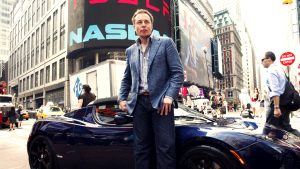
Tesla’s stock price increased dramatically in that period, and SpaceX’s valuation also climbed.
3. Record highs and the half-trillion-dollar milestone
By December 2024, Musk’s net worth broke past US$400 billion—a historic first. (nypost.com) Then, in October 2025, Forbes reported that Musk became the first person ever with a net worth of US$500 billion (briefly). (Investopedia)
4. Compensation deals, legal battles and governance
Musk’s wealth is also tied to massive compensation deals. For example, his 2018 Tesla pay package (worth in the tens of billions) was challenged and struck down in part by a Delaware judge in January 2024 for governance concerns. (Wikipédia) While the legal outcome may not immediately reduce his wealth, it shows the governance risks embedded in such sky-high executive pay arrangements.
5. Market fluctuations and wealth volatility
Despite the soaring peaks, Musk’s net worth has displayed huge volatility—falling when Tesla’s stock dips, when broader tech markets slump, or when regulatory/political concerns mount. The fact that his wealth is so concentrated in a few companies makes it especially sensitive. (Business Insider)
Thus, the path to “mega-wealth” is not a linear climb but a high-amplitude roller-coaster.
V. Why Musk’s wealth-creation story stands out
1. Ownership over compensation
Rather than relying mostly on salary or bonuses, Musk’s model emphasizes large equity stakes and milestone-based compensation. That aligns his upside with the company’s upside and avoids the limit of fixed pay.
2. Combining multiple high-growth ventures
Many entrepreneurs succeed in one business; Musk built or backed multiple companies in different high-growth domains (EVs, space, AI, infrastructure). That diversification (within high-risk/high-reward) unlocked larger total upside.
3. Timing and sectoral shifts
Musk entered EVs just as the world was moving toward decarbonization, joined in space just as commercial space travel and satellite internet took off, and backed AI just as that domain erupted. Being in the right sectors at the right time mattered.
4. Willingness to take bold risks
Musk often invested heavily, personally, and publicly in ventures others would deem too speculative. For example, he invested in Tesla (even saving the company in 2008 with personal funds) when many thought the EV model was impossible to scale. (Business Insider)
5. Capture of growth rather than incremental improvement
Musk’s businesses are not just “better versions” of existing products—they aim to transform entire industries (cars → autonomous EVs; rockets → reusable launch; brain-machine interface; global satellite internet). That kind of transformational mindset tends to yield outsized returns.
6. Leveraging media & narrative
Musk also understands the power of narrative. His public persona, bold vision (colonising Mars, AI that “saves humanity”, EVs for all), and ability to draw investor attention add intangible value to his ventures—and help drive investor sentiment.
VI. What the numbers tell us (and what they don’t)
1. Net worth ≠ liquid cash
As earlier noted, much of Musk’s wealth is theoretical—based on current share prices and valuations of private companies. If he were to liquidate large parts of his holdings, the actual realizable value might differ due to market impact, tax liabilities, lock-ups, etc. Reddit users aptly observed that a notation of “worth $X billion” often hides illiquidity. (Reddit)
2. Concentration risk
When most of your wealth is tied to a small number of companies (Tesla, SpaceX for Musk), any negative shock to those companies (regulation, competition, macroeconomics) can quickly erode a large fraction of your net worth. Indeed, Musk has experienced such drawdowns.
3. Governance & compensation risk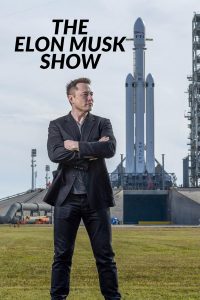
Large stakes and massive compensation packages invite close scrutiny—from shareholders, courts, regulators. Musk’s $55 billion compensation rejig, court challenge etc. show how governance issues can impact wealth and public perception. (Investopedia)
4. External dependencies still matter
Musk’s ventures benefit from broad secular trends (EV adoption, space commercialisation, AI) and favourable policy/subsidy frameworks. These factors are beyond his individual control—so while he rode the wave brilliantly, the wave itself is essential.
5. The role of valuation vs fundamentals
A large share of Musk’s wealth comes from market expectation of future growth (which drives valuations) rather than current profits alone. This means high valuation multiples and speculative elements are baked into the numbers—which adds upside and risk.
6. Wealth as power and responsibility
At ~US$500 billion, Musk’s wealth is not just personal prosperity—it is systemic. The Guardian noted his fortune equated to roughly 1.6% of U.S. GDP at one point. (marketwatch.com) With that comes influence, scrutiny and a degree of responsibility.
VII. The modern dynamics: where is Musk’s wealth going now?
1. 2024-2025: record highs
Recent developments show Musk’s wealth continuing to grow:
- Tesla’s stock rally in 2024 pushed Musk’s net worth past US$400 billion. (nypost.com)
- In October 2025, Forbes pegged his net worth at US$500 billion—the first person ever to hit the half-trillion mark. (Investopedia)
2. Proposed compensation package: toward a trillionaire?
Tesla has proposed an unprecedented 10-year compensation deal for Musk, tied to dramatic milestones (market cap targets, robotaxi deployment, AI/robotics scale-up). If successful, this could push Musk into “trillionaire” territory. (Investopedia)
3. Shifts in wealth composition
While earlier the bulk of Musk’s wealth came from Tesla equity, more recent fractions are moving toward his SpaceX stake and his AI/other business bets. For instance, his SpaceX stake has been valued at US$168 billion in recent reporting. (marketwatch.com)
4. Growing competition, regulatory headwinds
The landscape is becoming tougher: EV competition from China, regulatory/court challenges over executive pay, increased scrutiny of big tech, macro-economic pressures. Musk’s wealth may depend on how well his companies adapt and scale in this tougher environment.
5. The “first trillionaire” narrative
Given current growth trajectories, some analysts suggest Musk could become the first person worth US$1 trillion (though timing and risk remain uncertain). (YouTube) Whether that happens or not, the narrative itself reinforces the scale of his wealth ambition and public perception.
VIII. Lessons & insights from Musk’s wealth-creation journey
1. Align equity and vision
Ownership matters. If you want outsized returns, being a stakeholder (not just employee) in a high-growth venture is critical.
2. Choose big bets in big d
omains
Musk didn’t pick small improvements—he aimed for paradigm shifts (electric cars, reusable rockets, AI). If you’re playing small, returns will likely remain small.
3. Ride the wave—but don’t rely solely on luck
Timing matters. The EV wave, the AI wave, the space commercialisation wave: Musk positioned himself at the confluence of these. But he also did the work: investing, scaling, persisting through failure.
4. Take risk, but manage attention and governance
While Musk took colossal risks, he also managed to maintain board influence, investor relations, media visibility. However, the governance issues (e.g., his compensation battles) show risk isn’t only technological—it’s structural and regulatory.
5. Wealth is volatile when tethered to growth expectations
When your value is based on expectations (future earnings, disruption), then valuations can rise and fall fast. Musk’s fortune has seen wild swings; building buffers or diversification helps.
6. Reinvest for scale — not just for success
Musk often reinvested profits (or never cashed out) and ploughed resources into scaling production, R&D, new launches. If he had taken modest profits early, his upside might have been far smaller.
7. Public narrative and mission amplify value
Musk’s public “mission” (colonise Mars, accelerate sustainable energy, create safe AI) creates brand, investor attraction, and media attention—thus reinforcing value beyond pure engineering or manufacturing.
8. Understand that paper wealth ≠ cash flow
Massive net worth is nice; converting it to personal liquid assets or philanthropic capital is a separate challenge. For entrepreneurs aspiring to wealth, realise that scaling and liquidity aren’t identical.
IX. Conclusion
Elon Musk’s ascent to extraordinary wealth is not the result of one lucky break—it is the product of decades of strategic entrepreneurship, high-stakes investment, bold vision, alignment of ownership and execution, and perfect timing in transformative sectors. From his early stakes in Zip2 and PayPal to his leadership of Tesla and SpaceX, and his forays into AI and infrastructure, Musk exemplifies how ambition paired with execution can generate scale few ever reach.
However, the story also carries cautionary notes: wealth driven by valuation can be volatile; being the richest person in the world brings intense scrutiny; and much of that wealth remains on paper, with liquidity, governance and regulatory issues always lurking.
For business leaders, innovators and aspiring entrepreneurs, Musk’s journey suggests that the pathway to massive wealth lies less in incremental improvement and more in transformative ambition, ownership, timing and the willingness to embrace risk. As Musk continues toward perhaps the next benchmark—be it the first trillionaire, or achieving his Mars-oriented vision—his wealth milestone serves both as inspiration and a blueprint for what it takes to play at the largest scale.
Embrace the Right Amount of Makeup