
 By admin
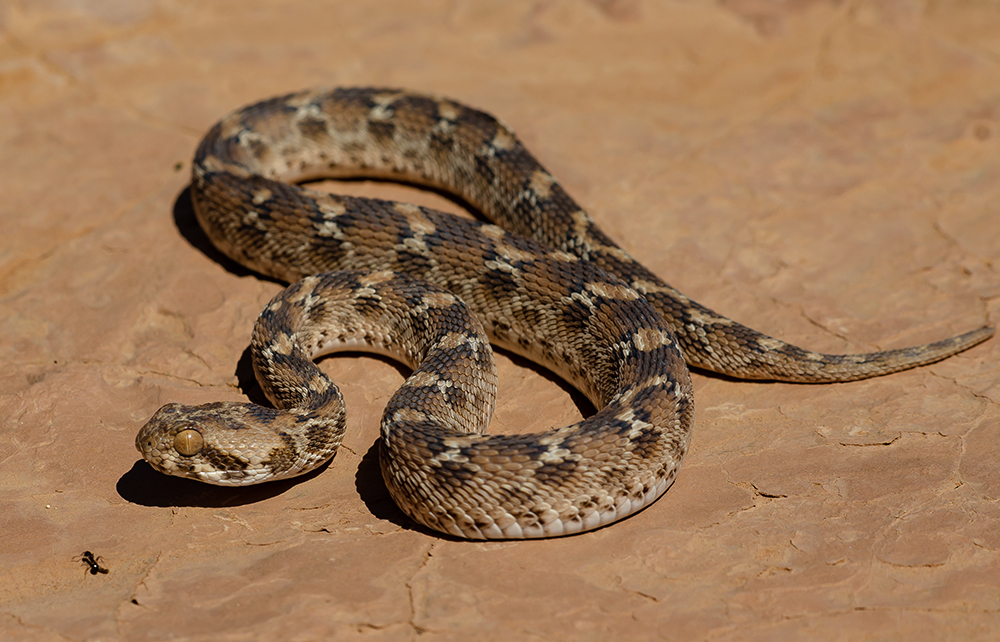
How Do Snakes Hear Without External Ears? The Science Behind Their Extraordinary Sense of Sound
Introduction
At first glance, snakes may appear to be completely deaf creatures. They lack external ears, earlobes, or even visible openings on the sides of their heads—features we typically associate with hearing. Yet, anyone who studies snake behavior knows that these reptiles respond to sound, vibrations, and even subtle environmental cues with incredible precision. So how do snakes hear if they have no ears?
Modern research in biology, zoology, and neurophysiology has revealed that snakes have evolved a sophisticated and highly specialized auditory system—different from that of mammals, but no less effective. Instead of relying on airborne sound waves captured by outer ears, snakes detect vibrations through their bones, skin, and internal structures. This unique mechanism allows them to “hear” in a way that is perfectly adapted to their ecological needs as stealthy predators and evasive prey.
This article explores how snakes hear, the anatomy behind their auditory abilities, the role of vibrations, differences between species, and how modern science continues to unlock the mysteries of snake perception. With a detailed professional structure and strong SEO keywords, this guide will offer a comprehensive look at one of nature’s most fascinating sensory adaptations.
Main Body
1. The Myth: Are Snakes Deaf?
For centuries, people believed snakes were deaf, largely because they lack external ears. However, scientific studies prove the opposite. Snakes do hear—but they do so differently than humans. They don’t rely on eardrums or outer ears; instead, their sensory system is built around detecting vibrations and low-frequency sounds.
1.1 Why People Thought Snakes Were Deaf
- No visible external ears
- Limited reaction to high-pitched airborne sounds
- Behavior focused on ground-based cues
1.2 Modern Scientific Evidence
Studies using behavioral experiments and imaging technology show that snakes respond to a wide range of frequencies, especially low-frequency vibrations between 80–600 Hz, which match the sounds produced by prey, predators, and movement in their surroundings.
2. Snake Hearing Anatomy: A System Built for Vibrations
Unlike mammals, snakes lack the three-part ear structure (outer, middle, inner). Instead, they have a streamlined auditory system that specializes in sensing movement and vibrations.
2.1 No External Ear: Why Evolution Eliminated It
External ears may be helpful for mammals, but for burrowing or ground-hugging animals like snakes, they are unnecessary and even disadvantageous. Snakes evolved to:
- Move through tight spaces
- Avoid obstacles
- Maintain sleek, aerodynamic bodies
Thus, the external ear disappeared, but internal hearing mechanisms remained.
2.2 The Jawbone Connection: A Unique Hearing Tool
One of the most remarkable features of snake anatomy is the quadrate bone, which connects the lower jaw to the skull.
The lower jaw bones:
- Rest lightly on the ground when the snake moves or waits
- Pick up tiny ground vibrations
- Transfer these vibrations to the quadrate bone
- Send signals to the inner ear
This bone-conduction hearing is incredibly sensitive.
2.3 The Inner Ear: Similar Yet Different
Inside a snake’s skull lies a functional inner ear with:
- A columella auris (the snake version of the stapes bone)
- Fluid-filled chambers
- Sensory hair cells

These cells convert mechanical vibrations into electrical signals that the brain interprets as “sound.”
2.4 Bone Conduction vs. Air Conduction
Snakes primarily depend on bone conduction, not air conduction. This means:
- They are excellent at detecting ground vibrations
- They are less sensitive to sounds traveling through the air
- They “hear” differently from mammals but no less effectively
3. How Snakes Detect Vibrations: Their Primary Hearing Method
Vibration detection is the heart of snake hearing.
3.1 Ground Vibrations: Their Main Auditory Channel
Snakes detect:
- Footsteps of large animals
- Movements of prey
- Approach of predators
- Shifting soil and environmental disturbances
A snake’s body acts like a long, sensitive antenna, transmitting signals to the jaw and skull.
3.2 Substrate Sensitivity
The type of ground affects how well a snake hears.
- Sand and loose soil: Excellent vibration transmission
- Dense clay: Less effective
- Rocky terrain: Variable sensitivity
Burrowing species have even more refined vibration detection abilities.
3.3 Airborne Vibrations: Hearing Through the Skull
While less sensitive to airborne sound, snakes can still detect:
- Low-frequency sound waves
- Deep vibrations in the air
- Loud environmental noises
These vibrations travel through the skull bones to the inner ear.
4. What Sounds Can Snakes Hear?
4.1 Frequency Range
Studies show snakes hear best between 40–600 Hz.
For comparison:
- Human hearing: 20–20,000 Hz
- Snake hearing: Narrow, low-frequency range
This range is ideal for:
- Rodent movement
- Rustling leaves

- Heavy footsteps
- Low growls
4.2 Sounds Snakes Do Not Hear Well
Snakes are not sensitive to:
- High-pitched voices
- Music
- Sharp clicks
- High-frequency whistles
Thus, charmers’ flutes do not “attract” snakes; instead, snakes react to movement, not sound.
5. Behavior and Hearing: How Snakes Use Their Acoustic Sense
5.1 Detecting Prey
Snakes rely on vibrations to:
- Sense approaching rodents
- Detect crawling insects
- Locate burrowing animals
Even subtle digging movements beneath the ground can alert a snake to prey.
5.2 Avoiding Danger
Hearing helps snakes detect:
- Approaching humans
- Predators like birds and mammals
- Environmental disturbances
These cues allow snakes to escape or hide.
5.3 Communication Between Snakes
Although they do not vocalize, snakes can detect:
- Tail vibrations
- Movements of competing snakes
- Mating rituals involving rhythmic shifting
Vibrational “communication” plays a role, especially among ground-dwelling species.
6. Differences in Hearing Among Snake Species
6.1 Burrowing Snakes
Species like sand boas and blind snakes:
- Have extremely strong vibration detection
- Rely almost entirely on ground signals
- Prefer low-frequency environments
6.2 Arboreal (Tree-Dwelling) Snakes
These species:
- Depend more on airborne vibrations
- Detect the movement of birds
- Sense branch movements caused by prey
6.3 Aquatic Snakes
Water transmits vibrations efficiently.
Aquatic snakes are sensitive to:
- Water ripples
- Splashing prey
- Underwater disturbances
6.4 Large vs. Small Snakes
Larger species like pythons detect deeper vibrations better due to their heavy jawbones.
7. The Role of Scientific Technology in Understanding Snake Hearing
7.1 Imaging and Auditory Tests
Researchers use:
- Laser Doppler vibrometry
- Micro-CT scans
- Neural response analysis
These tools map how sound waves move through a snake’s skeleton and how its brain responds.
7.2 Behavior Studies
By observing snake reactions to controlled vibrations, scientists confirm:
- Snakes distinguish between different vibration patterns
- They can pinpoint the direction of a vibration
- Their responses depend on species, environment, and vibration type
7.3 Ongoing Research
Scientists are still learning:
- How snakes use hearing in hunting strategies
- Whether snakes can adapt to urban noise
- How hearing varies across the snake evolutionary tree
8. Why Snakes Don’t Need External Ears: An Evolutionary Perspective
Snakes evolved from lizard ancestors millions of years ago. As their body shape changed:
- Limbs were lost
- Bodies elongated
- Lifestyles shifted to ground and underground habitats
External ears eventually disappeared because:
- They weren’t useful in tight spaces
- Vibration detection was more reliable
- Smooth bodies helped snakes move silently
The result:
A highly refined vibration-based hearing system perfectly adapted to their environment.
Conclusion
Snakes may not hear the world the way humans do, but their unique auditory system is a remarkable product of evolution. Instead of relying on external ears or eardrums, snakes detect vibrations through their jawbones, skulls, and inner ear structures, giving them surprising sensitivity to low-frequency sounds. This adaptation allows them to track prey, avoid predators, navigate their habitats, and survive in diverse environments—whether underground, in trees, or beneath water.
Understanding how snakes hear not only reveals the complexity of reptile sensory biology but also highlights the extraordinary ways nature shapes organisms to fit their ecological roles. Far from being “deaf,” snakes possess a finely tuned sense of hearing that is different, specialized, and incredibly effective.
How Does a Bee Become a Queen?