
 By admin

Introduction
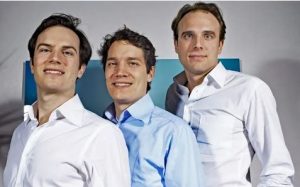
In the global startup ecosystem, few names evoke as much intrigue, controversy, and admiration as the Samwer brothers—Marc, Oliver, and Alexander. Hailing from Germany, this entrepreneurial trio has built an empire based on the controversial yet undeniably effective strategy of replicating successful American internet business models and tailoring them to European and emerging markets. Through their venture-building powerhouse Rocket Internet, the Samwer brothers have left a lasting imprint on the global tech landscape, launching some of the most recognized brands in e-commerce, food delivery, and fintech.
This article provides an in-depth exploration of their entrepreneurial journey, examining the brothers’ background, business strategies, iconic ventures, criticisms, and lasting impact on the startup world. By diving deep into their methodology of fast scaling, market adaptation, and execution, we gain insight into one of the most dynamic forces shaping today’s digital economy.
I. The Samwer Brothers: Background and Early Influences
A. Family Heritage and Early Exposure to Business
Born and raised in Cologne, Germany, the Samwer brothers grew up in a privileged environment that fostered their entrepreneurial ambitions. Their father, Sigmar-Jürgen Samwer, was a well-respected lawyer, which gave them access to elite networks and high levels of education. However, rather than following a traditional path, the brothers demonstrated a shared passion for business innovation and market disruption from an early age.
B. Education and Formative Years
All three brothers pursued higher education in business and law, gaining exposure to international markets, particularly the burgeoning tech scene in Silicon Valley. This global perspective would later become a key asset in identifying scalable opportunities across borders.
II. First Ventures: From Alando to Jamba!
A. Alando: The German eBay
In 1999, Marc, Oliver, and Alexander Samwer co-founded Alando, a German online auction platform that was essentially a localized version of eBay. Alando quickly gained traction, capitalizing on Germany’s rising interest in e-commerce.
Key Achievement:
Within just 100 days, eBay acquired Alando for $50 million, marking the brothers’ first major exit and showcasing their ability to identify gaps in local markets and execute swiftly.
B. Jamba!: Capitalizing on Mobile Content Trends
Riding on their initial success, the Samwers turned to the booming mobile content market with Jamba!, founded in 2000. Jamba! specialized in ringtones and mobile applications, becoming one of Europe’s leading mobile content providers.
Key Highlights:
- Rapid market dominance in the ringtone sector.
- Eventually sold to VeriSign for $273 million in 2004.
These ventures established the Samwers as serial entrepreneurs adept at rapid scaling and exit-focused strategies.
III. Rocket Internet: Industrializing Startup Replication
A. Founding of Rocket Internet
In 2007, the Samwer brothers launched Rocket Internet, a Berlin-based startup incubator and venture builder with a mission to identify successful business models globally and adapt them for under-served markets.
B. Core Strategy: Copy, Adapt, and Scale
Rocket Internet’s model is often summarized as “copycat entrepreneurship”—a method involving:
- Identifying successful U.S. startups (e.g., Amazon, Uber, Airbnb).
- Replicating their core value propositions for markets like Europe, Asia, and Africa.
- Localizing the business model to fit regulatory, cultural, and economic contexts.
- Rapid scaling using aggressive funding and operational tactics.
C. Global Reach and Market Focus
Rocket Internet’s reach extends across Europe, Asia, Latin America, Africa, and the Middle East, with an emphasis on e-commerce, fintech, food delivery, and logistics.
IV. Notable Ventures and Investments
A. Zalando: Fashion E-Commerce Giant
Founded in 2008, Zalando is Europe’s largest online fashion retailer, often likened to Zappos in the U.S.
Achievements:
- IPO in 2014, with a valuation exceeding €5 billion.
- Dominance in over 15 European markets.
B. HelloFresh: Revolutionizing Food Delivery
Launched in 2011, HelloFresh delivers meal kits directly to consumers’ doors.
Milestones:
- Went public in 2017, now valued at over $10 billion.
- Global operations, including in North America, Europe, and Australia.
C. Delivery Hero: Global Food Delivery Network
Initially part of Rocket Internet’s portfolio, Delivery Hero has become a global food delivery leader, active in over 40 countries.
Achievements:
- IPO in 2017, raising over €1 billion.
- Acquisition of competitors to consolidate market presence.
D. Additional Ventures
- Lamoda (fashion e-commerce in Russia).
- Foodpanda (food delivery across Asia).
- Global Fashion Group (fashion marketplace for emerging markets).
V. Controversies and Criticisms
A. Accusations of Copycat Tactics
The Samwers have been frequently criticized for their “cloning” strategy, which some argue stifles innovation and undermines original entrepreneurs.
Criticisms include:
- Lack of original ideation.
- Legal battles over intellectual property.
- Aggressive competitive practices.
B. Defense: Market Adaptation and Execution
The brothers argue that local adaptation and flawless execution are equally valuable as innovation, especially in markets underserved by Silicon Valley giants.
Key Arguments:
- “Cloning” provides market access to regions ignored by U.S. companies.
- Execution and local customization are crucial for success, not just the idea.
VI. Philanthropy and Broader Impact
Although the Samwer brothers are famously private about their personal lives, they have engaged in philanthropic efforts focused on education, entrepreneurship, and healthcare initiatives in emerging markets. Their impact investments aim to foster innovation ecosystems in developing regions.
VII. Legacy and Impact on the Global Startup Ecosystem
A. Redefining Entrepreneurship
The Samwers have redefined what it means to be entrepreneurs by industrializing the startup process—a feat that has been both celebrated and condemned.
B. Driving Competition and Innovation
Despite criticisms, their ventures have:
- Increased competition in stagnant markets.
- Forced incumbents to innovate.
- Created thousands of jobs worldwide.
C. Lessons for Entrepreneurs
Key takeaways from the Samwer model:
- Speed of execution is often as critical as ideation.
- Localization is essential when scaling globally.
- Aggressive growth tactics can win markets before competition arises.
Conclusion
The Samwer brothers’ journey offers a compelling study in entrepreneurship, innovation, and global business strategy. By systematically replicating and localizing proven business models, they have built a formidable portfolio of companies that have reshaped industries worldwide. While their methods have sparked debate, their impact on the global startup ecosystem is undeniable. They have proven that execution, speed, and market understanding can rival the power of innovation itself, offering lessons for future entrepreneurs navigating the high-stakes world of tech startups.
Saudi Arabia’s Vision for the Gaming Industry