
 By admin
Why Can’t We Just Print More Money and Make Everyone Rich?
Introduction
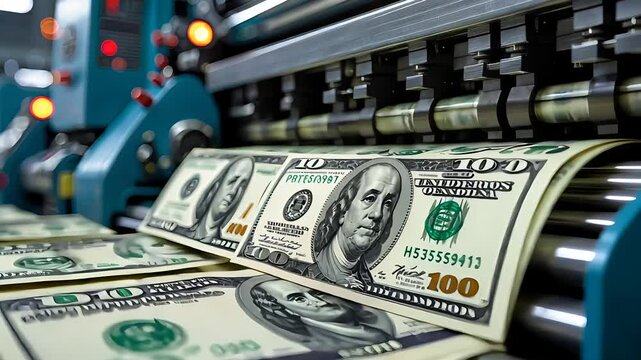
The idea of printing more money to solve economic problems seems simple and attractive. If governments can produce unlimited banknotes, why not print more to eliminate poverty, create jobs, and make everyone wealthy? After all, money is just paper, right?
In reality, the relationship between money supply, wealth, and economic stability is far more complex. Printing excessive amounts of currency without economic backing does not make a country richer—it often makes it poorer. This article explores why money printing is not a miracle solution, examining the concepts of inflation, purchasing power, real wealth creation, and historical examples of economies that tried this approach and failed. It also looks at modern monetary policies and why nations cannot ignore economic fundamentals.
Understanding Money Beyond Paper
Money as a Medium of Exchange
Money is not valuable simply because it exists as paper or digital numbers in a bank account. Its value comes from what it represents: a claim on goods, services, and resources within the economy. Printing more money does not increase the number of cars, houses, or food available—it only increases the amount of currency chasing the same goods.
The Difference Between Money and Wealth
Wealth is the real value created through production, innovation, labor, and natural resources. For instance, a nation becomes wealthier when it builds factories, grows crops, develops technology, or provides services. Printing money does not create these resources—it only changes the amount of paper used to represent them.
The Core Problem: Inflation
What Is Inflation?
Inflation occurs when the general price of goods and services rises over time. If a government prints money without increasing production, demand goes up while supply stays the same. The result? Prices skyrocket.
For example, if a loaf of bread costs $1 today and the government suddenly doubles the money supply, that same loaf might cost $2 tomorrow. Citizens may have more money in hand, but their purchasing power remains the same—or worse, declines.
Hyperinflation: When Printing Money Goes Wrong
Hyperinflation is the extreme form of inflation where prices rise uncontrollably. This usually happens when governments print vast amounts of money to cover deficits or debt.
Historical examples include:
- Weimar Germany (1920s): The German government printed enormous sums to pay war reparations. At its peak, people needed wheelbarrows full of cash just to buy bread.
- Zimbabwe (2000s): Inflation reached astronomical levels, with a 100 trillion Zimbabwean dollar note issued in 2009.
- Venezuela (2010s): Printing money to cover deficits led to hyperinflation that devastated the economy, making even basic goods unaffordable.
These cases show that excessive money creation destroys trust in currency and destabilizes entire societies.
Why Printing More Money Doesn’t Work
The Supply and Demand Imbalance
If everyone suddenly had more money, demand for goods would surge instantly. However, production capacity—factories, workers, raw materials—cannot expand overnight. This imbalance causes shortages and price spikes.
The Loss of Trust in Currency
Money works because people trust it as a store of value. When governments flood the economy with excessive money, confidence erodes. People may turn to foreign currencies, gold, or even bartering, undermining the national economy.
The Risk of Currency Devaluation
If a country prints excessively, international markets lose confidence in its currency. The value of that currency falls compared to others, making imports more expensive and further driving inflation.
The Role of Central Banks
Why Central Banks Control Money Supply
Institutions like the Federal Reserve (U.S.), the European Central Bank, and the Bank of England carefully regulate how much money enters the economy. They aim to balance growth and inflation by adjusting interest rates, reserve requirements, and open market operations.
Printing Money in Controlled Ways
Central banks do sometimes expand the money supply—but in controlled, measured ways. For instance, during financial crises, they may use quantitative easing (QE) to inject liquidity into the economy. Unlike reckless money printing, QE is carefully monitored, temporary, and aimed at stimulating investment rather than simply handing out cash.
Common Misconceptions
Misconception 1: “If We Print More, Everyone Will Be Richer”
Reality: More money in circulation without more goods just increases prices. People feel richer briefly but quickly realize their money buys less.
Misconception 2: “The Government Can Just Erase Debt by Printing”
Reality: Printing to repay debt reduces trust in government bonds and can lead to currency collapse. Investors demand higher interest rates, making borrowing more expensive.
Misconception 3: “Digital Currencies Work Differently”
Reality: Whether physical or digital, money’s value still depends on trust, scarcity, and real economic output. Printing digital money recklessly would have the same inflationary effects.
Case Studies: Lessons from History
Weimar Germany
After World War I, reparations and money printing created hyperinflation. By 1923, prices doubled every few days, and workers demanded wages twice a day to buy food before prices rose again.
Zimbabwe
In the 2000s, printing money to pay for war costs and land reforms led to inflation of 79.6 billion percent per month at its peak. The Zimbabwean dollar eventually became worthless.
Venezuela
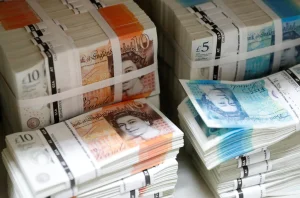
In the 2010s, oil dependency and government overspending fueled massive m
oney printing. Hyperinflation destroyed purchasing power, forcing citizens to rely on U.S. dollars and barter systems.
These examples highlight a critical truth: uncontrolled money creation destroys economies rather than saving them.
Alternatives to Printing Money
Boosting Productivity
Instead of printing money, countries grow wealth by investing in infrastructure
, education, and innovation. Productivity improvements create real wealth and sustainable growth.
Progressive Taxation and Redistribution
Governments can reduce inequality by designing fair tax systems and redistributing wealth through social programs—without destabilizing currency.
International Trade and Investment
By opening markets, encouraging exports, and attracting foreign investment, nations create long-term wealth rather than short-term illusions.
Responsible Monetary Policy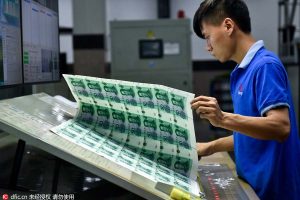
Careful management of money supply, interest rates, and fiscal discipline helps economies thrive without triggering inflation.
Why Controlled Inflation Is Actually Good
Economists agree that a small, controlled level of inflation (around 2% annually in most advanced economies) is healthy. It encourages spending and investment, prevents hoarding, and reflects gradual economic growth. The challenge is keeping inflation predictable and manageable.
Conclusion
The question, “Why don’t we just print more money and make everyone rich?” reveals a common misunderstanding about economics. Money itself is not wealth—it is only a tool for exchanging real value. Printing excessive amounts without increasing goods and services simply leads to inflation, currency collapse, and economic chaos.
Real wealth comes from productivity, innovation, trade, and responsible governance. While the dream of instant riches through money printing is tempting, history shows that it always ends in disaster. The true path to prosperity lies not in endless banknotes but in building sustainable economic systems that generate real value for all.
Bookkeeping for Your Online Business