
 By admin
Introduction
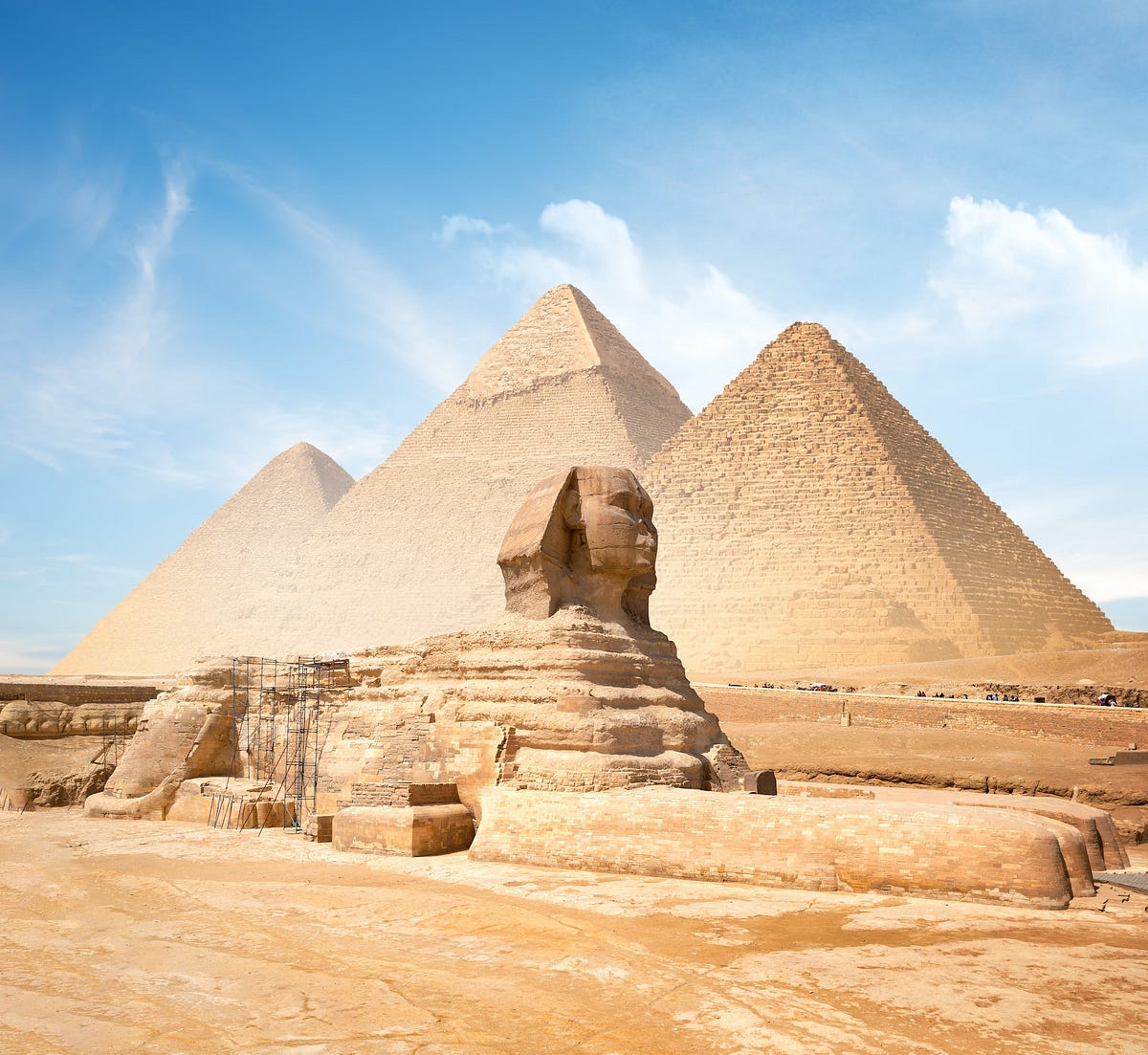
Few monuments in human history have fascinated people as much as the pyramids of ancient Egypt. Standing tall on the Giza Plateau for more than 4,500 years, these colossal structures remain a testament to the vision, engineering brilliance, and determination of the Pharaohs and their people. The Great Pyramid of Khufu (Cheops), the Pyramid of Khafre, and the Pyramid of Menkaure are not just tombs—they are cultural symbols that embody the power, spirituality, and architectural mastery of one of the world’s earliest civilizations.
For centuries, scholars, explorers, and curious minds have debated the question: how did the ancient Egyptians build the pyramids without modern technology? Theories range from the ingenious use of ramps and levers to complex social organization involving tens of thousands of skilled workers. Recent archaeological discoveries, combined with modern scientific analysis, have shed new light on this age-old mystery, helping us piece together a clearer picture of pyramid construction.
This article explores the methods, materials, workforce, religious significance, and modern discoveries surrounding the pyramids, revealing how the Pharaohs turned their visions of eternity into stone reality.
The Historical Context of Pyramid Construction
The Old Kingdom and the Age of the Pyramids
The construction of the pyramids took place primarily during Egypt’s Old Kingdom (2686–2181 BCE), often referred to as the “Age of the Pyramids.” Pharaohs during this era viewed themselves not just as political rulers but as divine beings whose legacy had to be eternal. Monumental tombs were therefore essential to ensure their passage into the afterlife.
Before the pyramids, Egyptian kings were buried in mastabas—flat-roofed rectangular tombs. The innovation came with Djoser’s Step Pyramid at Saqqara, designed by the architect Imhotep around 2630 BCE. This structure marked the beginning of pyramid evolution, ultimately culminating in the smooth-sided pyramids at Giza.
The Pharaohs Behind Giza’s Pyramids
- Khufu (Cheops): Built the Great Pyramid, the largest and most iconic of them all.
- Khafre: Built the second pyramid, often associated with the Great Sphinx.
- Menkaure: Constructed the smallest of the three main pyramids at Giza, but with exquisite precision.
Each pyramid reflected not only the Pharaoh’s desire for immortality but also the empire’s wealth, workforce organization, and technological progress.
Planning and Designing the Pyramids
The Vision of Eternity
Pyramids were not random structures; they were carefully designed to align with religious and cosmic beliefs. Many pyramids are aligned with cardinal points and celestial bodies like Orion’s Belt and the North Star, emphasizing their spiritual symbolism.
Architectural Planning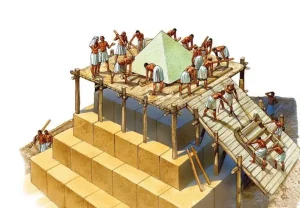
Archaeological findings show that Egyptians used tools like:
- Ropes and wooden stakes to measure straight lines.
- Simple leveling instruments filled with water to ensure flat surfaces.
- Geometry and early mathematics to calculate angles and dimensions.
The base of the Great Pyramid is almost a perfect square, with sides measuring over 230 meters each, and misaligned by less than 0.1 degrees—an astonishing feat without modern surveying equipment.
Materials and Transportation
Quarrying the Stones
The pyramids were built using millions of limestone and granite blocks, some weighing up to 80 tons.
- Local limestone was used for the pyramid’s core.
- Higher-quality Tura limestone was used for the smooth outer casing, giving the pyramids their brilliant white appearance.
- Granite from Aswan, nearly 900 km away, was used for internal chambers and structural support.
Transporting the Stones
One of the greatest challenges was moving these colossal stones. Recent evidence suggests:
- Wooden sledges were dragged across sand lubricated with water to reduce friction.
- Canals and boats transported heavy granite blocks along the Nile.
- Rollers and levers may have helped position blocks precisely.
In 2018, archaeologists discovered ancient papyrus scrolls known as the Diary of Merer, written by an overseer. It described how limestone blocks were transported along canals to Giza, providing the first direct evidence of logistics in pyramid building.
Construction Techniques
The Ramp Theories
The most widely accepted explanations for pyramid construction involve ramps. Several models exist:
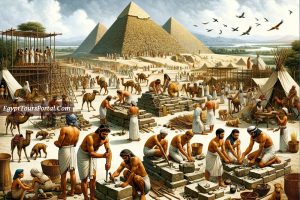
- Straight ramp theory – A massive straight ramp leading to the pyramid’s base.
- Zigzag ramp theory – A switchback ramp built along one face of the pyramid.
- Spiral ramp theory – A ramp circling the pyramid as it rose.
Each theory has merits and challenges, but evidence of ramps at other pyramid sites suggests some form of ramp system was crucial.
Lever and Pulley Systems
While pulleys as we know them were not used, Egyptians likely employed wooden levers to lift stones and adjust their positions with precision.
Workforce Organization
Contrary to old myths of “slave labor,” evidence shows that pyramid builders were skilled workers, artisans, and farmers working in rotating teams. Excavations near Giza revealed:
- Worker villages with bakeries, breweries, and medical facilities.
- Hierarchical labor organization with overseers and engineers.
- A workforce of around 20,000–30,000, not the 100,000 or more often claimed.
Religious and Cultural Significance
Symbolism of the Pyramid Shape
The pyramid was not just a tomb but a cosmic symbol:
- Its triangular shape represented the sun’s rays, connecting the Pharaoh with the sun god Ra.
- The pyramid’s peak pointed toward the heavens, symbolizing ascension to the afterlife.
Rituals and Afterlife Beliefs
Inside, the pyramids housed chambers, passageways, and elaborate burial rituals. They contained treasures, food, and symbolic items to aid the Pharaoh’s journey to eternity. Hieroglyphic inscriptions and wall carvings reinforced the spiritual role of these monumental structures.
Modern Discoveries and Scientific Insights
Archaeological Breakthroughs
- Thermal scanning has revealed hidden cavities in the Great Pyramid.
- Muon tomography (cosmic-ray imaging) detected large voids inside Khufu’s pyramid, possibly undiscovered chambers.
- The Papyrus of Merer confirmed logistical details of stone transport.
Engineering Lessons
Modern engineers studying the pyramids gain insights into:
- Material durability: The limestone and granite have survived millennia of erosion.
- Precision construction: The alignment and measurements are still unmatched.
- Project management: The ability to coordinate thousands of workers on a single vision.
Debunking Myths
Despite popular myths, there is no evidence of aliens or lost advanced civilizations. Instead, the pyramids reflect the human genius of ancient Egyptians, who combined ingenuity, organization, and spirituality to achieve greatness.
Legacy of the Pyramids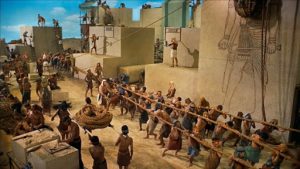
The pyramids remain more than architectural wonders; they are enduring symbols of human ambition and creativity. They continue to attract millions of visitors annually and inspire architects, historians, and engineers worldwide.
Moreover, their influence spread beyond Egypt. Later civilizations borrowed elements of pyramid-like structures, from Mesopotamian ziggurats to Mesoamerican temples.
The pyramids remind us that human determination, when guided by vision and belief, can create monuments that withstand the test of time.
Conclusion
The mystery of how the Pharaohs built the pyramids is not fully solved, but modern research has brought us closer to understanding the blend of engineering brilliance, organized labor, and spiritual devotion that made these monuments possible. They were not the work of slaves, nor of aliens, but of a highly skilled and motivated civilization determined to secure eternal life for their rulers.
The pyramids of Giza are more than tombs—they are timeless testaments to the power of human will, organization, and creativity. As we uncover more evidence, the story of their construction continues to inspire awe, reminding us that even in the ancient world, human ambition could move mountains—literally.
Why is the Leaning Tower of Pisa Leaning?