
 By admin
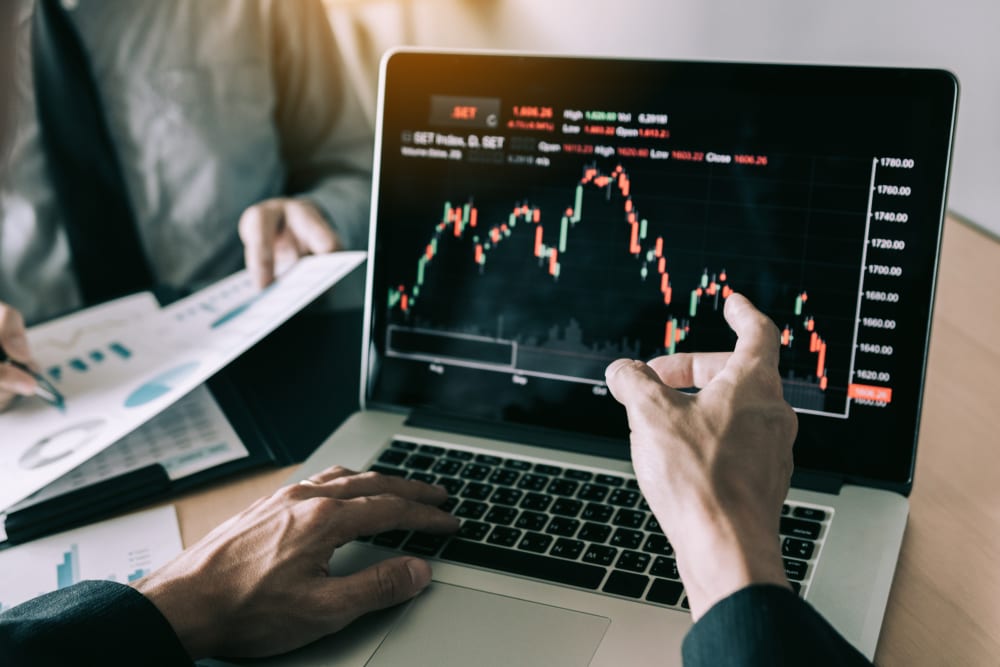
Who Participates in the Forex Market? A Deep Dive into the Global Currency Trading Ecosystem
Introduction: Understanding the World’s Largest Financial Market
The foreign exchange market (forex or FX) stands as the world’s largest and most liquid financial marketplace, with a daily trading volume surpassing $7.5 trillion in 2025. Unlike stock exchanges confined to specific countries or locations, the forex market operates 24 hours a day, five days a week, across major global financial hubs such as London, New York, Tokyo, Singapore, and Frankfurt.
At its core, the forex market revolves around the buying and selling of currencies—the lifeblood of international trade and investment. Every transaction, whether it’s a corporation purchasing raw materials abroad, a central bank adjusting monetary policy, or an individual trader speculating on price movements, involves currency exchange.
Yet, despite its vastness, not all participants in the forex market play the same role or operate at the same scale. Understanding who participates in forex trading helps explain how prices are determined, what drives market volatility, and how global economic forces are intertwined through currency movements.
This article provides a comprehensive look into the main participants of the forex market—from central banks and commercial institutions to hedge funds, corporations, and retail traders—illustrating how each contributes to the dynamic flow of the world’s currency economy.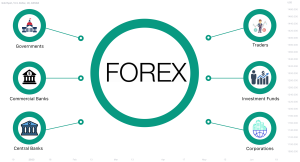
1. The Structure of the Forex Market
1.1 A Decentralized Network
Unlike stock exchanges that operate through a centralized exchange, the forex market is decentralized and over-the-counter (OTC). This means trading occurs directly between participants—banks, corporations, brokers, and traders—without a central marketplace.
Technology plays a critical role in this structure. With advanced electronic communication networks (ECNs) and algorithmic trading platforms, participants can trade instantly across time zones, ensuring liquidity around the clock.
1.2 The Interbank Market
The interbank market forms the backbone of forex trading, where the world’s largest banks and financial institutions exchange currencies in massive volumes. These transactions, often worth millions or billions of dollars, establish the reference exchange rates seen by other participants.
In 2025, interbank transactions account for roughly 45–50% of global forex volume, according to data from the Bank for International Settlements (BIS). This dominance reflects the essential role banks play in maintaining market liquidity, managing risks, and facilitating global payments.
2. Central Banks: The Guardians of Monetary Stability
2.1 Role and Influence
Central banks are arguably the most powerful participants in the forex market. Institutions such as the U.S. Federal Reserve (Fed), the European Central Bank (ECB), the Bank of Japan (BoJ), and the Bank of England (BoE) oversee national monetary policies, regulate currency supply, and maintain economic stability.
Central banks intervene in forex markets for several reasons:
- Stabilizing currency fluctuations to support economic goals.
- Managing inflation by influencing interest rates and money supply.
- Accumulating foreign reserves to strengthen economic resilience.
- Supporting export competitiveness through currency devaluation or revaluation.
2.2 Examples of Central Bank Actions
A classic example is the Bank of Japan’s periodic yen interventions, which aim to prevent excessive currency appreciation that could hurt exporters. Similarly, the People’s Bank of China (PBoC) carefully manages the yuan’s exchange rate to maintain trade stability.
Central banks typically conduct forex operations through open market transactions, using reserves to buy or sell currencies. Even a single announcement by a major central bank can trigger immediate market reactions, influencing traders, corporations, and investors worldwide.
3. Commercial and Investment Banks: The Powerhouses of Liquidity
3.1 Interbank Trading and Market Making
Large commercial and investment banks are the driving engines of forex liquidity. Institutions such as J.P. Morgan Chase, Citigroup, Deutsche Bank, UBS, HSBC, Barclays, and Goldman Sachs act as intermediaries between buyers and sellers, quoting bid and ask prices for currency pairs.
These banks often serve as market makers, providing continuous liquidity to clients—corporations, hedge funds, and governments—while managing their own currency portfolios.
3.2 Why Banks Trade Forex
Banks participate in forex markets for three main purposes:
- Client transactions: Executing trades on behalf of multinational corporations, institutional investors, or governments.
- Hedging: Managing risks associated with foreign investments, loans, or imports/exports.
- Speculation: Taking strategic positions based on anticipated currency movements to generate profits.
With technological advancements in 2025, banks employ AI-driven analytics and high-frequency trading (HFT) algorithms to detect micro trends and execute trades in milliseconds, maximizing profit opportunities and minimizing risk.
4. Multinational Corporations: Managing Global Cash Flow
4.1 Corporate Forex Operations
Large multinational corporations (MNCs)—such as Apple, Toyota, Shell, and Nestlé—actively engage in forex trading to manage their foreign exchange exposure. When these corporations conduct international business, they must convert earnings, pay suppliers, or repatriate profits across multiple currencies.
For example:
- A U.S.-based company selling products in Europe earns in euros but reports profits in dollars.
- A Japanese car manufacturer paying for materials in U.S. dollars must hedge against yen-dollar fluctuations.
4.2 Hedging and Risk Management
Corporations typically use hedging instruments such as forward contracts, options, and swaps to protect against unfavorable currency movements. For instance, an exporter can lock in an exchange rate months before receiving payment to avoid potential losses from a weakening foreign currency.
These corporate trades, though smaller in volume than those of banks, contribute significantly to the stability and liquidity of the global forex market.
5. Hedge Funds and Institutional Investors: Speculating on Global Currency Trends
5.1 The Role of Speculative Traders
Hedge funds and institutional investors are among the most aggressive players in the forex market. These participants trade with the goal of profiting from currency fluctuations, often leveraging vast sums of money.
Unlike banks or corporations that trade primarily for hedging or operational reasons, hedge funds focus on speculative strategies such as:
- Carry trades (borrowing in low-interest currencies to invest in high-interest ones).
- Macro trading based on geopolitical events and central bank policies.
- Algorithmic trading using machine learning models.
5.2 Market Impact
Funds such as Bridgewater Associates, Renaissance Technologies, and Citadel manage billions in forex positions. Their large trades can influence currency movements, especially in smaller or emerging markets.
In the era of AI-based predictive analytics, these institutions use data from real-time economic indicators, social sentiment analysis, and even satellite data to forecast market directions more accurately than ever before.
6. Retail Traders: The Growing Force in Online Forex
6.1 Rise of Retail Forex Trading
The retail forex market has grown exponentially due to the rise of online trading platforms, mobile apps, and social trading networks. Today, millions of individuals around the world engage in forex trading through brokers like MetaTrader, eToro, Forex.com, and Interactive Brokers.
Retail traders account for roughly 5–10% of total global forex volume, a small yet significant portion given the market’s massive size.
6.2 Accessibility and Technology
Modern platforms allow even small investors to access leverage, advanced analytics, and automated strategies that were once exclusive to institutions.
However, retail traders face higher risks due to leverage and market volatility. Many beginners lose capital due to insufficient understanding of risk management, margin calls, and liquidity traps.
Educational initiatives and AI-based trading assistants now help individual traders make more informed decisions, marking a shift toward data-driven retail participation in 2025.
7. Forex Brokers: The Gatekeepers of Market Access
7.1 How Brokers Operate
Forex brokers serve as the intermediaries between traders and the broader interbank market. They provide the necessary infrastructure for executing trades, offering access to currency pairs, analytical tools, and liquidity providers.
Two main types of brokers dominate the market:
- Dealing Desk (Market Makers): Create internal liquidity and set bid/ask spreads.
- Non-Dealing Desk (ECN/STP Brokers): Route trades directly to liquidity providers for real market pricing.
7.2 Regulation and Transparency
In 2025, regulatory oversight has become stricter. Entities like the Financial Conduct Authority (FCA) in the UK, the Commodity Futures Trading Commission (CFTC) in the US, and the Cyprus Securities and Exchange Commission (CySEC) enforce transparency and protect retail investors from fraud and excessive risk exposure.
8. Governments and Sovereign Wealth Funds
8.1 Governmental Participation
Governments sometimes intervene in forex markets to stabilize their national currency or manage foreign debt payments. By selling or buying their currency, they can influence exchange rates to achieve economic or political goals.
8.2 Sovereign Wealth Funds
Countries with significant financial surpluses—like Norway, Singapore, and the United Arab Emirates—operate sovereign wealth funds (SWFs) that invest globally, including in forex markets. These funds diversify national reserves and hedge against fluctuations in commodity revenues or exports.
Conclusion: A Complex Network of Global Participants
The forex market is a vast, interconnected system sustained by diverse participants—each contributing to global liquidity, stability, and economic integration.
From central banks that shape monetary policy to corporations managing cross-border operations and retail traders leveraging technology for speculative gain, every actor plays a vital role in maintaining the rhythm of global currency flow.
In 2025 and beyond, as technology advances and AI continues to revolutionize financial decision-making, the forex market will remain a cornerstone of the global economy, reflecting the constant dance of politics, trade, and human ambition across borders.
Mastering the Art of Investment Strategy