
 By admin
Introduction
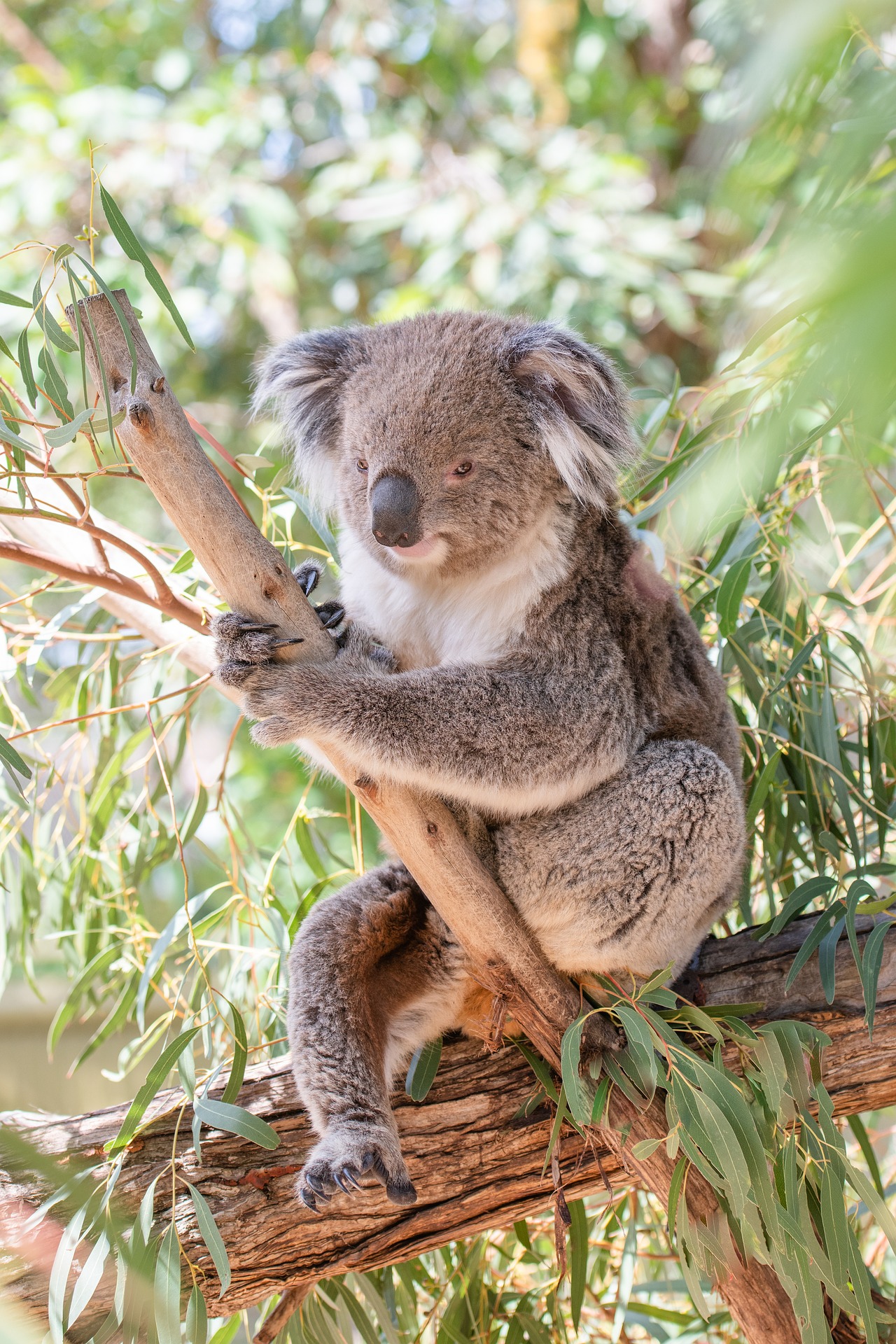
The koala (Phascolarctos cinereus), an iconic symbol of Australia’s wildlife, is a marsupial that captures hearts worldwide with its unique appearance and fascinating biology. Often mistaken for a “bear” due to its bear-like appearance, the koala is, in fact, a tree-dwelling marsupial related to kangaroos and wombats. Known for its leisurely lifestyle, eucalyptus diet, and strong grip that allows it to cling to trees, the koala has a pivotal role in its ecosystem. This essay explores the koala’s biology, physical adaptations, behavior, diet, habitat, and conservation status, highlighting the importance of protecting this beloved species.
Physical Characteristics and Anatomy
The koala is a medium-sized marsupial with a distinctive, stocky body covered in thick, soft fur, which ranges in color from light grey to brownish. The fur is denser on their back, which provides insulation from rain and the elements, while the underside remains lighter and thinner. One of the koala’s most recognizable features is its large, fluffy ears, which enhance its hearing—an essential adaptation for detecting predators or communicating with others.
Koalas have several anatomical adaptations that allow them to thrive in their arboreal environment:
- Strong Limbs and Claws: Their fore and hind limbs are well-developed and muscular, equipped with sharp claws that enable them to climb trees effortlessly and maintain a strong grip on branches.
- Opposable Thumbs: Koalas have two opposable digits on their front paws, giving them a powerful grasp, similar to a human’s thumb.
- Specialized Teeth: Their dental structure is adapted for grinding eucalyptus leaves, which are tough and fibrous. Sharp incisors help strip leaves from branches, while molars and premolars break down the material for digestion.
- Pouch for Reproduction: Like all marsupials, female koalas possess a forward-facing pouch where their underdeveloped young (joeys) complete their development post-birth.
Adult male koalas are typically larger than females, measuring about 70–85 cm (28–33 inches) in length and weighing between 8 to 14 kilograms. Females are smaller, weighing 6 to 10 kilograms on average.
Diet and Digestive Adaptations
The koala’s diet is almost exclusively composed of eucalyptus leaves. Australia has over 600 species of eucalyptus trees, but koalas are highly selective, feeding on only around 30 species. Their preferences vary based on geographic location, age, and the chemical composition of the leaves.
- Eucalyptus Leaves: Eucalyptus leaves are low in nutrients, high in fiber, and contain toxic compounds such as phenols and tannins. Few animals can digest this toxic food source, making the koala a unique herbivore.
- Slow Metabolism: To cope with such a low-energy diet, koalas have an exceptionally slow metabolic rate, which allows them to conserve energy. They spend 18–22 hours a day resting or sleeping, minimizing their energy expenditure.
- Specialized Digestive System: Koalas possess a long cecum (part of the large intestine) filled with bacteria that break down the fibrous cellulose in eucalyptus leaves. This microbial fermentation process allows the koala to extract the limited nutrients available in their diet.
Koalas consume around 500 grams of leaves daily, which also fulfill most of their water requirements, although they will drink from water sources during droughts or extreme heat.
Behavior and Lifestyle
Koalas are solitary and highly territorial animals, preferring to live in well-defined home ranges that they mark and defend. Despite their sedentary reputation, koalas can be surprisingly agile when moving between branches or trees. Key aspects of their behavior include:
- Sleeping Patterns: Koalas sleep for most of the day—up to 22 hours—due to their low-calorie diet and slow metabolism. They are primarily nocturnal, becoming active at night to feed and move.
- Communication: Koalas communicate through a series of vocalizations, including deep bellows, grunts, and snarls. Male koalas produce low-frequency calls to establish dominance and attract mates.
- Reproduction and Lifecycle: Koalas have a slow reproductive rate, which makes their populations vulnerable. Females reach sexual maturity at about 2–3 years old, and they give birth to a single joey after a short 35-day gestation period.
- Joeys are born blind, hairless, and about the size of a jellybean. They crawl into the mother’s pouch, where they remain for about 6–7 months, feeding on milk.
- Once the joey leaves the pouch, it clings to its mother’s back and continues to nurse while transitioning to eucalyptus leaves.
Koalas are not inherently aggressive, but they may display defensive behavior when threatened, emitting loud growls or scratching with their sharp claws.
Habitat and Geographic Distribution
Koalas are native to Australia and are found primarily in eucalyptus forests along the eastern and southeastern coastlines. Their range extends across Queensland, New South Wales, Victoria, and South Australia. Preferred habitats include open woodlands and forests where eucalyptus trees dominate.
The koala’s habitat requirements are specific: they need suitable eucalyptus trees for food and large, continuous areas of forest for movement, shelter, and reproduction. Habitat fragmentation due to human activities, urbanization, and deforestation poses significant threats to their survival.
Threats to Koala Populations
Koala populations face multiple threats, both natural and human-induced:
- Habitat Loss: Urban development, agriculture, logging, and infrastructure projects have led to extensive habitat destruction and fragmentation. Loss of suitable habitats limits the koala’s food supply and increases their vulnerability to predators, vehicle collisions, and stress.
- Climate Change: Rising temperatures, droughts, and increased frequency of wildfires have devastating effects on eucalyptus forests and koala populations. Heatwaves can lead to dehydration and death in koalas.
- Disease: Koalas are highly susceptible to diseases such as chlamydia, which can cause blindness, infertility, and death if untreated. Stress from habitat loss exacerbates their vulnerability to infections.
- Predation and Accidents: Koalas are preyed upon by dogs, foxes, and large birds of prey. Additionally, they are frequently injured or killed in vehicle collisions when crossing roads.
Conservation Efforts
Efforts to conserve koala populations have become a national priority in Australia. Conservation initiatives include:
- Habitat Protection and Restoration: Protecting existing eucalyptus forests and replanting native trees to restore habitats are critical steps. Several protected areas and wildlife corridors have been established to aid koala movement.
- Wildlife Rescue and Rehabilitation: Organizations like the Australia Zoo Wildlife Hospital and Port Macquarie Koala Hospital rescue injured or sick koalas, providing medical care and rehabilitation.
- Research and Monitoring: Scientific research on koala behavior, genetics, and disease helps conservationists develop targeted strategies. Population monitoring through GPS tracking provides data on movement patterns and habitat use.
- Community Engagement: Raising public awareness about koala conservation and encouraging responsible land management practices play a crucial role in protecting the species.
In 2022, the koala was officially listed as an endangered species in several Australian states, emphasizing the urgent need for effective conservation action.
Conclusion
The koala remains one of the most recognizable and cherished species on the planet. Its specialized adaptations, unique diet, and slow-paced lifestyle make it a marvel of evolutionary biology. However, the future of the koala hangs in the balance due to habitat destruction, climate change, and disease. Conservation efforts must focus on protecting natural habitats, mitigating human impacts, and ensuring the health and survival of wild koala populations.
Preserving the koala is not only vital for biodiversity but also symbolic of humanity’s responsibility to protect and coexist with the natural world. As custodians of Earth’s rich ecosystems, it is our duty to ensure that future generations have the opportunity to witness the beauty and charm of the iconic Australian koala.