
 By admin
Introduction
Among the many breeds of working and sporting dogs, the Collie stands out for its remarkable intelligence, versatility, and loyalty. Traditionally associated with herding, the Collie has evolved into a well-rounded companion capable of excelling in various roles, from sporting and guarding to companionship and competitive showing. This article offers a modern, detailed look at the Collie dog, exploring its origins, physical characteristics, temperament, and current roles in society. With its striking appearance and sharp intellect, the Collie remains one of the most admired and beloved dog breeds worldwide.
Origins and Historical Background
A Mysterious Lineage
The origin of the Collie is still shrouded in mystery, although many theories suggest that it has close ancestral ties with wild dogs. Historical naturalists such as Georges-Louis Leclerc, Comte de Buffon considered the Collie (specifically the sheepdog variant) to be the “true dog of nature”—a prototype from which modern canine breeds may have descended. Buffon also regarded the Collie as superior in instinct and intelligence, an animal seemingly born to serve humans without requiring extensive training.
From Herding to Household
Originally bred in the Scottish Highlands and northern England, the Collie was a working dog par excellence. Its main role involved herding sheep and cattle, navigating rugged terrains and responding instinctively to farmers’ whistles and commands. Over time, the breed was selectively refined not just for performance, but also for appearance—especially with the emergence of the show Collie, which diverged from the traditional working stock in both form and function.
Multifunctional Working Dog
Sporting Excellence
The Collie’s keen sense of smell, agility, and natural alertness allow it to rival traditional sporting dogs such as Pointers, Setters, Water Spaniels, and Retrievers. With proper training, the Collie can:
-
Track and retrieve game across land and shallow waters.
-
Serve as a vermin-killer, particularly effective in rural or farm environments.
-
Act as a watchdog, guarding property and alerting owners to intrusions.
-
Excel in canine sports like agility, flyball, obedience, and herding trials.
Guardian and Companion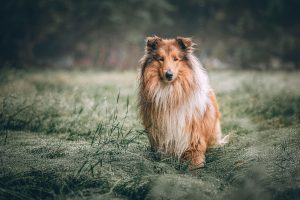
In addition to its work ethic, the Collie is a loyal guardian and affectionate family companion. Their protective instincts make them especially suitable for homes with children. While generally gentle, they will not hesitate to defend their home or human family from perceived threats.
Breed Varieties and Temperament
Rough vs. Smooth Collie
There are two main types of Collie:
-
Rough Collie: Known for its luxurious long coat, the rough-coated variety is often seen in dog shows and as the classic “Lassie” dog.
-
Smooth Collie: This version has a short, dense, and smooth coat, making it more suitable for outdoor work and harsh weather. Though equally intelligent, the smooth Collie is typically more reserved and less instantly friendly than its rough-coated counterpart.
Personality Traits
The Collie is known for its sweet temperament, high intelligence, and eagerness to please. It forms strong bonds with its owners and thrives on interaction, stimulation, and activity. However, the breed can be:
-
Sensitive to tone of voice and environment.
-
Aloof or shy around strangers, particularly the smooth variety.
-
Highly trainable, excelling with positive reinforcement techniques.
Physical Characteristics and Breed Standards
Head and Skull
-
Skull: Flat, moderately wide between the ears, narrowing toward the eyes.
-
Stop: Minimal depression between forehead and muzzle.
-
Muzzle: Tapered but strong, never snipy or weak; always ending in a black nose regardless of coat color.
Eyes and Expression
-
Eyes: Medium-sized, almond-shaped, and set obliquely.
-
Color: Usually brown, but blue or “china eyes” are common in blue merle Collies.
-
Expression: Alert, intelligent, and inquisitive—hallmarks of the breed.
Ears and Hearing Posture
-
Ears: Small, wide at the base, positioned on top of the skull.
-
Movement: Laid back when relaxed, semi-erect and slightly forward when alert.
Body Structure
-
Neck: Muscular, arched, and proportionate in length.
-
Chest: Deep with well-sprung ribs.
-
Loins: Strong and broad.
-
Forelegs: Straight and well-boned; pasterns flexible but not weak.
-
Hind legs: Muscular thighs, clean and sinewy below hocks, with bent stifles.
Feet and Mobility
-
Feet: Oval, with arched toes and well-padded soles.
-
Movement: Smooth, flowing, and effortless; the gait should exhibit free and true action, a reflection of both agility and endurance.
Size and Weight
-
Height: Males 22–24 inches; females 20–22 inches at the shoulder.
-
Weight: Males 45–65 lbs; females 40–55 lbs.
-
Build: Athletic, more racy than cloddy, indicating stamina and speed.
Coat and Grooming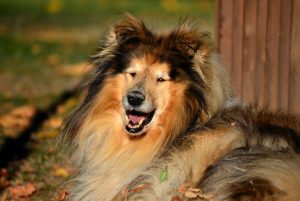
Rough Collie
-
Coat: Long, straight, and harsh on the outer layer with a dense undercoat.
-
Colors: Common shades include sable and white, tricolor (black, white, and tan), blue merle, and white with colored markings.
-
Maintenance: Requires regular brushing to prevent matting and tangles, particularly around the ruff and hindquarters.
Smooth Collie
-
Coat: Short, hard, and dense with a flat appearance.
-
Maintenance: Less intensive grooming; a weekly brush typically suffices.
Health and Lifespan
Common Health Concerns
Although generally robust, Collies are predisposed to several hereditary conditions, such as:
-
Collie Eye Anomaly (CEA): A congenital eye defect that may lead to blindness.
-
Progressive Retinal Atrophy (PRA): Another eye-related condition.
-
Dermatomyositis: A skin and muscle disorder.
-
Multidrug Sensitivity (MDR1 gene): A genetic mutation that affects response to certain medications.
Responsible breeding practices and genetic testing are essential to reduce the incidence of these disorders.
Average Lifespan
A healthy Collie typically lives 12 to 14 years, especially with regular veterinary care, a balanced diet, and an active lifestyle.
Ideal Living Environment
Collies are best suited for:
-
Active households with access to a yard or countryside.
-
Owners willing to provide mental and physical stimulation.
-
Families or individuals committed to regular socialization and training.
Although adaptable to apartment living, the Collie needs ample daily exercise to prevent boredom and maintain health.
Conclusion
The Collie is a timeless breed—intelligent, agile, loyal, and beautiful. Whether on the field, at home, or in the show ring, the Collie excels in multiple roles. Its versatility, combined with an affectionate nature and striking appearance, makes it one of the most endearing and functional breeds in the canine world. For those seeking a devoted companion with brains, beauty, and energy, the Collie offers a perfect match.
Five Signs Your Cat Truly Loves You