
 By admin
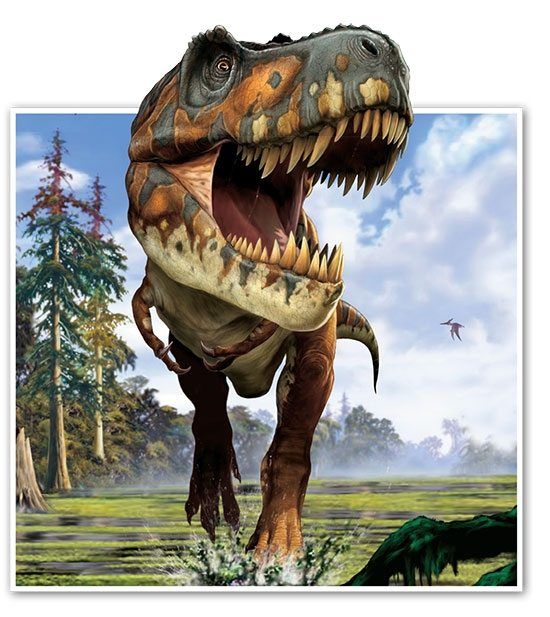
How Do We Know What Dinosaurs Looked Like If They Went Extinct 65 Million Years Ago?
Introduction
Dinosaurs are among the most fascinating creatures ever to have walked the Earth. They dominated our planet for over 165 million years before vanishing in a mass extinction event about 65 million years ago. Yet despite their disappearance, humanity has been able to reconstruct detailed images of how these prehistoric giants looked, moved, hunted, and even cared for their young. But how is it possible to know what an animal looked like when no human being ever saw a living dinosaur?
Thanks to paleontology, the study of ancient life, scientists have uncovered an incredible wealth of information that helps us piece together the puzzle. Fossils, bones, skin impressions, footprints, and advanced technology allow us to reconstruct not only dinosaur skeletons but also their colors, behaviors, and evolutionary connections to modern animals.
This article explores the methods and discoveries that reveal the appearance of dinosaurs, showing how science, technology, and creativity work together to bring these magnificent creatures back to life in our imagination.
Fossils: The Primary Source of Dinosaur Knowledge
What Are Fossils?
Fossils are the preserved remains or traces of ancient life. They include bones, teeth, eggs, footprints, and even fossilized skin or feathers. Through careful excavation and analysis, paleontologists can use these remains to determine what dinosaurs looked like and how they lived.
Skeletons as a Blueprint
The first step in reconstructing a dinosaur’s appearance is its skeleton. Complete or partial skeletons act like a blueprint, allowing scientists to determine body size, posture, and movement. For example, the discovery of nearly complete Tyrannosaurus rex skeletons has shown us its massive skull, powerful legs, and tiny arms. Similarly, the long neck bones of Brachiosaurus reveal how it fed on tall trees.
Fossilized Skin and Impressions
In rare cases, fossils include skin impressions or even patches of fossilized tissue. These provide direct evidence of texture, scale patterns, or feather structures. For instance, skin impressions from hadrosaurs (duck-billed dinosaurs) show that they had scaly, reptile-like skin, while fossils of small theropods in China display feathers, linking dinosaurs to modern birds.
Footprints and Trackways: Movement Frozen in Time
Reading Dinosaur Tracks
Fossilized footprints, known as trackways, tell us how dinosaurs walked, ran, and even interacted with each other. From the depth, spacing, and size of the footprints, scientists can estimate speed, body weight distribution, and gait.
Behavior from Footprints
Some trackways show groups of dinosaurs walking together, suggesting herd behavior. Others reveal predator-prey interactions, where the footprints of a carnivore follow closely behind a herbivore. These discoveries provide valuable insight into dinosaur behavior beyond just their physical appearance.
Clues from Modern Animals
Birds: The Closest Living Relatives
Modern birds are direct descendants of small theropod dinosaurs. By studying birds, scientists can infer details about dinosaur anatomy, feathers, and even colors. The similarities between the wishbone (furcula) of birds and certain theropod dinosaurs show evolutionary continuity.
Reptiles as a Model
Dinosaurs also share traits with reptiles such as crocodiles and lizards. By comparing bone structures, scientists can hypothesize about muscles, skin, and scale patterns. This comparative anatomy helps fill in missing details when fossils are incomplete.
The Color Puzzle: What Did Dinosaurs Look Like?
Melanosomes and Fossilized Pigments
For decades, dinosaur reconstructions were based mostly on imagination. However, modern technology has revolutionized our ability to determine dinosaur colors. Scientists now study microscopic structures called melanosomes, which contain pigments in feathers and skin. Different shapes of melanosomes correspond to specific colors (e.g., black, brown, or iridescent).
In 2010, researchers discovered that Anchiornis, a small feathered dinosaur, had black-and-white feathers with a reddish crest. This marked the first time scientists accurately described a dinosaur’s coloration.
Patterns and Camouflage
Colors were not just for beauty—they had survival purposes. Some dinosaurs may have had camouflage patterns to hide from predators, while others displayed bright colors for mating displays, similar to modern birds.
Technology and Modern Reconstructions
CT Scans and 3D Imaging
Advances in medical imaging, such as CT scans, allow scientists to look inside fossilized skulls and bones without damaging them. This helps in reconstructing brain size, sensory abilities, and muscle attachments.
Digital Models and Robotics
Computer modeling enables paleontologists to simulate dinosaur movements, estimate weight, and recreate behaviors. Robotics and biomechanical studies also help us understand how dinosaurs walked or how strong their bites were. For example, studies show that T. rex had one of the most powerful bites of any land animal in history.
Virtual and Augmented Reality
Today, museums use virtual reality (VR) and augmented reality (AR) to bring dinosaurs to life for the public. These technologies rely on the latest scientific data, offering more accurate reconstructions than older artistic interpretations.
From Bones to Movies: The Role of Art and Imagination
Paleoart and Scientific Illustration
Paleoartists—specialized illustrators who combine art and science—play a crucial role in visualizing dinosaurs. They base their drawings on fossil evidence, anatomy, and modern animal comparisons. While some artistic license is necessary, paleoart helps bridge the gap between science and public imagination.
Hollywood and Pop Culture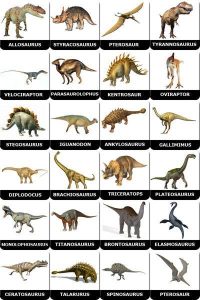
Movies like Jurassic Park have shaped public perception of dinosaurs for decades. While not always scientifically accurate, such films spark interest and encourage further research. Interestingly, many updates in dinosaur science, such as feathered raptors, have forced filmmakers to rethink earlier portrayals.
Recent Discoveries and Ongoing Research
Feathered Dinosaurs in China
The fossil beds of Liaoning, China, have yielded remarkable discoveries of feathered dinosaurs, reshaping our understanding of dinosaur evolution. These fossils confirm that many theropods were feathered, strengthening the link between dinosaurs and birds.
Dinosaur DNA: Is Jurassic Park Possible?
While complete dinosaur DNA has never been recovered, scientists have found proteins and soft tissues preserved in some fossils. Although the idea of cloning dinosaurs remains science fiction, such discoveries open new research avenues into molecular paleontology.
Climate and Habitat Clues
Fossilized plants, pollen, and even chemical traces in rocks help reconstruct the ecosystems dinosaurs lived in. This provides context for their appearance, showing how they adapted to deserts, forests, or coastal environments.
Conclusion
Even though dinosaurs vanished from Earth 65 million years ago, science has given us extraordinary tools to uncover their secrets. Through fossils, footprints, skin impressions, and cutting-edge technology, we now know more about dinosaurs than ever before. We can describe their skeletons, reconstruct their muscles, determine their colors, and even infer their behaviors.
The study of dinosaurs is not just about the past—it is about understanding evolution, adaptation, and survival. Every new fossil discovery adds another piece to the puzzle, painting a clearer picture of these magnificent creatures that once ruled the Earth.
Dinosaurs may be gone, but in the hands of paleontologists, artists, and scientists, they continue to live in our knowledge, our culture, and our imagination.
The Remarkable Versatility of the Collie