
 By admin
Debunking the Blind Bat Myth: The Truth Behind Bat Vision and Echolocation
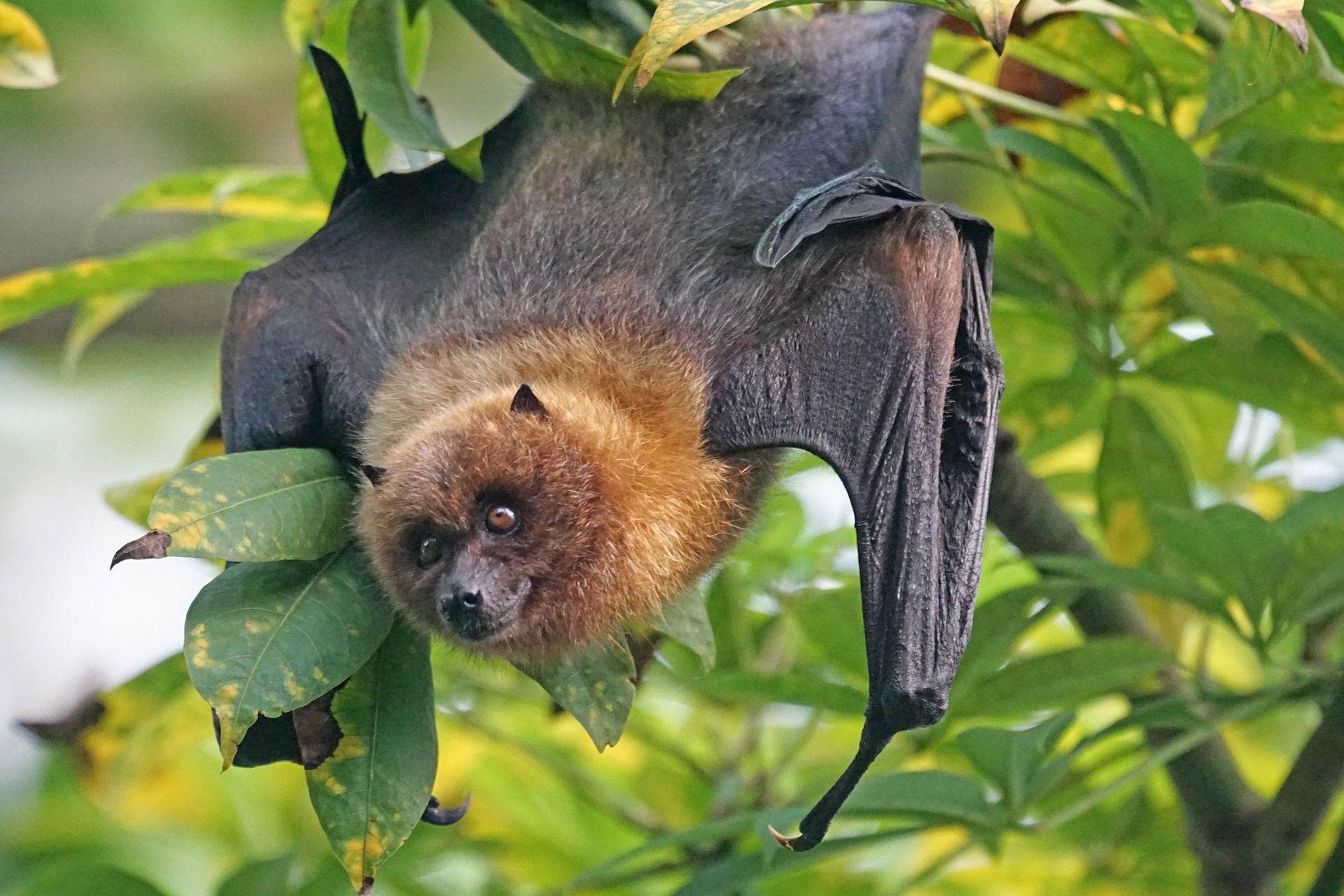
Bats have long been misunderstood creatures, often the subject of myths and misconceptions. One of the most persistent and widespread myths is that bats are blind. This misconception likely arose due to their nocturnal nature and reliance on echolocation. However, modern scientific research has debunked this myth, revealing that bats possess functional vision. While bats are renowned for their remarkable echolocation abilities, they also rely on their vision to navigate their environment, particularly under low-light conditions. This article explores the intricacies of bat vision, their echolocation system, and how these nocturnal mammals use both senses to navigate with astonishing precision.
The Myth of Blind Bats
The phrase “blind as a bat” has been ingrained in popular culture for centuries, leading to the belief that bats are visually impaired. In reality, this is far from the truth. While it is true that bats have evolved specialized ways to navigate and hunt in the dark, their eyes are far from useless. They are capable of vision, and in fact, many species of bats are well adapted to seeing in low-light conditions. The myth likely stems from the fact that bats often rely more on their acute hearing and echolocation abilities than on their sight when they are in complete darkness. However, their eyes serve a critical function, especially when navigating during twilight hours or in environments where light is still available.
Anatomy of Bat Eyes
Bat eyes vary in size and structure depending on the species, which reflects their diverse habitats and behaviors. The retina of most bats is rich in rod cells, a type of photoreceptor that is highly sensitive to low light levels. This abundance of rods enhances their ability to see in dim environments, a key feature for a nocturnal mammal. Some species of bats, such as fruit bats (also known as flying foxes), have larger eyes and a higher concentration of cone cells. These cone cells are responsible for color vision and better visual acuity, enabling bats to locate ripe fruits and flowers in their environment.
Interestingly, while fruit bats rely more on their vision for foraging, other species like insectivorous bats have more limited reliance on their eyesight. This variation reflects the diversity in the diets and behaviors of bats, illustrating that while vision is important, it is not always the dominant sense for every bat species.
Echolocation: Seeing with Sound
Although bats have functional vision, they are perhaps most famous for their ability to use echolocation—a sophisticated biological sonar system that allows them to navigate and hunt in the dark with exceptional precision. Bats emit high-frequency sound waves that bounce off objects in their environment and return as echoes. By interpreting these echoes, bats are able to build a detailed auditory map of their surroundings, detecting the location, size, shape, and even the texture of objects and prey.
Echolocation is so accurate that bats can detect obstacles as small as a human hair, even in complete darkness. This ability is not only essential for hunting but also crucial for navigating through complex environments, such as dense forests, caves, and urban spaces. Bats are capable of flying at high speeds without colliding with obstacles, a testament to the efficiency and precision of their echolocation system.
How Echolocation Works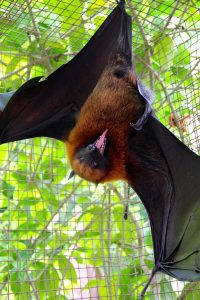
The process of echolocation can be broken down into three main stages:
- Sound Emission: Bats produce ultrasonic sounds, usually beyond the range of human hearing (above 20 kHz). These high-frequency sounds are emitted through the bat’s mouth or nose, depending on the species.
- Echo Reception: The emitted sound waves travel through the air until they encounter an object or prey. When the sound waves hit an object, they bounce back as echoes.
- Signal Processing: Bats have specialized structures in their inner ears that are finely tuned to detect the returning echoes. Their brains then process the time delay between sound emission and echo reception, as well as the frequency and intensity of the echoes, to determine the object’s location, size, shape, and even its movement.
This sophisticated system allows bats to hunt insects, navigate through dark environments, and avoid obstacles with exceptional precision, all without relying on sight alone.
Vision vs. Echolocation: Complementary Systems
Bats’ reliance on vision or echolocation depends on their species, behavior, and environmental conditions. Fruit bats, which primarily feed on fruits and nectar, have highly developed visual systems that allow them to detect colors and navigate in low-light conditions. However, they do not possess highly advanced echolocation abilities. On the other hand, insectivorous bats rely much more on echolocation for hunting, as it is far more effective for tracking fast-moving prey in total darkness.
In many species, vision and echolocation complement one another. Vision provides useful information when there is some light available, while echolocation comes into play in complete darkness or when pinpoint accuracy is needed, such as when a bat is hunting insects.
Adaptations for Nocturnal Life
Bats are highly specialized for a nocturnal lifestyle, and their sensory adaptations reflect this. These include:
- Tapetum Lucidum: Some bat species possess a reflective layer behind the retina called the tapetum lucidum, which enhances their night vision. This layer reflects light that passes through the retina back into the photoreceptor cells, increasing the amount of light available to the bat’s eyes.
- Pinnae Modifications: The external ears, or pinnae, of many bats are large and highly sensitive. The pinnae act like sound funnels, capturing sound waves and directing them into the ear canal. This enhances their hearing sensitivity, which is vital for effective echolocation.
- Wing Morphology: Bats have highly flexible wings that provide exceptional maneuverability. This allows them to fly with agility, making it easier for them to avoid obstacles and navigate complex environments. Their wing membranes are also thin and highly sensitive to air pressure changes, providing them with additional feedback during flight.
Behavioral Strategies for Navigation and Foraging
In addition to their physical adaptations, bats employ a range of behavioral strategies to optimize their navigation and foraging efficiency. Some of these strategies include:
- Roosting Habits: During the day, bats typically seek shelter in dark, secluded locations such as caves, hollow trees, or man-made structures. These roosts offer safety from predators and environmental threats.
- Foraging Routes: Many bats establish and memorize specific foraging routes, which they follow on a nightly basis. By becoming familiar with these paths, bats reduce the cognitive load associated with navigation, making it easier to find food and return to their roosts.
Human Applications of Echolocation
The study of bat echolocation has inspired a wide array of technological innovations. These systems, which mimic bat biology, have numerous applications in human technology:
- Sonar and Radar Systems: Both sonar and radar technologies were inspired by the principles of echolocation. Sonar, used in underwater navigation, and radar, which is used for aerial detection, both rely on emitting sound waves that bounce off objects and return to the sender. These technologies are crucial for a variety of applications, including navigation, search-and-rescue missions, and military operations.
- Assistive Devices for the Visually Impaired: Research into echolocation has also led to the development of devices that help visually impaired individuals navigate their surroundings. These devices emit sound waves and interpret the returning echoes, providing real-time information about the environment to the user.
Conservation Implications
Understanding the sensory systems of bats has important implications for their conservation. For example:
- Habitat Protection: Preserving the natural roosting and foraging habitats of bats is essential to their survival. Habitat destruction, whether through deforestation, urbanization, or pollution, can lead to population declines.
- Minimizing Human Disturbances: Human activities, such as artificial lighting and noise pollution, can interfere with bats’ natural behaviors. Reducing light pollution and creating quiet zones near bat roosting sites can help mitigate the negative effects of human disturbance.

Conclusion
Bats are highly complex and adaptive creatures with an impressive range of sensory abilities. Their vision and echolocation work together to provide them with the tools they need to thrive in nocturnal environments. Understanding the reality of bat vision and echolocation not only dispels long-standing myths but also highlights the importance of conserving these fascinating creatures. Through ongoing research and technological innovations inspired by bat biology, humans continue to benefit from the remarkable abilities of these nocturnal mammals.
How to Protect Your Garden from Cats