
 By admin
Introduction
In today’s highly competitive digital landscape, businesses of all sizes are searching for fast, measurable, and scalable methods to reach online customers. Among the various advertising models available, Pay-Per-Click (PPC) marketing has emerged as one of the most effective and widely adopted strategies for driving targeted traffic and generating leads. Whether used by global corporations or small local businesses, PPC advertising enables marketers to place their products and services directly in front of consumers who are actively searching for them. With real-time analytics, precise audience targeting, and exceptional flexibility, PPC marketing continues to play a central role in modern digital advertising campaigns.
This article provides a detailed, updated, and professional overview of how PPC marketing works, the benefits it offers, its potential drawbacks, and the strategies required to run a successful campaign. It also explores how businesses can leverage professional PPC agencies to maximize performance and return on investment (ROI). With strong keywords, modern insights, and a structured presentation, this guide aims to serve as a complete resource for anyone looking to master PPC advertising in today’s digital world.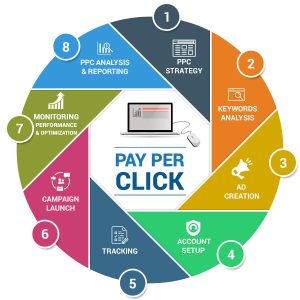
Main Body
1. Understanding PPC Marketing
1.1 What Is Pay-Per-Click Advertising?
Pay-Per-Click (PPC) marketing is a performance-based online advertising model in which advertisers pay a fee each time a user clicks on one of their ads. Instead of earning visits organically through search engine optimization (SEO), businesses purchase visits by bidding on specific keywords or audiences. PPC ads commonly appear on:
- Search engine results pages (Google, Bing, Yahoo)
- Social media platforms (Facebook, Instagram, LinkedIn, TikTok)
- Display networks on third-party websites
- Video platforms like YouTube
- Shopping networks such as Google Shopping
Due to its measurable nature and ability to deliver immediate results, PPC has become one of the most popular and effective digital marketing methods.
1.2 Why PPC Marketing Is So Widely Used
PPC advertising stands out because it targets users at the exact moment they express interest in a product, service, or topic. When a consumer types a keyword like “best running shoes” or “emergency plumbing services,” PPC ads appear alongside organic search results, creating a highly targeted and motivated audience.
PPC is frequently referred to by other names such as pay for performance, pay for placement, and cost per click (CPC)—all emphasizing its results-driven nature.
2. Benefits of PPC Marketing
2.1 Advantages for Advertisers
PPC marketing provides multiple advantages, especially for businesses aiming for fast and measurable outcomes:
- Only Pay for Results: Advertisers pay only when a user clicks, making PPC highly cost-efficient compared to impression-based advertising models.
- Instant Visibility: Unlike organic SEO, which may take months, PPC ads generate instant exposure and traffic.
- Targeted Audience Reach: Ads appear only to users actively searching for specific keywords or belonging to selected demographics.
- High Flexibility and Control: Advertisers can adjust budgets, keywords, ad locations, and audience segments at any time.
- Measurable ROI: With built-in analytics tools, advertisers can track conversions, clicks, impressions, and sales in real time.
2.2 Benefits for Consumers
PPC ads also benefit consumers by providing:
- Relevant Information: Ads match user intent, offering products or solutions they are actively seeking.
- A Clean User Experience: Users avoid intrusive pop-ups, spam emails, or irrelevant advertisements.
- Quicker Access to Services: PPC ensures that consumers quickly find reputable companies willing to solve their immediate needs.
3. How PPC Works in Modern Search Engines
3.1 Keyword Targeting and Search Intent
When a user searches for a product or service, PPC ads appear alongside organic results based on keyword relevance and bid amounts. Advertisers compete in an online auction for keyword placement, with factors such as quality score, bid amount, and ad relevance determining their position.
This creates a qualified audience that is far more likely to convert compared to general advertising.
3.2 Cost Management and Budget Allocation
PPC enables businesses to set daily or monthly budgets, preventing overspending. This ensures cost control, especially for small businesses, where marketing budgets are often limited. The advertiser’s control over spending makes PPC one of the most predictable forms of online advertising.
4. Possible Drawbacks of PPC Marketing
Despite its many advantages, PPC marketing also presents potential challenges—especially for those lacking experience in digital advertising.
4.1 The Complexity of PPC Campaign Management
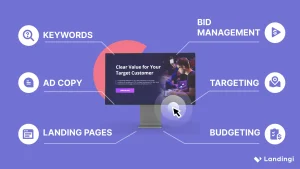
Launching a PPC campaign involves much more than simply submitting ads to Google or another search platform. A successful PPC campaign requires:
- Strategic keyword research
- Competitor analysis
- Well-designed landing pages
- Bid management
- Continuous optimization
- Performance tracking
Beginners often underestimate these complexities, leading to wasted budgets and low conversions.
4.2 High Costs for Competitive Keywords
As more businesses invest in PPC marketing, keyword competition intensifies. Highly competitive keywords—like those in finance, insurance, real estate, or e-commerce—can cost several dollars per click, pushing small businesses to the margins.
Larger companies often dominate due to their ability to outbid smaller competitors, creating an uneven playing field.
4.3 Continuous Funding Requirements
PPC campaigns require ongoing investment. If an advertiser stops funding the campaign:
- Ads immediately disappear
- Traffic drops to zero
- Rankings for competitive keywords are lost
Businesses relying exclusively on PPC may face severe consequences if ads stop running—for instance, during budget cuts or payment issues.
4.4 Risk of Poor Conversions
Without proper campaign setup—including keyword matching, negative keywords, compelling ad copy, and optimized landing pages—clicks may not turn into sales. This results in high costs with minimal return on investment.
5. Running an Effective PPC Marketing Campaign
To ensure maximum ROI, businesses must adopt strategic and well-planned PPC practices. Below are essential steps for achieving PPC success.
5.1 Conduct Comprehensive Keyword Research
Choosing keywords is the foundation of any PPC campaign. Businesses should focus on:
- High-intent keywords that signal purchase intent
- Long-tail keywords that reduce competition and cost
- Branded and competitor keywords
- Negative keywords to eliminate irrelevant traffic
Simply selecting the most popular keywords does not guarantee success. Specific, well-targeted keywords often perform better and cost less.
5.2 Create High-Quality Ad Copy
Effective PPC ads require clear, engaging, and action-oriented copy. Strong ad copy includes:
- A compelling headline
- A unique value proposition
- Clear benefits
- A strong call to action (CTA)
This significantly influences click-through rates (CTR) and Quality Score.
5.3 Optimize Landing Pages
Sending users to a poorly designed landing page is one of the most common PPC mistakes. High-converting landing pages should have:
- Fast load times
- Clear messaging aligned with the ad
- Strong visuals and minimal distractions
- Simple lead forms
- Trust signals such as testimonials, reviews, or badges
5.4 Monitor and Optimize Performance
Successful PPC campaigns require constant monitoring. Businesses should track key performance indicators (KPIs):
- Click-through rate (CTR)
- Cost per click (CPC)
- Conversion rate
- Cost per acquisition (CPA)
- Quality Score
- Return on ad spend (ROAS)
Campaigns must be adjusted frequently to maintain profitability.
5.5 A/B Testing for Better Results
Testing ad variations helps identify what resonates best with customers. A/B testing may involve:
- Different headlines
- Alternative ad descriptions
- Adjusted keywords
- Different landing page layouts
- Various CTAs
Continuous testing ensures long-term improvement.
6. Professional PPC Management Services
6.1 Why Hiring a PPC Professional Is Beneficial
The growing complexity of PPC platforms has led many businesses—especially small and medium enterprises—to hire professional PPC agencies. These experts bring:
- In-depth experience
- Tools for keyword analysis
- Advanced bidding strategies
- Skilled copywriting
- Data-driven optimization
For businesses with limited time or expertise, a PPC professional can significantly increase marketing performance.
6.2 Services Provided by PPC Agencies
Professional PPC companies typically offer:
- Complete campaign setup
- Keyword strategy development
- Ad creation and optimization
- Competitor analysis
- Landing page recommendations
- Monthly performance reports
- Ongoing bid and budget management
Many agencies also train in-house teams to continue operating campaigns independently after initial setup.
6.3 Cost and ROI Considerations
While hiring an agency involves additional costs, the improved efficiency and higher conversion rates often generate superior returns compared to running campaigns without professional support.
Conclusion
PPC marketing remains one of the most powerful online advertising methods available today. Its ability to deliver immediate results, target interested consumers, and provide measurable performance makes it indispensable for both small businesses and global brands. However, success in PPC requires expertise, strategic planning, and continuous optimization.
While PPC offers many benefits, such as targeted audiences, budget control, and flexible campaigns, it also comes with challenges—including competition for keywords, the need for constant funding, and the risk of poor campaign management. Businesses can overcome these challenges by investing in keyword research, optimizing landing pages, monitoring campaign performance, and seeking professional help when needed.
Ultimately, PPC marketing offers an opportunity for businesses to reach the right audience at the right time with precision and measurable impact. When implemented correctly, it can significantly enhance brand visibility, generate high-quality leads, and drive long-term growth in the digital marketplace.
The Power of Viral Marketing in B2B Growth