
 By admin
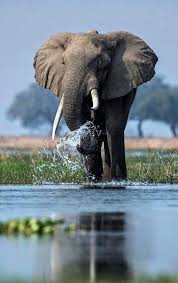
How Do Elephants Drink Water Without Choking Through Their Trunks?
Introduction
Among all the anatomical wonders found in the animal kingdom, the elephant’s trunk stands unrivaled in both complexity and versatility. At once a nose, an upper lip, a hand, a sensory organ, and a communication tool, the trunk represents one of evolution’s most sophisticated biological innovations. Yet one of its most astonishing feats often goes unnoticed or misunderstood: the ability of elephants to drink water safely through a structure that is, anatomically speaking, part of their respiratory system.
At first glance, the act appears paradoxical. The trunk is essentially an elongated nasal passage connected directly to the lungs, so how can an elephant draw large volumes of water into it without choking or drowning? Unlike humans and many other mammals, elephants seem to defy basic respiratory logic every time they drink. For centuries, this behavior puzzled naturalists, explorers, and scientists alike.
Modern research, however, has revealed that elephant drinking is not a simple act but a highly coordinated physiological process involving muscular precision, neural control, and unique anatomical adaptations. Far from sipping water like a straw, elephants employ their trunks as temporary reservoirs, carefully controlling airflow and liquid movement with remarkable accuracy. Advanced imaging technologies, biomechanical studies, and comparative anatomy have transformed our understanding of this process, revealing insights that extend beyond zoology into fields such as robotics, biomedical engineering, and evolutionary biology.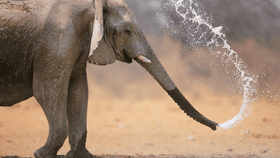
This article provides an in-depth, up-to-date exploration of how elephants drink water without choking. By examining trunk anatomy, the drinking sequence, neurological coordination, and evolutionary context, we uncover how nature engineered a solution that is as elegant as it is effective. Understanding this mechanism not only deepens our appreciation for elephants but also highlights why protecting these intelligent giants is vital—they are living repositories of biological ingenuity.
I. The Elephant Trunk: An Evolutionary Masterpiece
A. A Unique Fusion of Nose and Upper Lip
The elephant trunk, scientifically known as the proboscis, is not merely a long nose. It is a fusion of the upper lip and nostrils that evolved over millions of years as elephants adapted to changing environments. This fusion resulted in an organ capable of extraordinary strength and precision without the support of bones.
The trunk is classified as a muscular hydrostat, meaning it relies entirely on muscles rather than skeletal structures for movement and stability. Similar structures include the human tongue and octopus tentacles, but the elephant trunk far surpasses them in scale and complexity. An adult elephant’s trunk contains over 40,000 individual muscle units, arranged in longitudinal, radial, and oblique layers. These muscles allow the trunk to elongate, contract, twist, curl, and lift objects weighing several hundred kilograms—or delicately pick up a peanut.
This muscular arrangement is essential for drinking, as it enables precise control over internal volume and pressure, allowing elephants to manipulate water safely within the trunk.
B. Internal Anatomy and the Airway Challenge
Inside the trunk run two elongated nasal passages, each lined with mucous membranes and rich blood supply. These passages connect directly to the nasopharynx, which leads toward both the lungs (via the trachea) and the stomach (via the esophagus). This anatomical crossroads poses a potential danger: without proper control, water could easily enter the lungs.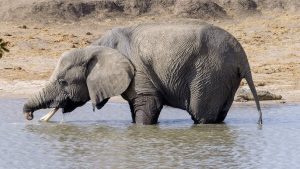
What prevents this from happening is not chance but a suite of specialized adaptations, chief among them a highly modified epiglottis and exceptional neuromuscular coordination.
II. The Epiglottis: The Elephant’s Primary Safeguard
A. An Oversized and Active Valve
In most mammals, the epiglottis is a relatively small flap of cartilage that closes over the trachea during swallowing. In elephants, however, the epiglottis is large, elongated, muscular, and highly mobile, acting as a powerful gatekeeper between the respiratory and digestive systems.
When an elephant prepares to swallow water, the epiglottis moves upward and forward, sealing the entrance to the trachea with remarkable efficiency. This creates a watertight barrier that prevents liquid from entering the lungs, even when large volumes of water are involved.
B. Precision Timing and Neural Control
The movement of the epiglottis is not automatic; it is governed by precise neural signals coordinated with trunk muscle contractions and head posture. This timing is critical. If the epiglottis closes too early or too late, the risk of aspiration increases. Studies have shown that elephants possess exceptional neural control over this process, refined through both evolution and learning.
Young calves must practice drinking repeatedly, gradually mastering the coordination required. This learning period highlights that elephant drinking is not just anatomical—it is behavioral and neurological as well.
III. How Elephants Actually Drink: A Step-by-Step Process
A. Suction: Drawing Water Into the Trunk
Contrary to popular belief, elephants do not drink continuously through their trunks. Instead, they use the trunk as a temporary water storage device.
- Immersion of the Trunk Tip:
The elephant lowers the trunk tip into a water source, spreading the nostrils slightly. - Creation of Negative Pressure:
By expanding internal nasal cavities through muscular contraction, the elephant creates suction. High-speed imaging studies have shown that elephants can draw water into the trunk in less than a second. - Volume Control:
An adult elephant can hold approximately 8 to 10 liters of water in its trunk at once. The exact amount varies depending on thirst, body size, and environmental conditions.
B. Transporting the Water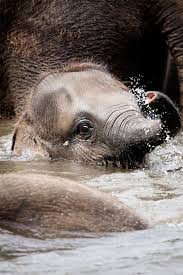
Once the trunk is filled, powerful circular muscles contract to hold the water in place. The elephant then lifts and curls the trunk toward its mouth, maintaining internal pressure to prevent spillage.
This stage demonstrates the trunk’s dual role as both container and delivery system, a capability unmatched by any other terrestrial mammal.
C. The Swallowing Moment
As the trunk tip reaches the mouth:
- The elephant tilts its head slightly.
- The epiglottis seals the trachea.
- Trunk muscles squeeze the stored water into the oral cavity.
- A brief exhalation may occur, clearing residual droplets from the airway.
With the airway fully protected, water flows safely into the esophagus and onward to the stomach. The entire sequence happens smoothly, often within seconds.
IV. Advanced Scientific Discoveries and Modern Research
A. Imaging the Invisible
Recent advancements in CT scanning, MRI, and motion-capture technology have allowed scientists to observe trunk mechanics in unprecedented detail. Researchers have mapped internal pressure changes and muscle activation patterns during drinking, confirming that elephants dynamically adjust suction strength and flow rate.
One notable finding is that elephants can modulate suction depending on the substance they are collecting—gentle suction for fragile vegetation and powerful suction for water or mud.
B. Insights from Comparative Anatomy
Studies of extinct proboscideans, such as mammoths, reveal similar nasal and skull structures, suggesting that this drinking mechanism evolved early. The trunk likely became longer as elephants adapted to dry environments, enabling them to access water without kneeling or submerging their heads—an energy-efficient and safer strategy for massive animals.
V. The Trunk Beyond Drinking
A. A Multi-Functional Survival Tool
The elephant trunk is essential for feeding, breathing, smelling, touching, communication, and defense. Its tip contains thousands of sensory receptors, allowing elephants to detect subtle textures, vibrations, and chemical signals.
Elephants also use their trunks to produce vocalizations, manipulate objects, care for calves, and engage in social bonding. Drinking is just one function within an astonishingly broad behavioral repertoire.
B. Vulnerability and Conservation Implications
Because the trunk is so vital, injuries to it can be devastating. Damage can lead to dehydration, malnutrition, and social isolation. Conservationists now recognize trunk health as a key indicator of elephant well-being.
Understanding trunk biomechanics also has applications beyond wildlife protection. Engineers have drawn inspiration from the elephant trunk to design soft robotic arms, flexible medical devices, and safer airway management systems in human medicine.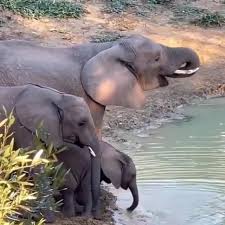
Conclusion
Elephants do not choke when drinking through their trunks because evolution has equipped them with a perfectly coordinated system of anatomical structures, muscular control, and neurological precision. The trunk functions as a temporary reservoir, while an oversized, highly mobile epiglottis seals the airway at exactly the right moment. This process is refined through learning and executed with astonishing consistency.
Far from being a biological curiosity, the elephant’s drinking mechanism exemplifies nature’s ability to solve complex engineering challenges through gradual adaptation. Modern science continues to uncover new details about this remarkable organ, offering insights that extend into technology, medicine, and conservation.
Protecting elephants means preserving not only a keystone species but also a living example of evolutionary brilliance. As we continue to learn from these giants, their survival ensures that one of nature’s greatest masterpieces remains part of our world.
Protecting Cats in a Modern World