
 By admin

Impossible Is Just a Word: How Ambition, Mindset, and Action Turn Dreams Into Reality
Introduction: The Power of Believing Beyond Limits
Every person, at some stage in life, dreams of becoming someone remarkable — someone who leaves a meaningful mark on the world. Whether it’s imagining the thrill of scoring a game-winning goal, envisioning yourself as the star of a major event, or fantasizing about wealth, success, or fulfilling relationships, dreams are universal. Yet, thousands of aspirations fade away every day, not because they are unachievable, but because people stop believing in them.
In a fast-paced, competitive world, the word “impossible” has become one of the most powerful barriers between individuals and their own potential. Many people allow fear, doubt, or a lack of confidence to shrink their ambitions. Instead of living boldly and pursuing meaningful goals, they settle into routines, focusing only on survival, not growth.
But what if the idea of “impossible” was nothing more than a mindset — a belief that can be challenged, redefined, and eventually erased? Modern psychology, neuroscience, and real-world success stories all point in one direction: the limits we perceive are often self-imposed, and human potential expands when ambition is paired with consistent action.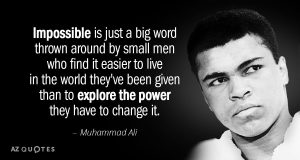
This article explores how to dismantle the illusion of impossibility, set meaningful and achievable goals, push past mental barriers, and turn dreams into tangible accomplishments. With the right mindset, strategic planning, and persistent effort, impossible truly becomes just a word.
Main Body
1. Why “Impossible” Stops Us: Understanding the Mindset Barrier
1.1 The Psychology of Limitation
The human brain is designed for survival, not success. Evolution trained our minds to choose safety, avoid risks, and stick to familiar patterns. When we think of big dreams — launching a business, becoming financially independent, or mastering a new skill — the brain often activates fear circuits that whisper:
- “You can’t do it.”
- “It’s too complicated.”
- “What if you fail?”
These thoughts are not facts; they are protective responses. But when we believe them, we shrink our dreams to match our fears rather than expanding our capabilities to meet our ambitions.
1.2 The Perception of Difficulty
People often label tasks as “impossible” not because they truly are, but because:
- They require skills we haven’t developed yet
- They demand long-term consistency
- They involve stepping outside our comfort zone
In reality, most great accomplishments were once considered unattainable. Yet progress happens every time someone chooses courage over fear.
1.3 The Danger of the Comfort Zone
Staying within the comfort zone feels safe, but it silently kills ambition. Success requires challenge. Growth comes from discomfort. As the classic gym motto says: “No pain, no gain.”
Without stretching your limits, nothing new can be achieved.
2. The Power of Vision: Why Dreaming Big Matters
2.1 Imagination Fuels Innovation
Every breakthrough in human history began with an idea that seemed impossible:
- Electricity
- Airplanes
- Space travel
- The internet
- Artificial intelligence
If early scientists, inventors, and innovators had accepted “impossible” as truth, the modern world would not exist.
2.2 The Bumblebee Lesson
For decades, scientists believed that the bumblebee should not be able to fly based on aerodynamic calculations. Fortunately, the bumblebee never received this memo — it simply flew.
This famous example reminds us that limitations exist only when we believe in them.
2.3 The Visionary Mindset
To think big is not to fantasize; it is to imagine a possibility, then commit to making it real. Visionaries:
- See what others don’t
- Believe before proof exists
- Act despite uncertainty

“Impossible” is merely an opinion, not a destination.
3. When Dreams Fail: The Danger of Inaction
3.1 Dreaming Without Action
Some people dream grand, exciting dreams — owning companies, becoming global leaders, achieving creative greatness — yet take no practical steps to turn those dreams into reality.
The result?
Frustration, regret, and the painful belief that success is reserved for others.
3.2 The “Over-Dreaming Trap”
Ambition without planning is like a ship without navigation. Common symptoms include:
- Waiting for inspiration
- Hoping for perfect circumstances
- Relying on luck instead of discipline
Dreams collapse when they are not supported by structure, strategy, and consistent effort.
3.3 The Balance Between Ambition and Action
Great goals require:
- Courage to dream
- Strategy to plan
- Discipline to act
- Patience to persist
This balanced combination is what transforms impossible dreams into achievable realities.
4. A Practical Method: Turning the Impossible Into Possible
One of the most effective goal-setting exercises involves categorizing ambitions into three lists:
4.1 Step One: List “Things You Know You Can Do”
These are tasks within your current ability, such as:
- Learning a simple skill
- Improving fitness with basic routines
- Saving small amounts of money
- Communicating better
These goals build confidence and momentum. Each achieved task reinforces the belief that progress is possible.
4.2 Step Two: List “Things You Might Be Able to Do”
These goals require growth, learning, or effort, such as:
- Starting a side business
- Learning a foreign language
- Completing a major creative project
- Running a marathon
They are achievable but require commitment and resilience.
4.3 Step Three: List “Things That Feel Impossible Right Now”
These might include:
- Becoming a millionaire
- Traveling the world
- Publishing a book
- Buying a home
- Earning a degree later in life
The key is not to eliminate these dreams, but to shift them — gradually — into the “possible” category as you develop new skills and confidence.
4.4 The Power of Progression
As you consistently achieve goals from the first two lists, your capabilities expand.
Over time, tasks that once felt unimaginable become realistic.
This method proves that “impossible” is not a permanent state — it is only a temporary opinion.
5. Real-World Examples: The Evolution of the Impossible
5.1 The Moon Landing
A century ago, landing on the moon was pure fantasy. Scientists, philosophers, and ordinary people believed it was forever impossible.
Yet in 1969, a dream fueled by ambition, science, and perseverance became history.
5.2 Instant Global Communication
Sending a message across continents in seconds was unimaginable just a few generations ago. Today, through email, social media, and smartphones, it is part of everyday life.
5.3 Modern Technologies
Artificial intelligence, self-driving cars, biotechnology, and digital economies were all considered unrealistic ideas — until they weren’t.
Innovation is simply the art of turning “impossible” into “normal.”
6. The Formula for Success: Inspiration + Perseverance
6.1 Edison’s 1% Inspiration, 99% Perspiration
Thomas Edison famously said that genius consists of:
- 1% inspiration
- 99% perspiration
This remains one of the most accurate descriptions of success. Dreams are necessary — but they are only the beginning.
Without discipline, hard work, sacrifice, and persistence, even the greatest ideas remain unrealized.
6.2 The Role of Discipline
Discipline is the bridge between goals and achievement. It means:
- Showing up even when you don’t feel motivated
- Working through difficulty
- Staying consistent
- Managing time wisely
Discipline sustains progress long after motivation fades.
6.3 Leaving the Comfort Zone
Ask any athlete or fitness enthusiast: progress requires pushing beyond comfort. Growth feels uncomfortable — but that discomfort is the birthplace of success.
7. How to Build a Mindset That Defies the Impossible
7.1 Replace Limiting Beliefs
Limitations like:
- “I’m not good enough”
- “I’m too old”
- “It’s too late”
…are mental walls, not actual barriers. Replacing them with empowering beliefs is the first step to transformation.
7.2 Train Your Mindset
A strong mindset is developed through:
- Daily positive affirmations
- Journaling
- Continuous learning
- Surrounding yourself with ambitious people
- Practicing discipline
- Celebrating small wins
7.3 Turn Fear Into Fuel
Fear of failure can either stop you — or motivate you.
When seen correctly, fear becomes energy, pushing you to prepare more, work harder, and grow stronger.
8. The Journey Toward the “Possible”
8.1 The Ladder of Progress
Every big achievement is built through small steps. Success rarely happens suddenly; it is earned through:
- Commitment
- Consistency
- Learning
- Adaptation
Each step makes the next one easier.
8.2 The Transformation Happens Gradually
One day you will look back and realize:
- What once terrified you is now manageable
- What once felt impossible is part of your reality
- The person you dreamed of becoming is now who you are
The impossible becomes possible the moment you decide to pursue it with discipline and belief.
Conclusion: The Impossible Is Within Reach
The word impossible is not a description of reality — it is a mindset shaped by fear, habit, and self-doubt. When you challenge that mindset, your world expands. Dreams begin to transform into achievable goals. Step by step, with perseverance, discipline, and unwavering belief, the boundaries of possibility shift.
Great achievements do not belong only to the gifted, the lucky, or the extraordinary. They belong to anyone willing to dream boldly and work consistently. The ladder of progress is climbed one step at a time, and each step brings you closer to the life you once believed was out of reach.
So keep dreaming, keep striving, and keep pushing forward. Because in the end, impossible is just a word — and you have the power to redefine it.