
 By admin
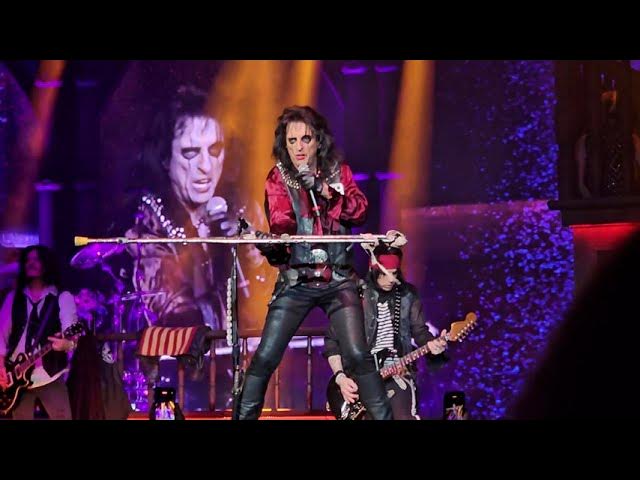
Introduction: The Return of a Rock Icon
Alice Cooper, the legendary originator of shock rock, is once again electrifying stages around the world. Long hailed as a pioneer of theatrical hard rock, Cooper’s influence spans more than five decades, shaping not only the sound but also the spectacle of rock music. Known for his darkly theatrical stage performances, gory props, and horror-inspired makeup, Alice Cooper has remained an indelible figure in the music world. His recent tours continue to demonstrate that true rock and roll is far from dead—it’s alive, screaming, and on fire with Alice Cooper at the helm.
As the world of rock music continues to evolve, the resurgence of live concerts in the post-pandemic era has reignited a hunger for authenticity and raw performance energy. And no one embodies that energy better than Alice Cooper. This article explores his fascinating journey from a Detroit-born preacher’s kid to an international rock star, analyzing the impact he has had on rock culture and how his legacy continues to inspire generations of musicians.
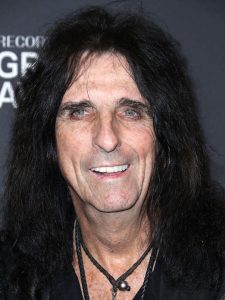
Alice Cooper
Clive Davis’ 2019 Pre-Grammy Gala, Arrivals, The Beverly Hilton, Los Angeles, USA – 09 Feb 2019
Early Life and Musical Awakening
From Vincent to Alice: Origins in Detroit and Phoenix
Born Vincent Damon Furnier on February 4, 1948, in Detroit, Michigan, Cooper’s upbringing was steeped in religious tradition. His father was an evangelist, and his grandfather was an ordained apostle in The Church of Jesus Christ. This strict spiritual environment may seem at odds with the blood-soaked theatrics of his later career, but it also laid the groundwork for his later exploration of good versus evil, rebellion, and redemption—central themes in his music.
In the late 1950s, the Furnier family relocated to Phoenix, Arizona, where young Vincent would attend Cortez High School. There, he discovered a love for satire and writing, contributing sharp-witted columns to the school newspaper. It was also at Cortez that he met future bandmates Glen Buxton and Dennis Dunaway—fellow misfits who shared his love for British invasion rock.
The Birth of a Band: From The Earwigs to The Spiders
Like many teenage boys of the era, Furnier and his friends formed a band to get the attention of girls. Their first performance was a Beatles parody at a school talent show, complete with mop-top wigs and fake accents. Though rudimentary, the performance was a hit, and they caught the music bug for life.
They soon expanded the lineup with guitarist Michael Bruce and renamed themselves The Earwigs, then later The Spiders. Influenced by the likes of The Beatles, The Who, Pink Floyd, The Yardbirds, and The Rolling Stones, the band began to carve out their own sound—a gritty fusion of garage rock and psychedelia. Their local hit “Don’t Blow Your Mind” caught attention in Phoenix, paving the way for a move to Los Angeles and another name change: The Nazz.
Becoming Alice Cooper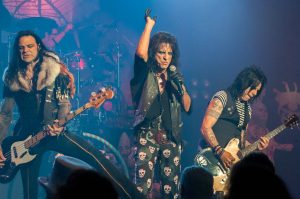
When another band led by Todd Rundgren claimed the name The Nazz, Furnier’s group chose the name “Alice Cooper”—a name that sounded innocent yet sinister, conjuring a fictional witch-like persona. Eventually, Vincent Furnier would legally adopt the name himself, merging his identity with the theatrical character he created on stage.
The Rise of Shock Rock
Breaking Boundaries with Theatrics and Sound
In 1969, the newly christened Alice Cooper band released their debut album, Pretties for You. Though critically misunderstood, it showcased their experimental edge. But it was their collaboration with producer Bob Ezrin on the 1971 album Love It to Death that launched them into stardom. The single “I’m Eighteen” became a teen anthem and charted in the U.S. Top 40.
Their 1973 album Billion Dollar Babies reached number one in the U.S. and UK, cementing their status as rock royalty. But beyond the music, it was their outrageous stage shows—featuring electric chairs, fake blood, boa constrictors, and guillotines—that earned Cooper his title as the Godfather of Shock Rock.
Solo Career and Reinvention
When the original Alice Cooper band split in 1974, Vincent kept the name and launched a successful solo career. His debut solo album, Welcome to My Nightmare (1975), was a concept album that blended horror, Broadway, and rock—a formula that proved hugely popular.
Over the next several decades, Cooper would reinvent himself repeatedly, releasing over 30 studio, live, and compilation albums. Hits like “Poison,” “School’s Out,” “No More Mr. Nice Guy,” and “Feed My Frankenstein” have become anthems of rebellion, angst, and theatrical bravado.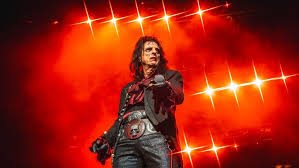
Cultural Influence and Legacy
Inspiring Future Generations
Alice Cooper’s unique blend of horror and rock paved the way for bands like Kiss, Marilyn Manson, Rob Zombie, Slipknot, and Ghost. His influence can be felt in the stagecraft of modern metal and even pop performances. Without Cooper, the concert-as-spectacle concept might never have evolved into what we see in today’s massive arena tours.
He has also made appearances in films (Wayne’s World, Dark Shadows), television shows (That ’70s Show, The Muppet Show), and even Broadway, showing the adaptability and longevity of his brand.
Faith, Sobriety, and Charity
Despite his dark stage persona, Cooper is a devout Christian and has been sober since the early 1980s after struggling with alcoholism. He attributes his recovery to his faith and his wife, Sheryl Goddard, whom he married in 1976.
In recent years, Cooper has turned to philanthropy. He founded the Solid Rock Foundation, a non-profit organization dedicated to providing free music, dance, art, and vocational training to teens in Phoenix. His commitment to helping young people escape destructive paths mirrors his own journey from chaos to purpose.
The Resurgence of Live Rock
2020s and Beyond: Tours, Collaborations, and Reinvention
As live music made its comeback in the 2020s following the COVID-19 pandemic, Alice Cooper was among the first legacy rock acts to return to touring. His 2021 and 2022 tours were lauded for their energy and theatricality, with Cooper sounding as sharp and powerful as ever.
He’s continued releasing new music as well, including Detroit Stories (2021), a tribute to his hometown’s rock heritage. The album debuted at #1 on Billboard’s Top Album Sales chart and showcased Cooper’s ability to stay relevant without sacrificing his iconic sound.
In 2023 and 2024, Cooper toured alongside fellow rock legends Rob Zombie and Ministry in a co-headlining tour that delighted fans of heavy metal and horror alike. At 75, Alice Cooper continues to prove that age is just a number in the world of rock and roll.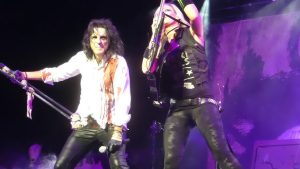
Conclusion: Alice Cooper—A Living Legend of Rock and Roll
Alice Cooper is more than just a rock star—he’s a cultural phenomenon. His transformation of live music into a theatrical event set a standard that performers continue to chase today. Through decades of changing music trends, personal battles, and cultural shifts, Cooper has remained relevant, respected, and revered.
Whether you’re a lifelong fan or a newcomer exploring the world of rock, an Alice Cooper concert is more than a musical event—it’s an unforgettable experience. His enduring presence on stage reminds us that true rock and roll is not only alive—it’s thrilling, dramatic, and as powerful as ever.
As long as there’s a stage to perform on, Alice Cooper will be there—with blood, snakes, fire, and a shockingly good time.
How to Find a Partner When You’re Alone