
 By admin
Introduction
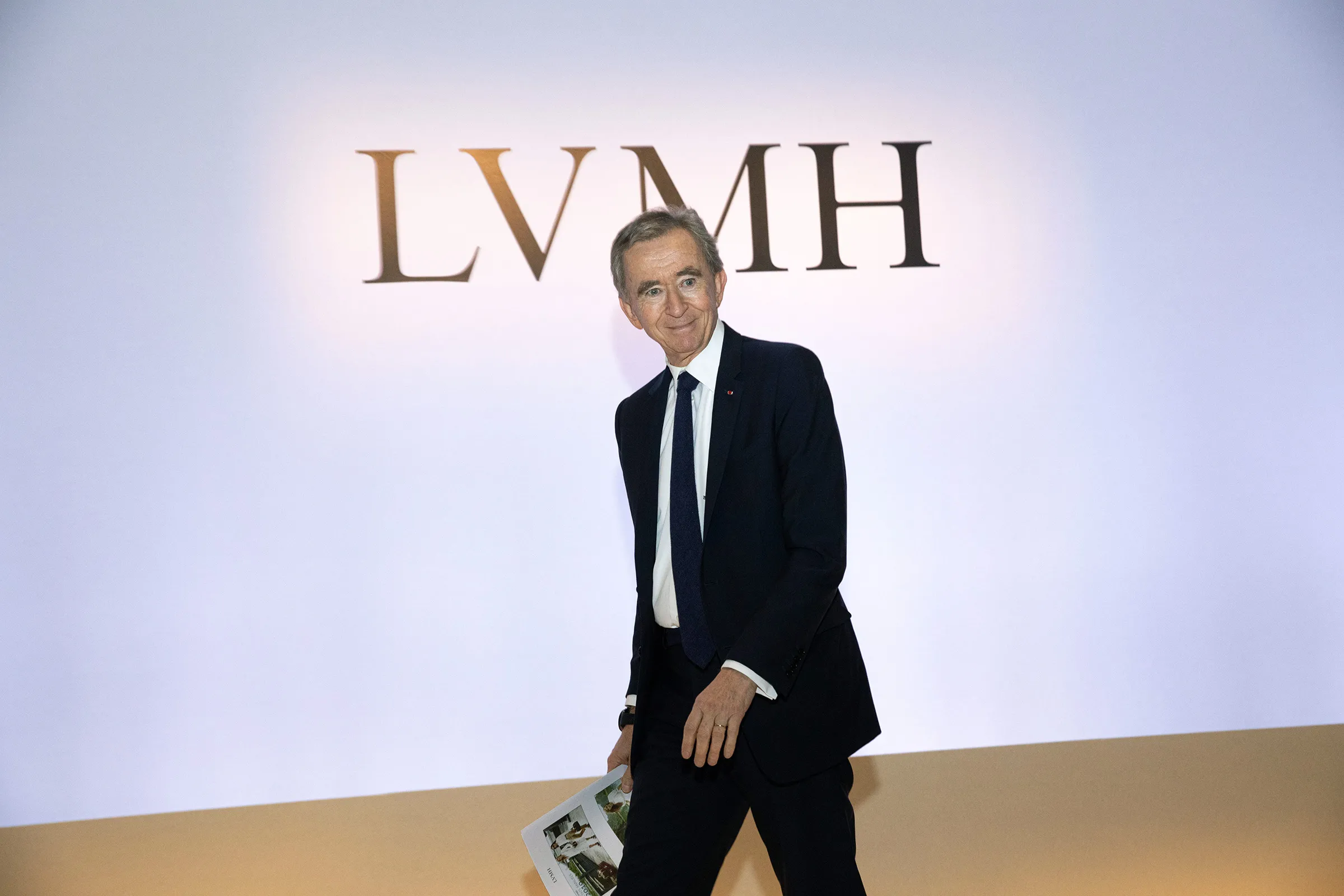
In the modern history of global capitalism, few individuals have reshaped an entire industry as profoundly as Bernard Arnault. Often simplified in popular media as a “rags to riches” story, Arnault’s rise is in fact far more nuanced, calculated, and intellectually rigorous. It is not the tale of accidental fortune or inherited privilege alone, but rather a case study in strategic foresight, disciplined execution, and a rare ability to transform cultural heritage into scalable economic power.
As Chairman and Chief Executive Officer of LVMH Moët Hennessy Louis Vuitton, Arnault oversees the world’s largest and most valuable luxury conglomerate, with a market capitalization that has surpassed $400 billion in recent years. The group commands more than 75 prestigious brands across fashion, leather goods, wines and spirits, perfumes and cosmetics, watches and jewelry, and selective retailing. Arnault himself has repeatedly ranked among the two wealthiest individuals on the planet, a reflection not merely of personal enrichment, but of sustained value creation over four decades.
This article revisits Bernard Arnault’s journey with analytical precision, dismantling myths while highlighting the structural strategies, acquisitions, leadership philosophies, and adaptive innovations that enabled him to construct the most formidable luxury empire in history. From his early exposure to industrial management to his mastery of brand desirability in the digital age, Arnault’s trajectory offers timeless lessons for business leaders, investors, and strategists worldwide.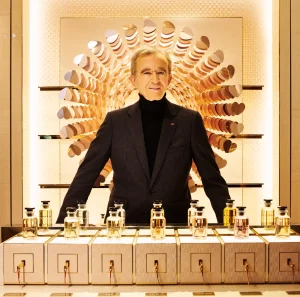
Early Foundations: Privilege, Preparation, and Strategic Discipline
Family Background and Intellectual Formation
Bernard Jean Étienne Arnault was born in 1949 in Roubaix, France, into a family firmly embedded in the industrial sector. His father, Jean Léon Arnault, owned Ferret-Savinel, a successful civil engineering and construction company. This environment exposed Arnault early to balance sheets, project risk, capital allocation, and long-term planning—skills that would later prove indispensable.
Arnault’s academic excellence led him to École Polytechnique, France’s most prestigious engineering school and a breeding ground for the nation’s elite administrators and business leaders. Graduating in 1971, Arnault combined technical rigor with analytical clarity, a dual competence that would later distinguish him from more creatively driven luxury executives.
Upon joining the family business, Arnault demonstrated strategic courage by persuading his father to pivot away from heavy construction toward real estate development, particularly in the United States. This decision significantly increased profitability and sharpened Arnault’s understanding of asset valuation, market cycles, and leverage—lessons that would echo throughout his career.
The Pivotal Breakthrough: Boussac Saint-Frères and the Dior Revelation
Identifying Value in Distress
The defining moment in Arnault’s ascent came in 1984 with the acquisition of the bankrupt conglomerate Boussac Saint-Frères. Backed by government support and external financing, Arnault purchased the group for a symbolic one franc, assuming responsibility for its heavy debts. To many observers, the deal appeared reckless. To Arnault, it was a calculated opportunity.
While Boussac owned several declining industrial assets, it also held Christian Dior, one of the most iconic names in French fashion. Arnault swiftly divested non-core businesses, liquidating factories and assets to stabilize finances. This aggressive restructuring reflected a principle that would become central to his empire: ruthless focus on brands with enduring emotional and cultural capital.
Revitalizing Dior as a Luxury Powerhouse
Arnault invested heavily in Dior’s couture, fragrance, and cosmetics divisions, modernizing its image while respecting its heritage. The launch of the “Poison” perfume in 1985 marked a commercial turning point, generating massive global sales and reestablishing Dior as a dominant luxury brand.
This success validated Arnault’s belief that luxury brands, when properly managed, could achieve both artistic prestige and extraordinary profitability. Dior became the prototype for his future acquisitions: acquire undervalued heritage, eliminate inefficiencies, amplify creativity, and globalize distribution.
Commanding LVMH: Strategy, Power, and Corporate Mastery
The Hostile Takeover That Changed Luxury Forever
In the late 1980s, the newly formed LVMH group—born from the merger of Moët Hennessy and Louis Vuitton—was plagued by internal power struggles. Arnault, initially positioned as a neutral investor, exploited these divisions with remarkable tactical intelligence.
Through Financière Agache, his holding company, Arnault accumulated shares while maneuvering rival factions against one another. By 1990, he had secured majority control and assumed the role of Chairman and CEO. This bold and controversial takeover instantly placed him at the helm of an unparalleled portfolio of luxury brands.
Centralized Control with Creative Autonomy
Unlike traditional conglomerates that favor decentralization, Arnault imposed strong centralized oversight in finance, strategy, and human resources while granting creative directors exceptional freedom. This hybrid model ensured brand coherence, cost discipline, and long-term strategic alignment without suffocating artistic expression.
Arnault famously paired visionary designers with rigorous business executives, creating internal tension that fueled performance. Creative stars such as John Galliano, Marc Jacobs, Raf Simons, and later Virgil Abloh were empowered to redefine luxury aesthetics while being held accountable to commercial metrics.
The LVMH Growth Engine: Acquisitions, Synergies, and Vertical Integration
Strategic Acquisitions with Surgical Precision
Arnault’s acquisition philosophy has been disciplined rather than impulsive. Each purchase reflects careful analysis of brand heritage, craftsmanship, scalability, and global appeal. Notable acquisitions include:
- Fendi (1999) – Revitalized through creative reinvention and leather goods expansion
- Bulgari (2011) – Strengthened LVMH’s position in high jewelry
- Loro Piana (2013) – Secured access to rare raw materials and textile excellence
- Rimowa (2016) – Modernized luxury travel goods
- Tiffany & Co. (2021) – A landmark $15.8 billion acquisition that expanded LVMH’s dominance in American luxury
Each integration preserved brand identity while leveraging LVMH’s operational scale, global retail network, and marketing expertise.
Vertical Integration as Competitive Armor
Arnault aggressively pursued vertical integration, acquiring tanneries, vineyards, watch manufacturers, and retail chains. By controlling the entire value chain—from sourcing to production to distribution—LVMH ensured quality consistency, protected margins, and reduced dependency on external suppliers.
This structure proved particularly resilient during supply chain disruptions, reinforcing LVMH’s competitive advantage in times of global uncertainty.
Innovation in the Digital and Experiential Age
Digital Transformation Without Diluting Prestige
Once cautious about digital channels, Arnault ultimately embraced technology as a tool to enhance exclusivity rather than erode it. LVMH invested in advanced e-commerce platforms, data analytics, and omnichannel experiences, allowing brands to personalize customer engagement at scale.
Initiatives such as 24S, investments in digital content platforms, and advanced CRM systems redefined luxury retail for a new generation of consumers.
Blockchain, NFTs, and the Metaverse
Under Arnault’s leadership, LVMH co-founded the Aura Blockchain Consortium, enabling transparency, authenticity verification, and sustainability tracking. Several brands experimented with NFTs, digital fashion, and immersive brand storytelling, positioning LVMH at the forefront of luxury innovation.
Navigating Crises and Global Complexity
Resilience Through Economic Turbulence
From financial crises to the COVID-19 pandemic, Arnault demonstrated strategic patience and resilience. During lockdowns, LVMH protected creative teams, accelerated digital initiatives, and maintained long-term investments. The result was a rapid post-pandemic rebound driven by global demand, particularly from Asia and the United States.
Geopolitical and Market Challenges
Operating across continents exposes LVMH to regulatory changes, currency volatility, and shifting consumer behavior. Arnault’s emphasis on geographic diversification and brand portfolio balance has helped mitigate these risks while sustaining growth.
Succession Planning and the Arnault Legacy
Preparing the Next Generation
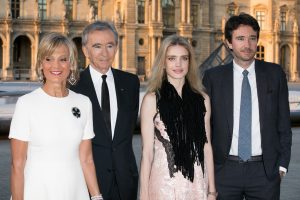
Unlike many founders who delay succession planning, Arnault has systematically integrated his five children into leadership roles across LVMH brands and holdings. This transparent grooming process ensures continuity while preserving family control, though it also invites public scrutiny.
A Lasting Impact on Global Luxury
Arnault’s influence extends beyond balance sheets. Through institutions like the Fondation Louis Vuitton, he has positioned luxury as both an economic engine and a cultural force. His legacy is not merely wealth accumulation, but the industrialization of desire itself.
Conclusion
Bernard Arnault’s ascent is neither accidental nor mythical. It is the product of relentless discipline, intellectual rigor, and an extraordinary ability to recognize value where others see decline. By applying industrial logic to artistic heritage, he transformed luxury from fragmented ateliers into a global, resilient, and aspirational industry.
As LVMH continues to expand across markets, technologies, and generations, Arnault’s vision endures: luxury is not frozen in tradition, but constantly reinvented through strategy, creativity, and control. In redefining what modern luxury means, Bernard Arnault has secured his place not only as the world’s most powerful luxury executive, but as one of the most influential business architects of our time.
Understanding Pay-Per-Click Advertising