
 By admin
Introduction
In an era where explosive combat sports dominate global entertainment, Judo continues to stand out as a martial discipline defined not by force, but by intelligent efficiency, refined technique, and profound philosophical depth. Meaning “the gentle way,” Judo was developed in 1882 by the visionary educator Dr. Jigoro Kano, who sought to transform centuries-old jujutsu practices into a system that was safe, structured, and centered on personal growth. Today, Judo is a sophisticated martial art, an Olympic-level competitive sport, a complete system of self-defense, and a philosophy that shapes character and ethical behavior.
Far more than a contest of strength, Judo thrives on principles such as leverage, balance, timing, and adaptability—making it an art where strategy prevails over aggression. This article offers an in-depth examination of modern Judo, tracing its historical origins, explaining its technical foundations, exploring its evolution into a global phenomenon, and highlighting why Judo remains an invaluable discipline for physical health, mental strength, and ethical development in the 21st century. Whether practiced on the polished tatami mats of a traditional dojo or showcased on the world stage of the Olympic Games, Judo continues to embody a timeless message: true power lies in harmonizing body, mind, and spirit.
Main Body
I. Historical Foundations and Philosophical Heart of Judo
1. The Birth of a New Martial System
Judo emerged from Jigoro Kano’s desire to modernize and elevate the fragmented and often dangerous techniques of traditional jujutsu schools. Kano was inspired by the efficiency of classical grappling techniques but believed that martial arts could serve a deeper purpose—educating individuals physically, mentally, and morally.
In 1882, he established the Kodokan, meaning “the place to study the way.” What began in a small room with just a handful of students would become the global headquarters of Judo education. Kano revised traditional techniques, removing life-threatening strikes and locks to create a training methodology that allowed real, full-power practice—known as randori—while maintaining safety. This revolutionary approach made Judo accessible to practitioners of all ages and backgrounds.
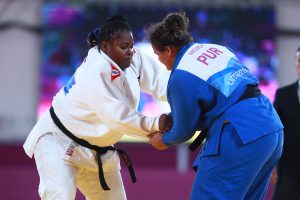
Judo Women’s +78 kg Gold Medal
CUB
ORTÍZ Idalys
PUR
MOJICA Melissa
for the Pan-American Games Lima 2019. Ernesto Zelada / Panam Sports via Xpress Media
2. Judo’s Guiding Principles: Efficiency and Mutual Prosperity
At the core of Judo lie two philosophical pillars that distinguish it from other martial arts:
a. Seiryoku Zen’yo — Maximum Efficient Use of Energy
This concept emphasizes doing more with less—using leverage, timing, and technique rather than brute strength. A smaller person can overcome a larger adversary by redirecting force rather than resisting it. This principle applies not only on the mat but in everyday decision-making and conflict resolution.
b. Jita Kyoei — Mutual Welfare and Benefit
Judo asserts that individuals improve best when they help others improve. Cooperation, respect, and discipline form the ethical foundation of the dojo. Bowing, maintaining cleanliness, and attentiveness to one’s training partner express this philosophy.
Together, these principles make Judo a lifelong path of self-improvement, empathy, and mindful living.
II. The Technical Arsenal of Judo: Precision, Control, and Strategy
Judo’s techniques are arranged in an elegant and systematic hierarchy. This structure helps practitioners progress logically and safely from basic fundamentals to advanced applications.
1. Nage-Waza (Throwing Techniques)
Throwing is the signature aspect of Judo. These techniques are grouped according to the body part used to execute the action:
a. Te-Waza (Hand Techniques)
Examples include:
- Seoi-nage (Shoulder Throw): A staple of competitive Judo that combines speed and leverage.
- Tai-otoshi (Body Drop): A powerful technique relying on timing and foot placement.
b. Koshi-Waza (Hip Techniques)
Examples include:
- O-goshi (Major Hip Throw)
- Harai-goshi (Sweeping Hip Throw)
These throws use the hips as the pivot point to lift and rotate the opponent.
c. Ashi-Waza (Foot and Leg Techniques)
Examples include: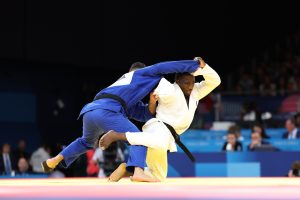
- Osoto-gari (Major Outer Reap)
- De-ashi-barai (Advanced Foot Sweep)
These emphasize timing and precision, often requiring minimal force.
d. Sutemi-Waza (Sacrifice Techniques)
Including:
- Tomoe-nage (Circle Throw)
- Yoko-gake (Side Fall Throw)
The judoka intentionally falls to execute a powerful technique.
2. Katame-Waza (Grappling Techniques)
Once on the ground, Judo focuses on pins, chokes, and joint locks—controlled methods of immobilizing or submitting an opponent.
a. Osaekomi-Waza (Pins)
Examples:
- Kesa-gatame (Scarf Hold)
- Yoko-shiho-gatame (Side Four-Corner Hold)
A pin held for 20 seconds results in an Ippon, or full victory.
b. Shime-Waza (Choking Techniques)
Judo employs:
- Blood chokes (compressing carotid arteries)
- Air chokes (restricting airflow)
Examples include Hadaka-jime and Okuri-eri-jime.
c. Kansetsu-Waza (Joint Locks)
Typically applied to the elbow joint:
- Juji-gatame (Cross Armlock)
- Ude-garami (Entangled Arm Lock)
These are tightly regulated to prevent injury.
3. Ukemi (Break-Falling): The Art of Protection
Ukemi is the first technique every judoka learns and the one they use most. Proper falling technique prevents injury, builds confidence, and allows practitioners to train safely and aggressively. Ukemi symbolizes resilience—the ability to fall, recover, and rise again.
III. Judo on the World Stage: Olympic Evolution and Global Influence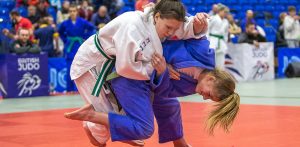
1. From Japan to the World: Judo’s Olympic Journey
Judo became an official Olympic sport for men in 1964, the same year the Games were hosted in Tokyo. Women’s Judo was added in 1992, accelerating the sport’s global expansion.
2. Modern Rule Changes and Competitive Dynamics
The International Judo Federation (IJF) continues to refine the sport to promote clarity, action, and fairness. Major developments include:
- Removal of direct leg grabs, encouraging upright posture and traditional techniques.
- Penalties for passivity to foster continuous engagement.
- Video refereeing systems, ensuring accuracy in scoring.
- Emphasis on Ippon, the ultimate demonstration of technique.
These adjustments have made Judo faster, more dynamic, and more appealing to global audiences.
3. Global Powerhouses and Regional Styles
While Japan remains influential, many nations dominate the international scene:
- France: Known for strategic gripping and exceptional women’s teams.
- South Korea: Dynamic foot sweeps and explosive athleticism.
- Brazil: Strong groundwork influenced by BJJ culture.
- Georgia: Powerful upper-body throws and unorthodox gripping.
This diversity has transformed Judo into a global competitive melting pot rich in styles and tactics.
4. The Rise of Women’s Judo
Female athletes like:
- Clarisse Agbegnenou (France)
- Uta Abe (Japan)
- Majlinda Kelmendi (Kosovo)
have elevated the sport with their technical precision and charisma. Women’s Judo now stands equal to men’s in popularity and competitive intensity.
IV. Judo’s Holistic Benefits: A Blueprint for Modern Well-Being
1. Physical Conditioning and Athletic Development
Judo offers one of the most complete full-body workouts in the world. It builds:
- Functional strength
- Flexibility and mobility
- Balance and coordination
- Explosive power
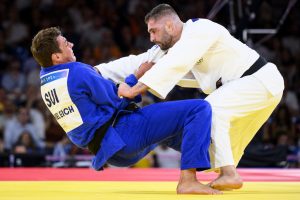
- Endurance and reaction speed
Judoka also develop exceptional grip strength, essential for throws and groundwork.
2. Mental Strength, Emotional Intelligence, and Strategy
Judo is often described as physical chess. Every movement involves strategic thinking, calculation, and adaptation. Benefits include:
- Enhanced problem-solving skills
- Emotional regulation under pressure
- Confidence and self-control
- Stress resilience
- Patience and mental clarity
Losing and learning in Judo builds humility and perseverance—qualities essential outside the dojo.
3. Values, Ethics, and Social Development
Judo training is built around responsibility, respect, and cooperation. Children who practice Judo often develop:
- Confidence without aggression
- Anti-bullying attitudes
- Respect for others
- Leadership skills
- Discipline and empathy
For adults, Judo is a lifelong community built on trust and mutual support.
V. The Future of Judo: Innovation, Inclusivity, and Cultural Legacy
1. Technology and Modern Training Methods
Modern Judo integrates:
- Biomechanical analysis
- Video playback for technique refinement
- Digital scoring and instant replay systems
- Sport science–based conditioning programs
These advancements elevate performance and accessibility for athletes worldwide.
2. Adaptive Judo and Universal Accessibility
Paralympic Judo—especially for athletes with visual impairments—highlights the art’s adaptability and inclusiveness. Programs for seniors, children, and people with disabilities ensure that Judo remains a lifelong practice.
3. Judo’s Growing Influence in MMA and Self-Defense
Judo’s grip-fighting, throws, and submissions are invaluable in modern combat sports. MMA legends like Ronda Rousey and Fedor Emelianenko showcased Judo’s power on the world stage. Many law enforcement and self-defense systems now integrate Judo principles due to their safety, efficiency, and practicality.
Conclusion
Judo is far more than a martial art of spectacular throws or competitive victories. It is a living philosophy, a disciplined practice of self-improvement, and a universal language of respect. From the philosophical teachings of Jigoro Kano to the electrifying Olympic arenas, Judo proves that true mastery lies not in overpowering others, but in mastering oneself.
Its principles—maximum efficiency and mutual benefit—are timeless tools for navigating modern challenges. Whether one practices Judo for fitness, self-defense, emotional balance, or personal growth, the “gentle way” offers a transformative path that harmonizes body, mind, and character.
In a world that often rewards speed over substance, Judo remains a powerful reminder that gentleness, precision, and integrity are the ultimate forms of strength.
The Transformative Power of Two Legends