
 By admin
Introduction
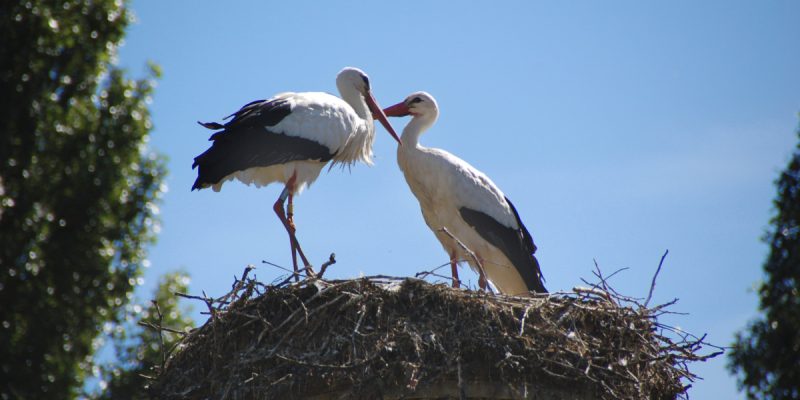
Across continents and centuries, the stork has stood as one of the most recognizable and symbolic bird species in human culture. With its elongated legs, striking wingspan, and unmistakable bill-clattering call, the stork has transcended the natural world to become a universal emblem of fertility, prosperity, and new beginnings. From European folklore that imagines the stork delivering newborns, to the reverence of ancient civilizations that associated the bird with the soul and longevity, storks occupy a unique place in the collective imagination of humanity.
Yet behind this powerful symbolism lies a bird of extraordinary biological capabilities, ecological importance, and environmental vulnerability. Storks—particularly the white stork (Ciconia ciconia)—are master navigators of global flyways, engineers of wetland ecosystems, and indicators of environmental health. Their migrations span thousands of kilometers, crossing deserts, river valleys, and entire continents with astonishing precision. At the same time, modern threats such as habitat destruction, electrocution from power lines, pollution, and climate change pose increasing risks to their survival.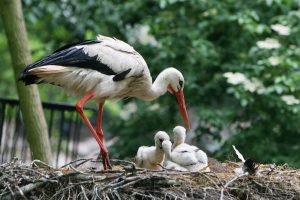
Today, improved tracking technologies, international conservation agreements, and growing public awareness are giving stork populations renewed hope. Understanding the cultural heritage, ecological roles, and conservation needs of these iconic birds reveals not only the stork’s remarkable story but also our own responsibility to protect the natural environment.
This article offers a comprehensive exploration of the stork’s biology, migration strategies, cultural impact, current threats, and the innovative conservation practices shaping its future. As a creature that bridges mythology and modern science, the stork stands as a powerful global ambassador for ecology, coexistence, and environmental stewardship.
Body
I. Biological Marvels: Anatomy and Evolutionary Adaptations
Storks belong to the family Ciconiidae, a lineage of large, long-legged wading birds distributed across Africa, Europe, Asia, and the Americas. Their bodies represent evolutionary excellence, enabling them to thrive in wetlands, agricultural lands, and open grasslands.
1. A Body Built for Flight Efficiency
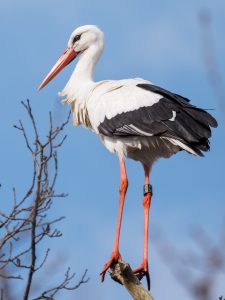
Storks are masters of soaring flight. Their large wings—reaching over 2.2 meters in the white stork—are engineered to catch thermal updrafts, allowing them to travel long distances while conserving energy. Unlike many other migratory birds, storks avoid flapping for extended periods. Instead, they glide gracefully on rising warm air, sometimes reaching altitudes of more than 1,500 meters.
Their lightweight skeletal structure, long neck, and aerodynamic body shape further optimize their flight. These adaptations let them migrate thousands of kilometers with minimum energy expenditure, making them one of the most iconic long-distance migrants on Earth.
2. Specialized Tools for Feeding and Survival
The stork’s long, pointed beak is a versatile adaptation that allows it to feed on a diverse diet: fish, amphibians, insects, small mammals, and even carrion depending on the species. The bill is also used in the famous “clattering” displays that serve as communication during courtship rituals and territorial disputes.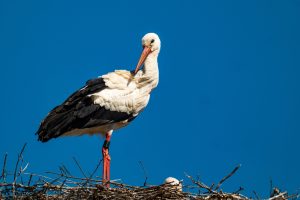
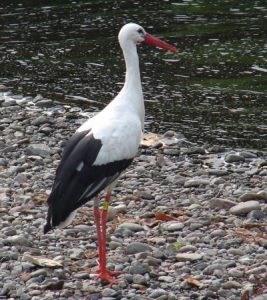
Their long, thin legs provide exceptional mobility in shallow wetlands and marshes. Storks can stand motionless for extended periods while hunting, reducing disturbance to prey. Their unfeathered legs also serve as a natural cooling system, enabling them to regulate temperature during hot weather.
3. Diversity Within the Stork Family
Although the white stork is the most familiar species to many, the Ciconiidae family comprises 19 species showcasing remarkable variation:
- Marabou Stork (Leptoptilos crumenifer): Known for its imposing stature and scavenging habits, this African species plays a critical ecological role by cleaning up carcasses.
- Saddle-billed Stork (Ephippiorhynchus senegalensis): With its vividly colored bill and elegant form, it is one of Africa’s most visually striking birds.
- Greater Adjutant (Leptoptilos dubius): Once widespread in South Asia but now critically endangered, it has become a symbol of urban-wetland conservation efforts.
- Black Stork (Ciconia nigra): More elusive and forest-dwelling, this species is known for its shy behavior and stunning iridescent plumage.
Each species has evolved distinct foraging strategies and habitat preferences, reflecting millions of years of ecological specialization.
II. The Great Odyssey: The Science and Spectacle of Migration
Migration is one of the most extraordinary aspects of stork biology. These birds undertake long, perilous journeys that test their instincts, endurance, and resilience.
1. Time-Honored Global Flyways
White storks in Europe typically migrate along two major flyways:
- The Eastern Flyway: From Central and Eastern Europe through the Balkans, Turkey, the Middle East, and down the Nile toward Eastern and Southern Africa.
- The Western Flyway: From Western Europe through the Iberian Peninsula and across the Strait of Gibraltar into Morocco and beyond.
These flyways are shaped by geography and physics. Storks avoid open sea crossings because thermals do not form over water. Instead, they follow land routes rich in thermal updrafts, enabling them to glide effortlessly over long distances.
2. A Technological Revolution in Understanding Migration
Today, scientists use GPS satellite tags, solar-powered transmitters, and data loggers to monitor stork migrations in real time. These technologies have revealed groundbreaking insights:
- Precise daily movements and stopover sites
- Differences in migration strategies between juveniles and adults
- Shifts in migration timing due to climate change
- Emerging patterns of “short-stopping,” where storks remain in Europe during winter
Increasingly, some storks choose to winter in Spain, Portugal, and Morocco, drawn to reliable food sources at landfills or irrigated farmlands. While this behavior shows adaptation, reliance on human waste also raises new ecological concerns.
3. Migration as a Test of Survival
Migration exposes storks to extreme risks: storms, predators, exhaustion, and human-made obstacles. Young storks face especially high mortality rates during their first southward journey. Successful migration depends on intact ecosystems, safe stopover sites, and favorable weather—conditions increasingly threatened by climate change and human development.
III. Cultural Iconography: The Stork in Myth, Art, and Modern Society
The cultural footprint of the stork is immense. Few animals have inspired as many stories, myths, and artistic representations across civilizations.
1. Myths of Fertility, Renewal, and Good Fortune
The association of storks with childbirth is deeply rooted in European folklore. Their annual springtime return coincided with seasonal agricultural prosperity and an increase in births. Other significant cultural interpretations include:
- Ancient Egypt: The stork symbolized the soul (ba), representing spiritual freedom and transformation.
- Norse Mythology: The stork embodied family, fidelity, and domestic protection.
- East Asia: Often featured in paintings, storks symbolize longevity, wisdom, and happiness.
The stork’s monogamous behavior and tendency to nest on rooftops further strengthened its reputation as a guardian of households.
2. A Cultural Icon Reinvented in the Modern World
Storks remain powerful cultural emissaries today:
- Used globally as symbols of maternity wards and birth announcements
- Featured in children’s books, advertisements, and animated films
- Adopted in corporate branding due to their positive symbolism
Their widespread cultural recognition offers a potent tool for conservation campaigns, allowing communities to connect emotionally with the species and support protection initiatives.
IV. Converging Crises: Modern Threats to Stork Populations
Despite their cultural prestige and ecological importance, many stork species face mounting threats in the 21st century.
1. Habitat Loss and Degradation
Wetlands—the lifeblood of stork ecology—are disappearing rapidly due to:
- Agricultural expansion
- Urban development
OLYMPUS DIGITAL CAMERA - Water diversion and dam construction
- Pollution and eutrophication
As wetlands shrink, storks lose essential feeding and breeding grounds, leading to declines in local populations.
2. Collision, Electrocution, and Energy Infrastructure
One of the leading causes of stork mortality is electrocution on high-voltage power lines. Storks frequently nest on pylons, unaware of the electrical danger. Additionally, wind turbines along migration routes increase the risk of collision, particularly during low-visibility events.
3. Pollution and Waste Consumption
Storks that forage at landfills may ingest plastics, toxins, or spoiled food, weakening their health and lowering reproductive success. Pesticide use in agriculture further reduces prey availability and can cause poisoning.
4. Climate Change Impacts
Climate change disrupts:
- Migration timing
- Wetland hydrology
- Insect and amphibian availability
- Temperature-dependent breeding cycles
These ecological mismatches threaten food security and breeding success, especially for long-distance migrants.
V. Wings of Hope: Modern Conservation Strategies and Success Stories
Efforts to protect storks offer a model of how science, policy, and community action can combine to save migratory species.
1. Engineering Safer Landscapes
Numerous countries are retrofitting electrical infrastructure to reduce bird mortality:
- Installing insulated cables and safe cross-arms on power poles
- Adding bird diverters to increase power line visibility
- Building artificial nesting platforms away from dangerous areas
These solutions demonstrate that modern development and wildlife conservation can coexist.
2. Habitat Restoration and Wetland Management
Large-scale conservation projects across Europe, Africa, and Asia focus on:
- Rehabilitating degraded wetlands
- Protecting floodplains from conversion
- Maintaining traditional low-intensity agriculture
- Creating community-based “stork villages”
In countries like Poland, Germany, and Spain, artificial nesting sites have led to remarkable population recoveries.
3. Citizen Science and Ecotourism
Public engagement is a vital component of stork conservation:
- Birdwatchers report nest activity and sightings
- Online platforms provide live-streamed nest cameras
- Ecotourism generates income for local communities
- Schools conduct environmental education programs centered on storks
These initiatives strengthen the connection between people and nature.
4. International Agreements and Flagship Species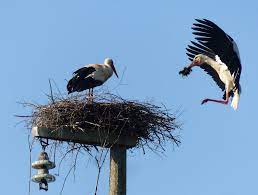
As migratory birds, storks symbolically unite nations. Their protection is coordinated through:
- The Convention on Migratory Species (CMS)
- The African-Eurasian Migratory Waterbird Agreement (AEWA)
- UNESCO Biosphere Reserves
Species like the Greater Adjutant have become conservation flagships, inspiring community-led movements that protect wetlands and uplift local livelihoods.
Conclusion
The stork’s story is a compelling reflection of our evolving relationship with nature—one that encompasses mythology, science, conservation, and global connectivity. These remarkable birds have inspired generations with their elegance, devotion, and extraordinary migrations. Yet today, their survival depends on the choices we make.
Habitat restoration, collision mitigation, sustainable agricultural practices, and international collaboration all play critical roles in securing the stork’s future. Just as the stork has symbolized hope and renewal for centuries, our conservation actions today can pave the way for a more harmonious relationship between humanity and the natural world.
Ensuring that future generations can witness the stork’s majestic return each spring is not simply an ecological responsibility—it is a cultural and moral one. The stork remains a global ambassador for biodiversity, resilience, and the enduring interconnectedness of all living things.
Strength, Intelligence, and Growth