
 By admin
The Power of Truth and the Destructive Path of Lies: How Honesty Leads to Salvation and Falsehood Leads to Ruin
Introduction
Truth and lies have shaped the moral foundation of human societies for thousands of years. Across cultures, religions, and philosophies, honesty has always been regarded as a noble virtue, while lying has been condemned as a behavior that weakens trust and destabilizes relationships. In the modern age—where information moves at incredible speed and public narratives can shift in seconds—the value of truth has become more critical than ever. The consequences of dishonesty are no longer limited to individual relationships; they can impact entire communities, institutions, and even nations.
In this article, we explore the profound difference between truth and lies, not only from a moral or ethical perspective but also through real-world examples, modern psychology, and contemporary societal trends. We examine how honesty leads its bearer to safety, stability, and success, while lying leads to destruction, loss of trust, and long-term harm. By understanding the true weight of both truth and deception, individuals and societies can make more conscious choices that foster integrity, trust, and sustainable human connections.
The Meaning of Truth and Lies
Understanding Truth (Honesty)
Truth is more than simply stating facts. It is a principle of moral integrity, aligned with sincerity, transparency, and respect. Honesty reflects the alignment of one’s actions, words, and inner values. In psychological terms, truthful behavior creates internal harmony and emotional stability because it avoids the cognitive dissonance associated with deception.
Characteristics of Honesty
- Consistency: Truthful people maintain reliable behavior and speech.
- Transparency: They show openness and sincerity in communication.
- Integrity: Their actions are guided by clear moral principles.
- Responsibility: They accept accountability for their behavior.
Honesty creates trust, which is essential for relationships, business, and community harmony. Without truth, any human interaction becomes fragile and vulnerable to collapse.
Understanding Lies (Falsehood)
Lying is the intentional distortion of the truth. It often stems from fear, selfish motives, insecurity, or the desire for personal advantage. Although a lie may seem like an easy escape from difficulty, its consequences can be long-lasting and deeply damaging.
Types of Lies
- White lies: Small deceptions often used to avoid hurting others.
- Manipulative lies: Lies used to control, deceive, or gain personal benefit.
- Hidden truth: Purposefully withholding crucial information.
- Exaggeration or distortion: Altering information to shape perception.
Even when lies begin small, they tend to grow. Over time, the liar becomes trapped in a web of falsehoods that requires more lies to sustain.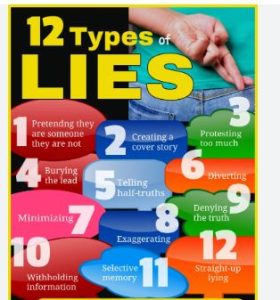
The Moral and Ethical Importance of Truth
Truth in Religion and Culture
Many world religions place truth at the center of moral conduct. In Islam, Christianity, Judaism, Buddhism, and other traditions, honesty is associated with righteousness, purity, and spiritual well-being. Truth is considered a form of worship, a sign of maturity, and a path to salvation.
Lying, on the other hand, is universally condemned. It is linked to hypocrisy, injustice, betrayal, and social corruption. Across civilizations, societies that honor truth tend to flourish, while those dominated by deceit often fall into disorder and mistrust.
Truth as a Foundation of Social Stability
Communities depend on trust. When people communicate honestly, societal systems—governments, markets, education, family structures—function smoothly. But when falsehood spreads, the fabric of society weakens.
History offers many examples of civilizations that fell due to deception, manipulation, and broken trust. Modern societies, too, face challenges such as misinformation, fake news, and political deceit, showing how lies can destabilize entire nations.
Psychological Effects of Truth and Lies
How Honesty Improves Mental and Emotional Health
Honesty provides emotional relief. People who speak the truth experience:
- Lower stress and anxiety
- Improved self-esteem
- Stronger relationships
- Greater confidence
Truth eliminates the fear of being exposed. It brings peace of mind and emotional clarity.
The Psychological Burden of Lying
Lying creates inner conflict. Psychologists explain that deception leads to:
- Stress and mental fatigue
- Guilt and shame
- Anxiety about being discovered
- Disconnection from others
- Long-term emotional instability
The more a person lies, the more they must remember and maintain the false narrative. This mental load can cause severe psychological strain.
Truth and Lies in Personal Relationships
How Honesty Builds Strong Bonds
Trust is the core of any relationship, whether romantic, familial, or social. Honesty strengthens these bonds by creating:
- Security
- Respect
- Emotional openness
- Realistic expectations
A truthful person becomes reliable, and others feel safe around them.
How Lying Destroys Relationships
When lies invade a relationship, they cause:
- Betrayal

- Loss of trust
- Emotional distance
- Conflicts and misunderstandings
Even a single lie can damage years of trust. Repeated lying almost always leads to the collapse of the relationship.
Truth and Lies in Professional Life
Honesty as a Path to Success
In the workplace, honesty leads to:
- Strong reputation
- Career growth
- Better teamwork
- Trust from colleagues and leadership
Companies thrive when employees communicate honestly, report problems accurately, and maintain integrity.
Lying in the Workplace and Its Consequences
Dishonesty at work may offer temporary gain, but it results in:
- Job loss
- Legal consequences
- Damaged reputation
- Failed projects or businesses
Professional environments built on lies become unstable and prone to collapse.
How Truth Leads to Salvation and Safety
Moral Salvation
Truth purifies the soul. It aligns character with principles of righteousness and leads to inner peace. A truthful person wins the respect of others and leaves a legacy of honor.
Practical Salvation
Truth avoids the complications that lies create. When a person is honest:
- They do not fear being exposed.
- They maintain clarity in relationships.
- They avoid legal or social consequences.
- They build a solid foundation for future success.
Truth may seem difficult at first, but it always leads to long-term safety.
How Lying Leads to Destruction and Ruin
Loss of Trust
Once a person is known as a liar, regaining trust becomes nearly impossible. People distance themselves, and opportunities disappear.
Social and Legal Consequences
Lying can lead to:
- Broken relationships
- Loss of friendships
- Loss of employment
- Legal problems
- Social isolation
A lie may feel like a shortcut, but every shortcut has a hidden cost.
The Internal Collapse of the Liar
Perhaps the greatest harm caused by lying lies within the liar himself. A deceptive person lives in fear, shame, and internal conflict. With time, this destroys confidence and self-worth.
Modern Challenges: Truth in the Digital Age
Fake News and Media Manipulation
Digital platforms have made it easier than ever to spread lies. Rumors, manipulated images, and false reports can reach millions in seconds. This creates new challenges for individuals and societies.
The Need for Critical Thinking and Verification
To navigate a world full of information, individuals must:
- Verify sources
- Cross-check facts
- Avoid emotional reactions
- Develop critical thinking skills
Truth now requires effort, awareness, and responsibility.
Conclusion
Truth and lies are not merely words or behaviors; they are life choices that shape destinies. Honesty builds trust, peace, success, and strong character. It leads to safety both in this world and in the moral realm. Lying, however, destroys relationships, harms mental health, ruins reputations, and ultimately leads to personal and social collapse.
In every era—past, present, and future—truth remains the foundation of safety and salvation, while falsehood continues to be a path of destruction. Choosing honesty is not always easy, but it is always the right path, the path that ensures dignity, trust, and lasting peace.
Rebuilding Trust and Talk with Your Teen