
 By admin
Echolocation Demystified: How Bats “See” in the Dark and the Myth of Blindness
Introduction
For centuries, bats have occupied a mysterious place in human imagination. Gliding silently through the night skies, emerging from caves at dusk, and navigating effortlessly in total darkness, they have inspired myths, legends, and persistent misconceptions. Among the most enduring of these myths is the expression “blind as a bat.” This phrase, deeply embedded in popular culture, suggests clumsiness, poor vision, and sensory limitation. In reality, nothing could be further from the truth.
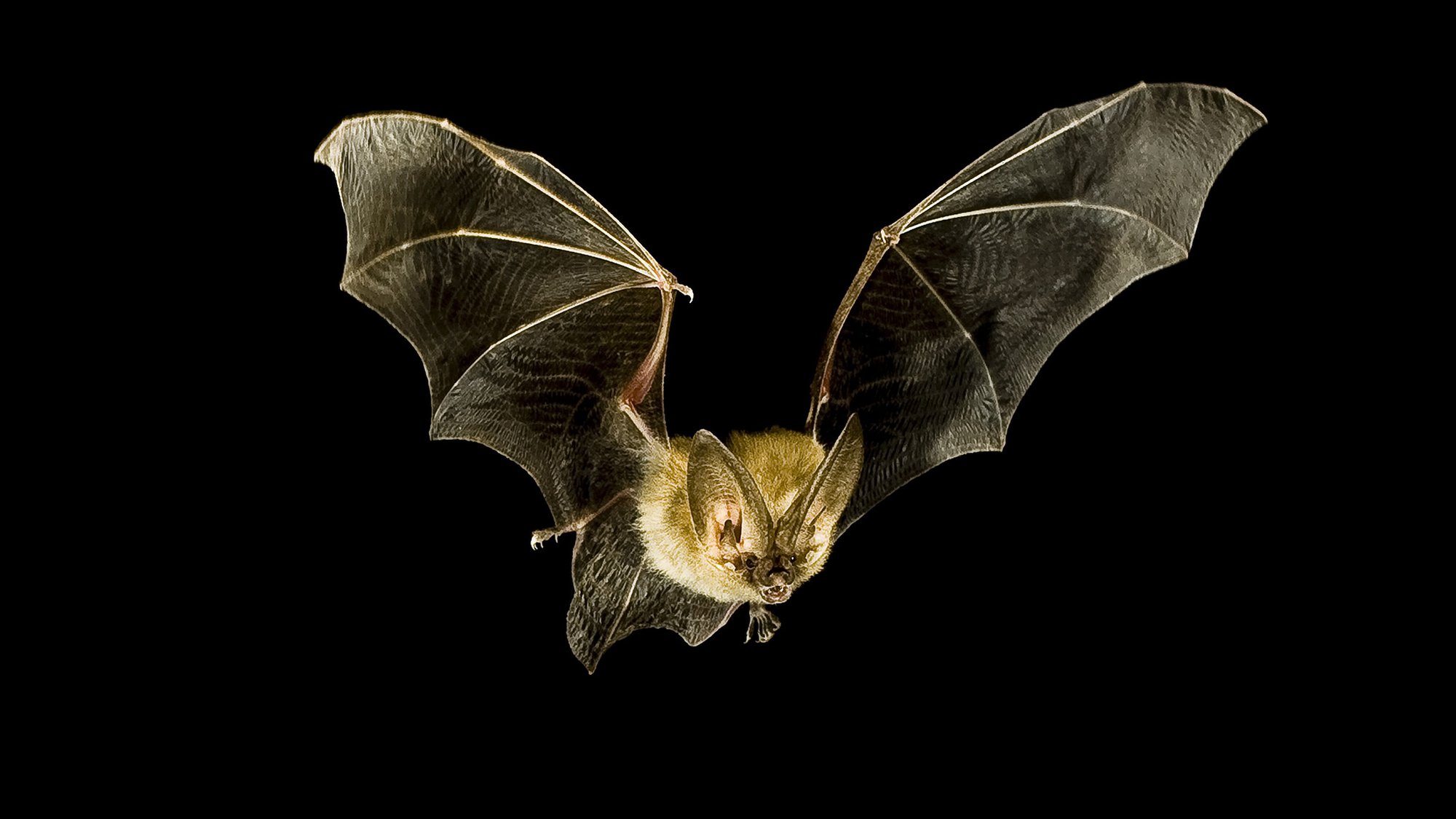
Bats are not blind. On the contrary, they possess one of the most advanced sensory systems found anywhere in the animal kingdom: echolocation, also known as biological sonar. This remarkable adaptation allows bats to “see” their surroundings using sound, creating detailed three-dimensional maps of the world through echoes alone. With this ability, bats can hunt fast-moving insects, avoid obstacles thinner than a human hair, navigate complex environments, and thrive in complete darkness where vision alone would fail.
This article offers a comprehensive, modern exploration of bat echolocation. We will examine how bats produce and interpret sound, how echolocation works in harmony with vision, how different species have evolved unique acoustic strategies, and how bat sonar has inspired cutting-edge human technology. By dismantling the myth of bat blindness, we reveal a powerful story of evolutionary innovation, neurobiological sophistication, and ecological importance that reshapes our understanding of perception itself.
1. Debunking the Myth: Are Bats Really Blind?
1.1 The Origins of a Persistent Misconception
The idea that bats are blind likely arose from their nocturnal habits and their uncanny ability to fly effortlessly in darkness. To early observers, it seemed impossible that a creature could navigate so precisely without sight. The misunderstanding was reinforced by folklore and idioms long before scientific observation corrected the narrative.
In truth, nearly all bat species have functional eyes. While bat vision differs from human vision, it is far from useless. The misconception persists largely because humans tend to underestimate senses that operate beyond our own perceptual limits.
1.2 Vision and Echolocation: A Complementary System
Bats rely on a multisensory approach to perception. Echolocation does not replace vision; instead, it complements it.
- Microbats (the majority of bat species) primarily use echolocation for navigation and hunting but still rely on vision for long-distance orientation and recognizing landmarks.
- Megabats (fruit bats or flying foxes) possess large, well-developed eyes and depend heavily on vision and smell, using limited echolocation mainly for close-range navigation in dark roosts.
This combination allows bats to operate efficiently across a wide range of lighting conditions, from twilight to complete darkness.
2. Understanding Echolocation: The Science of Seeing with Sound
2.1 What Is Echolocation?
Echolocation is an active sensory process. Unlike vision, which depends on ambient light, echolocation involves emitting sound waves and interpreting their echoes as they bounce off objects. By analyzing these returning echoes, bats can determine:
- Distance
- Size
- Shape
- Texture
- Speed
- Direction of movement

In essence, bats “illuminate” their environment acoustically.
2.2 Ultrasonic Sound: Beyond Human Hearing
Bat echolocation calls are ultrasonic, typically ranging from 20 kHz to over 200 kHz—far above the upper limit of human hearing. These high frequencies allow for exceptional spatial resolution, enabling bats to detect extremely small objects such as insects in mid-flight.
3. Sound Production: How Bats Generate Echolocation Calls
3.1 The Larynx: A Biological Sound Engine
Most bats produce echolocation calls using their larynx, or voice box. Specialized muscles surrounding the larynx contract at astonishing speeds, allowing bats to emit dozens—or even hundreds—of calls per second.
Some bats can adjust the intensity, frequency, and duration of each call in real time, tailoring their sonar output to the task at hand.
3.2 Mouth vs. Nose Emission
Different bat species emit sounds in different ways:
- Mouth-emitting bats release calls through an open mouth, allowing flexibility in beam direction.
- Nose-emitting bats, such as horseshoe bats, emit calls through their nostrils. These species possess elaborate nose-leaf structures that help focus and shape the outgoing sound beam, much like an acoustic lens.
4. Call Design: Different Sounds for Different Purposes
4.1 Frequency-Modulated (FM) Calls
FM calls sweep rapidly from high to low frequencies. They provide precise information about distance and object structure, making them ideal for navigating cluttered environments like forests.
4.2 Constant-Frequency (CF) Calls
CF calls maintain a steady frequency for longer durations. These calls are especially sensitive to Doppler shifts, allowing bats to detect the subtle wingbeats of flying insects.
4.3 Hybrid and Multi-Harmonic Calls
Many bats use a combination of FM and CF calls, extracting maximum information from each echo. This acoustic flexibility gives bats extraordinary control over their sensory input.
5. Echo Reception: The Role of Bat Ears and Hearing
5.1 Specialized Ears for Acoustic Precision
Bat ears are finely tuned instruments: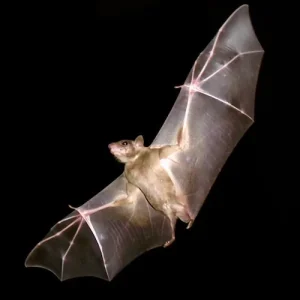
- Large, movable pinnae help capture echoes and determine vertical position.
- Intricate folds in the ear structure enhance directional sensitivity.
5.2 Protecting the Hearing System
Echolocation calls can exceed 140 decibels, loud enough to damage hearing. To prevent self-deafening, bats temporarily disengage the middle ear bones just before emitting a call, then reconnect them in milliseconds to receive the returning echo.
5.3 The Auditory Brain
A significant portion of the bat brain is devoted to auditory processing. Neurons are finely tuned to specific echo delays and frequency changes, enabling precise calculations of distance and motion.
6. The Hunting Sequence: Aerial Precision in Action
Bat hunting unfolds in distinct stages:
- Search Phase – Slow, wide-ranging calls scan the environment.
- Approach Phase – Call rate increases as the bat focuses on a detected target.
- Terminal Buzz – A rapid burst of calls (up to 200 per second) provides real-time updates during capture.
This process happens in fractions of a second, demonstrating remarkable neural speed and coordination.
7. Evolutionary Arms Race: Bats vs. Their Prey
7.1 Insect Countermeasures
Many nocturnal insects have evolved defenses against bat echolocation:
- Ultrasound-sensitive ears allow evasive maneuvers.
- Sonar-jamming clicks, produced by certain moths, confuse bat perception.
- Chemical defenses, signaled acoustically, warn bats of toxicity.
7.2 Bat Adaptations
In response, bats have evolved quieter calls, alternative frequencies, and unpredictable hunting patterns, illustrating a dynamic coevolutionary battle.
8. Neural Mapping: How Bats Build a 3D World from Sound
Bats convert sound into spatial awareness through neural mapping:
- Time delay equals distance.
- Frequency shift indicates speed.
- Binaural differences reveal direction.
This neural “sound vision” is so accurate that bats can distinguish objects differing by less than a millimeter.
9. Biomimicry: How Bat Sonar Inspires Human Technology
9.1 Navigation and Robotics
Bat echolocation has influenced:
- Autonomous vehicle sensors
- Drone navigation systems
- Obstacle-detection technologies
9.2 Medical Imaging
Principles derived from bat sonar have contributed to advances in ultrasound diagnostics and signal processing.
9.3 Assistive Devices for the Visually Impaired
Technologies such as ultrasonic canes and wearable sonar systems help visually impaired individuals navigate using sound-based feedback.
10. Conservation Challenges: Protecting the Masters of the Night
Despite their sophistication, bats face severe threats:
- Habitat destruction
- Wind turbine collisions
- Pesticide-driven insect decline
- White-Nose Syndrome, a devastating fungal disease
Protecting bats means preserving not only their roosts but also the acoustic environments essential to their survival.
Conclusion
Bats do not see the world as humans do—but they see it just as clearly, if not more so. Through echolocation, bats have transformed sound into sight, constructing rich, dynamic maps of their surroundings in total darkness. This extraordinary sensory system represents one of evolution’s greatest achievements, blending anatomy, physics, and neural processing into a seamless whole.
By dispelling the myth of bat blindness, we gain a deeper appreciation for these misunderstood creatures and their vital role in global ecosystems. From pest control to pollination, from scientific inspiration to technological innovation, bats enrich our world in countless ways. Preserving them is not only an ecological necessity—it is a commitment to protecting one of nature’s most brilliant expressions of intelligence and adaptability.
Why Elephants Never Choke When They Drink?