
 By admin
The Grandeur in Miniature: The Fine Piano Music Box as a Timeless Work of Art
Introduction: When Music, Memory, and Mastery Converge
Throughout human history, music has served as a universal language—an emotional bridge connecting generations, cultures, and moments in time. Long before the advent of digital recordings and instant streaming, music was preserved and shared through mechanical ingenuity. Among the most enchanting embodiments of this tradition stands the music box: a delicate yet powerful artifact that transforms motion into melody. While music boxes appear in many shapes and sizes, few rival the elegance, symbolism, and artistic depth of the piano music box.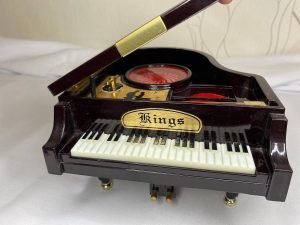
More than a charming novelty or decorative keepsake, a finely crafted piano music box represents a remarkable fusion of mechanical engineering, musical heritage, and sculptural artistry. It distills the grandeur of a full-sized piano—an instrument synonymous with refinement and emotional expression—into a miniature form that captivates both the eye and the ear. In doing so, it transcends the boundaries of craft and enters the realm of fine art.
In a world increasingly dominated by intangible digital experiences, the piano music box offers something profoundly different: a tangible, enduring object that invites touch, attention, and contemplation. This article explores the artistry, craftsmanship, mechanical sophistication, and cultural significance of fine piano music boxes, revealing why they continue to hold a revered place as heirlooms, collectibles, and timeless works of art in the modern age.
I. The Evolution of Music Boxes: From Mechanical Curiosity to Artistic Expression
1. Origins of the Music Box Tradition
The origins of the music box can be traced back to 18th-century Europe, where advances in clockmaking and watchmaking gave rise to mechanical devices capable of producing music. Early music boxes were closely linked to luxury timepieces, often hidden within snuff boxes, jewelry cases, or ornate cabinets. Switzerland and Germany quickly became epicenters of innovation, with artisans refining the mechanisms that transformed rotating cylinders and steel combs into harmonious sound.
These early creations were prized not only for their melodies but also for their craftsmanship. Owning a music box was a mark of sophistication, wealth, and cultural appreciation. Over time, music boxes evolved beyond functional marvels into decorative art objects, incorporating fine woods, precious metals, and elaborate ornamentation.
2. The Emergence of the Piano Music Box
As the piano rose to prominence in the 19th century as the centerpiece of domestic music-making, it naturally inspired miniature interpretations. The piano music box emerged as a tribute to the instrument’s elegance and cultural status. Rather than merely housing a musical movement, these boxes sought to replicate the visual identity and emotional symbolism of the piano itself.
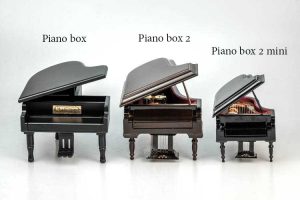
From upright designs to baby grand and concert grand forms, piano music boxes captured the essence of the instrument in scaled-down perfection. Over time, master artisans elevated these pieces beyond imitation, transforming them into symbolic sculptures that celebrate music, craftsmanship, and tradition.
II. Beyond Replication: The Anatomy of a Fine Piano Music Box
1. From Mass Production to Bespoke Excellence
Not all piano music boxes are created equal. At the lower end of the market, mass-produced models often feature generic movements placed inside piano-shaped casings. While charming, these pieces are primarily decorative and lack the depth, durability, and artistic integrity of high-end creations.
In contrast, bespoke piano music boxes are the result of meticulous handcrafting. Produced in limited quantities—or even as one-of-a-kind commissions—these masterpieces originate from regions with deep-rooted traditions in mechanical art, such as the Black Forest of Germany and the Jura Mountains of Switzerland. Here, generations of artisans have perfected the delicate balance between form and function.
2. Materials That Define Artistic Value
The choice of materials plays a decisive role in distinguishing a true work of art from a simple ornament. Fine piano music boxes are typically crafted from solid hardwoods such as mahogany, walnut, rosewood, or oak. These woods are selected not only for their visual beauty but also for their acoustic properties and longevity.
Artistic enhancements may include:
- Hand-carved decorative motifs
- Intricate marquetry using contrasting woods
- Mother-of-pearl or brass inlays
- Hand-painted scenes or lacquered finishes
- Accents of semi-precious stones or gilded metal
Every element is carefully considered, ensuring harmony between visual elegance and mechanical performance.
3. Precision in Miniature Design
One of the most remarkable aspects of a fine piano music box is the precision with which it recreates the details of a real piano. Individually defined keys, sculpted legs, a hinged lid that opens like a grand piano, and proportional accuracy all contribute to the authenticity of the piece. These details are not merely decorative—they reflect the artisan’s respect for the instrument and commitment to excellence.
III. The Mechanical Soul: Where Engineering Becomes Music
1. Understanding the Musical Movement
At the heart of every piano music box lies its musical movement—a complex assembly of components working in perfect synchronization. This mechanism typically consists of:
- A rotating cylinder or interchangeable disc
- Precisely positioned pins corresponding to musical notes
- A steel comb with tuned teeth
- A spring-driven motor and governor system
When activated, the pins pluck the comb’s teeth, producing clear, bell-like tones that combine into melody.
2. Note Capacity and Musical Complexity
The sophistication of a music box movement is often measured by its note capacity, which directly affects musical richness and realism:
- 18–36 notes: Simple melodies, short duration
- 72–96 notes: Fuller arrangements, improved harmony
- 144 notes and beyond: Complex compositions with dynamic range
High-end piano music boxes with 144-note movements or more can faithfully reproduce classical masterpieces by composers such as Chopin, Mozart, Beethoven, and Debussy. These movements allow for expressive phrasing, layered harmonies, and extended playtime—bringing the miniature instrument astonishingly close to its full-sized counterpart.
3. Customization and Musical Identity
Modern collectors often seek personalization. Many fine piano music boxes offer the option to choose specific compositions, transforming the piece into a deeply personal artifact. Whether commemorating a wedding, anniversary, or milestone, the selected melody becomes an audible signature of memory and meaning.
IV. A Multi-Sensory Masterpiece: Sound, Sight, and Touch
1. Acoustic Excellence Through Design
A premium piano music box is designed with acoustics in mind. The solid wooden case acts as a resonance chamber, amplifying and enriching the sound. Unlike plastic or composite materials, hardwood enhances tonal warmth, clarity, and sustain, resulting in a sound that is gentle yet emotionally resonant.
2. The Beauty of Visible Mechanics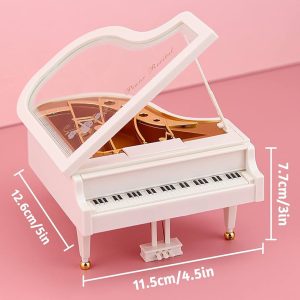
Many luxury piano music boxes feature glass panels or open designs that reveal the movement in action. Observing the rotating cylinder, vibrating comb, and precisely timed mechanisms is a mesmerizing experience—one that celebrates mechanical transparency and human ingenuity.
This visual engagement reinforces the idea that the piano music box is not merely an object, but a living performance of craftsmanship.
V. The Piano Music Box in the Digital Age: A Modern Heirloom
1. Emotional Permanence in an Ephemeral World
In an era where music is often reduced to invisible data, the piano music box offers permanence. Its melody is not streamed or downloaded—it is physically created, moment by moment, through motion and material. This tangibility fosters emotional attachment and narrative continuity.
2. Craftsmanship as Cultural Resistance
Owning a handcrafted piano music box is a conscious embrace of slow artistry. It reflects an appreciation for patience, skill, and tradition in a fast-paced, disposable culture. As such, these pieces are increasingly valued as heirlooms, passed down through generations with their stories intact.
3. Collectibility and Investment Value
Limited-edition piano music boxes from renowned workshops are gaining recognition among collectors and investors alike. Their value lies in scarcity, craftsmanship, and enduring appeal—qualities that resist depreciation and often appreciate over time.
VI. Evaluating Excellence: A Collector’s Guide
1. Material Authenticity
Always prioritize solid hardwood construction over veneers or synthetic substitutes. Examine joints, finishes, and inlays for precision and durability.
2. Movement Provenance
Renowned manufacturers such as Reuge (Switzerland) and Sankyo (Japan) are celebrated for reliability and tonal excellence. A high-quality movement produces clear, balanced sound without harshness.
3. Artistic and Mechanical Integrity
Look for crisp detailing, smooth winding mechanisms, secure hinges, and flawless operation. A signed piece or workshop mark adds authenticity and collectible value.
Conclusion: A Whisper of Grandeur That Endures
A fine piano music box is far more than a decorative accessory or nostalgic novelty. It is a masterful convergence of music, engineering, and visual art, distilled into a form that speaks quietly yet profoundly. Through its melody, it evokes memory; through its craftsmanship, it honors tradition; through its permanence, it defies time.
In its miniature grandeur, the piano music box captures the soul of an instrument that has shaped centuries of musical expression. It stands as a testament to human creativity and a reminder that true beauty often resides not in scale, but in detail, intention, and emotion. As both an artistic treasure and a personal legacy, it earns its place among the most enduring works of mechanical art—destined to resonate across generations.
The Psychology of Perfect Christmas Gifts