
 By admin
Introduction
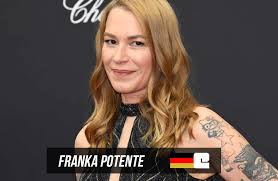
In the global history of contemporary cinema, few actresses have followed a path as coherent, restrained, and quietly influential as Franka Potente. Best known internationally for her explosive performance in Run Lola Run (Cours, Lola, cours), Potente became, almost overnight, the face of a new European cinematic energy at the turn of the millennium. Yet unlike many actors propelled to stardom by a single iconic role, she never allowed success to dictate her identity or creative choices.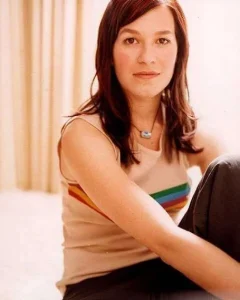
Born in Germany and shaped by European theater traditions, Franka Potente carved a career that bridged independent cinema, Hollywood productions, television, writing, and directing—without ever sacrificing artistic integrity. Her journey from Münster to Munich, from Berlin to Los Angeles, and ultimately back to Europe reflects a rare balance between ambition and restraint.
This article explores the solid, scandal-free, and deeply intentional trajectory of Franka Potente: an actress who reached Hollywood without chasing it, who became an icon without seeking celebrity, and who continues to influence cinema through authenticity rather than exposure.
Early Life and Family Origins in Münster
A Childhood Marked by Discipline and Curiosity
Franka Potente was born in 1974 in Münster, then part of West Germany, into a household defined by structure and intellectual curiosity. Her mother worked as a medical assistant, while her father was a schoolteacher—two professions rooted in discipline, responsibility, and service. This environment nurtured both independence and introspection, qualities that would later define Potente’s acting style.
From an early age, she demonstrated a strong inclination toward artistic expression, particularly drawing and theater. However, acting was not initially viewed as a future profession. Like many children raised in academically oriented families, creativity was encouraged—but pragmatism remained central.
Formal Training and the Move to Munich
Discovering Acting as a Profession
At the age of seventeen, Franka Potente moved to Munich to enroll at the prestigious Otto Falckenberg School of the Performing Arts, one of Germany’s most respected acting institutions. It was here that her perception of acting shifted from passion to profession.
Her teachers described her as focused, reserved, and deeply observant—traits that contrasted with the more extroverted theatrical archetypes of the time. This understated presence would later become one of her greatest strengths, allowing her to convey emotional depth without excess.
The school’s emphasis on classical training, physical awareness, and psychological realism shaped Potente into an actress capable of restraint as well as intensity.
The First Step On Screen: A Decisive Short Film
‘Aufbruch’ (1995): The Quiet Beginning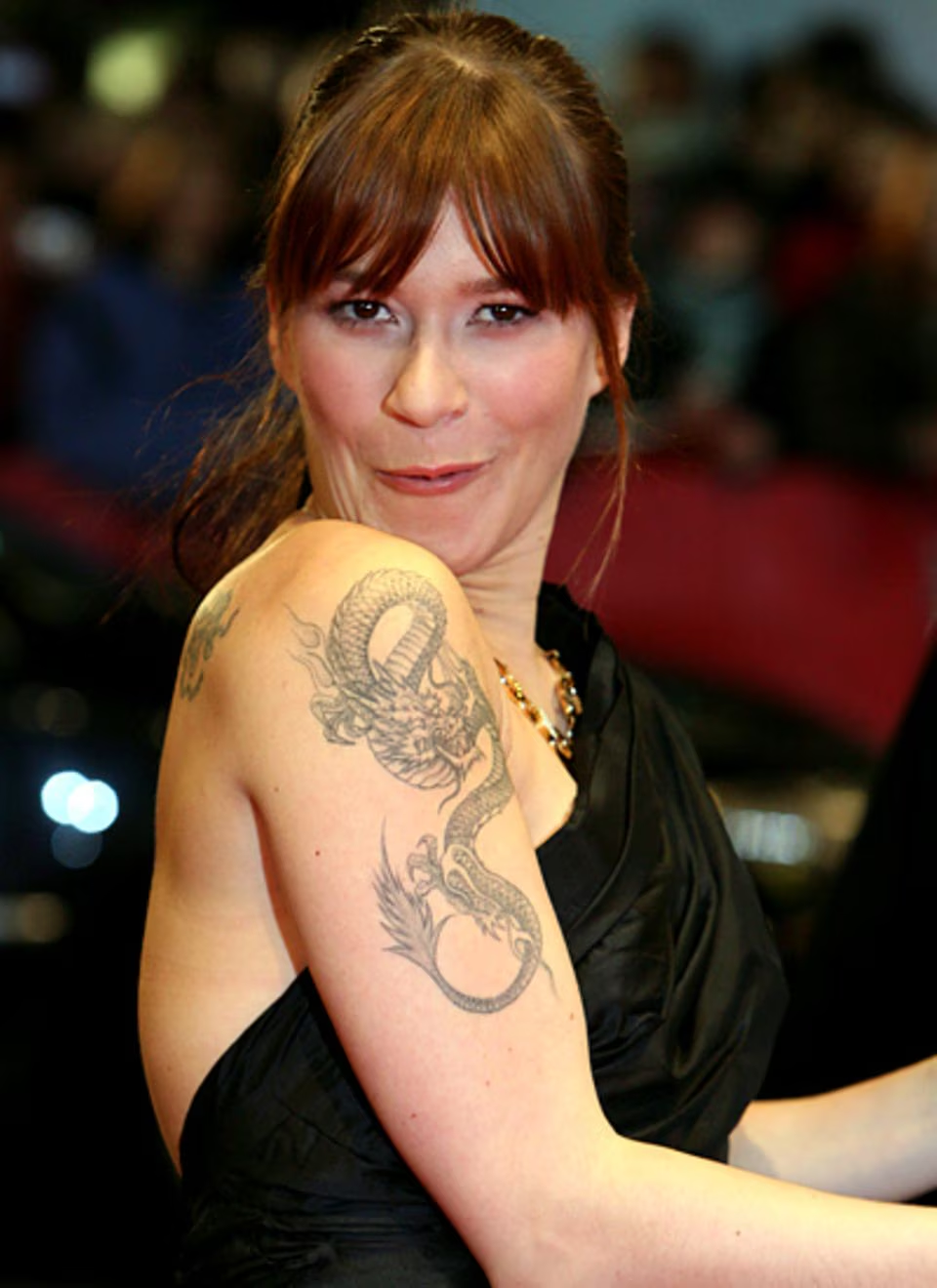
Potente’s first on-screen appearance came with the short film Aufbruch (1995), a student project that nevertheless caught the attention of independent film producers. While modest in scope, the performance revealed her ability to project sincerity and emotional nuance—qualities highly valued in European cinema.
This early exposure proved decisive, setting the stage for the opportunity that would define her career.
The Breakthrough That Changed Everything: Run Lola Run
A Role That Redefined European Cinema
In 1998, director Tom Tykwer cast Franka Potente in the lead role of Lola, a young woman racing against time to save the man she loves. The result was Run Lola Run, a film that would become a global phenomenon and a landmark of modern European cinema.
With her striking red hair, relentless energy, and raw emotional intensity, Potente embodied a new kind of female protagonist—active, driven, fearless, and central to the narrative. The film’s innovative structure, pulsating soundtrack, and kinetic editing captivated audiences worldwide.
International Recognition and Awards
The film grossed over $7 million in Germany alone and achieved significant success internationally. It received major accolades, including awards at the Sundance Film Festival, propelling both Tykwer and Potente onto the global stage.
More importantly, Run Lola Run became a case study in film schools across Europe and beyond, praised for its narrative experimentation and visual storytelling.
Crossing the Atlantic: From German Cinema to Hollywood
A Rare Transition for a European Actress
At a time when few European actresses successfully crossed into Hollywood without being typecast, Franka Potente signed with an American agent and relocated to Los Angeles. She became one of the most recognizable German actresses internationally, representing a new wave of European talent.
Yet her approach to Hollywood was cautious. She did not pursue celebrity for its own sake, nor did she abandon her artistic principles to conform to industry expectations.
Hollywood Milestones: From Blow to The Bourne Identity
‘Blow’ (2001): Subtle Strength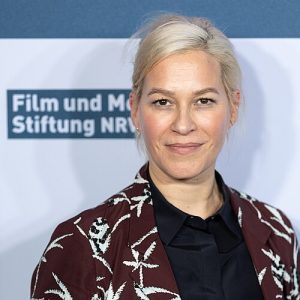
In 2001, Potente starred alongside Johnny Depp in Blow, portraying a German woman involved in international drug trafficking. Though not the film’s central character, her performance stood out for its restraint and authenticity.
Rather than dominating scenes, she anchored them—confirming her reputation as a character-driven actress rather than a conventional star.
Global Fame with The Bourne Identity
Her role as Marie Kreutz in The Bourne Identity (2002), opposite Matt Damon, elevated her to worldwide recognition. The film’s success introduced her to a massive global audience and established her as a credible presence in high-profile action cinema.
Unlike many female characters in the genre, Marie was neither ornamental nor secondary; she was intelligent, empathetic, and essential to the story’s emotional core.
The Challenge of Being European in Hollywood
Choosing Substance Over Exposure
Despite her success, Franka Potente never fully assimilated into the Hollywood system. She declined roles that felt superficial or misaligned with her values, choosing instead to maintain a selective, meaningful career.
This distance from the Hollywood machinery resulted in a non-linear but coherent trajectory—one that prioritized longevity and integrity over constant visibility.
Returning to European Cinema
Reclaiming Creative Control
After several years in the United States, Potente returned to Germany, starring in films such as Blueprint (2003) and Creep (2004). These projects reaffirmed her ability to carry films independently and reconnect with European storytelling traditions.
Her return was understated but well-received, reinforcing her image as an actress driven by substance rather than publicity.
A New Chapter: From Actress to Director
Embracing Storytelling Behind the Camera
In 2006, Franka Potente directed her first short film, Der die Tollkirsche ausgräbt (The One Who Digs Up Belladonna). The project marked a turning point, revealing her desire to control narrative perspective and creative process.
In 2020, she directed her first feature film, Home, a socially reflective drama about reintegration after incarceration. The film premiered to positive reviews at the Zurich Film Festival, praised for its emotional restraint and humanistic approach.
Television, Voice Work, and Artistic Versatility
From Prestige TV to Voice Acting
Throughout the 2010s, Potente expanded her repertoire through television, appearing in series such as Copper (BBC America) and Taboo (FX). Her performances demonstrated adaptability across genres, from historical drama to psychological intensity.
She also lent her voice to documentaries and animated projects, finding in voice acting a way to remain creatively active without constant on-screen exposure.
A Private Life Intentionally Preserved
Family, Balance, and Distance from Fame
In 2012, Franka Potente married actor Derek Richardson, with whom she has two daughters. The family resides in California, away from the public eye.
Her commitment to privacy has become one of her defining characteristics, allowing her to balance family life with artistic pursuits—a rare equilibrium in the entertainment industry.
Writing and Authorship
An Artist Beyond Performance
Beyond acting and directing, Potente is also a writer. She has authored short stories, contributed to screenplays, and collaborated with German cultural publications. Her writing mirrors her cinematic style: direct, restrained, and emotionally grounded.
From Icon to Reference
An Enduring Cinematic Legacy
More than two decades after Run Lola Run, Franka Potente remains a reference point in European film education. Her portrayal of Lola reshaped perceptions of female protagonists and inspired filmmakers to rethink narrative structure and pacing.
She did not seek to become a symbol—but became one nonetheless.
Recent Projects and Ongoing Work
Following Home, Potente continues to develop a new screenplay set in Germany. While details remain undisclosed, her ongoing commitment to storytelling suggests a continued evolution—on her own terms.
A Career Without Scandals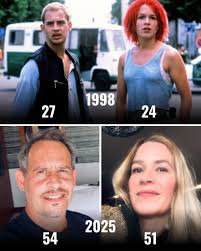
In an industry often marked by controversy, Potente’s reputation remains untouched. Her discretion, professionalism, and consistency have proven to be her most powerful assets.
Conclusion: A Lola Who No Longer Needs to Run
Franka Potente no longer needs to run like Lola. She has found her rhythm—one defined by artistic freedom, family stability, and creative authenticity. Her career stands as proof that success does not require constant visibility, and that influence can be quiet yet profound.
Her legacy is not built on excess, but on talent, rigor, and unwavering coherence—a rare achievement in modern cinema.
Acting as Humanity’s Living Reflection