
 By admin
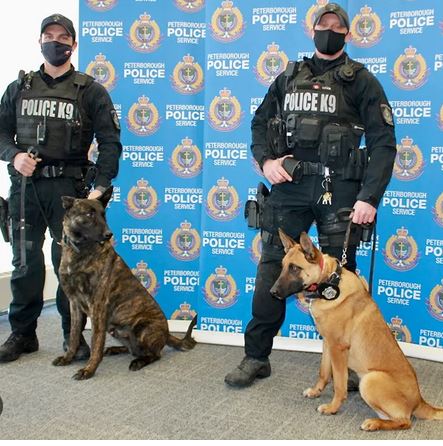
The Indispensable Role of Police Dogs in Narcotics Detection: A Comprehensive Overview
Introduction
Police dogs have long been integral to law enforcement agencies worldwide, particularly in the detection of illicit substances such as narcotics. Their unparalleled olfactory capabilities, combined with rigorous training, make them indispensable tools in combating drug trafficking. This article explores the science behind their scent detection abilities, the training methodologies employed, the breeds most commonly used, and recent advancements in the field. By understanding these aspects, we gain insight into why police dogs remain a cornerstone of modern drug enforcement strategies.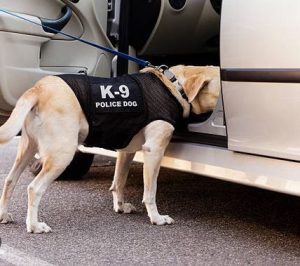
The Science Behind Canine Olfaction
A Superior Sense of Smell
Dogs possess an extraordinary sense of smell, far surpassing that of humans. While humans have approximately 5 million olfactory receptors, dogs boast up to 300 million, depending on the breed. This vast number of receptors, combined with a specialized olfactory system, allows dogs to detect minute concentrations of substances, even in complex environments.
How Dogs Detect Scents
When a dog inhales, air is divided between the respiratory system and the olfactory system. The olfactory region contains a dense layer of receptors that bind to odor molecules, transmitting signals to the brain for identification. This intricate system enables dogs to discern individual components of complex scents, making them exceptionally adept at detecting specific substances like narcotics.
Training Methodologies for Narcotics Detection
1. Selection of Suitable Candidates
Not all dogs are suited for police work. Breeds such as the German Shepherd, Belgian Malinois, and Labrador Retriever are often preferred due to their intelligence, agility, and strong work ethic. Candidates undergo thorough health screenings and behavioral assessments to ensure they possess the necessary physical and mental attributes for the demanding tasks ahead.
2. Basic Obedience Training
Before specializing in narcotics detection, dogs must master basic obedience commands. This foundational training ensures that handlers can maintain control in various situations, which is crucial during operations.
3. Scent Association Training
The core of narcotics detection training involves teaching dogs to associate specific scents with a reward. Trainers introduce the target odor (e.g., cocaine, heroin) and pair its discovery with positive reinforcement, such as treats or playtime. Over time, the dog learns to actively seek out the scent to receive the reward.
4. Proofing Against Distractions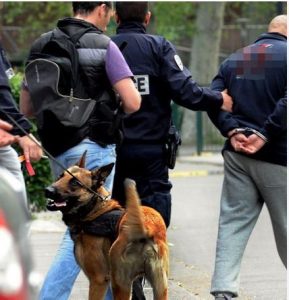
To ensure reliability, dogs are exposed to various environments with numerous distractions. This phase of training ensures that the dog remains focused on detecting the target scent, regardless of external stimuli.
5. Regular Maintenance Training
Continuous training is essential to maintain and enhance a dog’s detection capabilities. Regular sessions help reinforce learned behaviors and adapt to new challenges that may arise in the field.
Common Breeds Used in Narcotics Detection
German Shepherd
Renowned for their intelligence and versatility, German Shepherds excel in various law enforcement roles, including narcotics detection. Their strong work ethic and ability to adapt to different environments make them a popular choice.
Belgian Malinois
Similar in appearance to German Shepherds but often more agile, Belgian Malinois are highly energetic and possess a strong drive, making them excellent detection dogs.
Labrador Retriever
Known for their friendly demeanor and keen sense of smell, Labradors are frequently employed in detection roles, especially in public settings where a non-intimidating presence is beneficial.
Recent Advancements and Applications
Use in Correctional Facilities
In Spain, the city of Burgos has become a national reference point for training canine teams to detect drugs in prisons. The initiative focuses on passive detection, allowing dogs to indicate the exact location of illicit substances without causing harm. This approach has proven effective in preventing the entry and consumption of drugs within penitentiary institutions.
Detection of Synthetic Opioids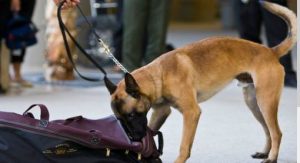
In the United Kingdom, Springer Spaniels named Dan and Jos are part of a new Border Force team trained to combat the influx of deadly synthetic opioids, such as nitazenes. These substances are significantly more potent than heroin and have been linked to numerous fatalities. The dogs undergo extensive training to identify various scents amidst distractions, ensuring they can effectively detect these dangerous substances.
Alternative Detection Methods
While dogs remain the primary agents for scent detection, research into alternative methods is ongoing. For instance, studies have explored the potential of training bees to detect narcotics. However, challenges such as the unpredictability of bee behavior have limited practical applications.
Challenges and Considerations
Resource Intensiveness
Training and maintaining detection dogs require significant time and financial investment. From selection to continuous training, the process is resource-intensive.
Handler Dependency
The success of a detection dog heavily relies on the handler’s expertise. A strong bond and effective communication between the dog and handler are paramount for successful operations.
Legal and Ethical Implications
The deployment of detection dogs must adhere to legal standards to ensure that searches and seizures are conducted lawfully. Additionally, ethical considerations regarding the welfare of the animals must be prioritized.
Conclusion
Police dogs play a vital role in narcotics detection, leveraging their extraordinary olfactory capabilities to enhance the effectiveness of law enforcement operations. Through rigorous training and careful selection, these canine units have become indispensable in the fight against drug trafficking. Recent advancements, such as their use in correctional facilities and the detection of synthetic opioids, highlight their evolving role in modern policing. However, challenges such as resource intensiveness and ethical considerations must be addressed to ensure their continued success. As technology advances, the integration of traditional canine units with innovative detection methods promises to further strengthen global efforts to combat illicit substances.
The Science Behind Using Mice in Experiments